Elenoa Likusei Dolodolotawake believes that leadership is not about standing at the front and having all the answers.
It is about listening, recognising the people doing the work, understanding their challenges and having the humility to learn from others.
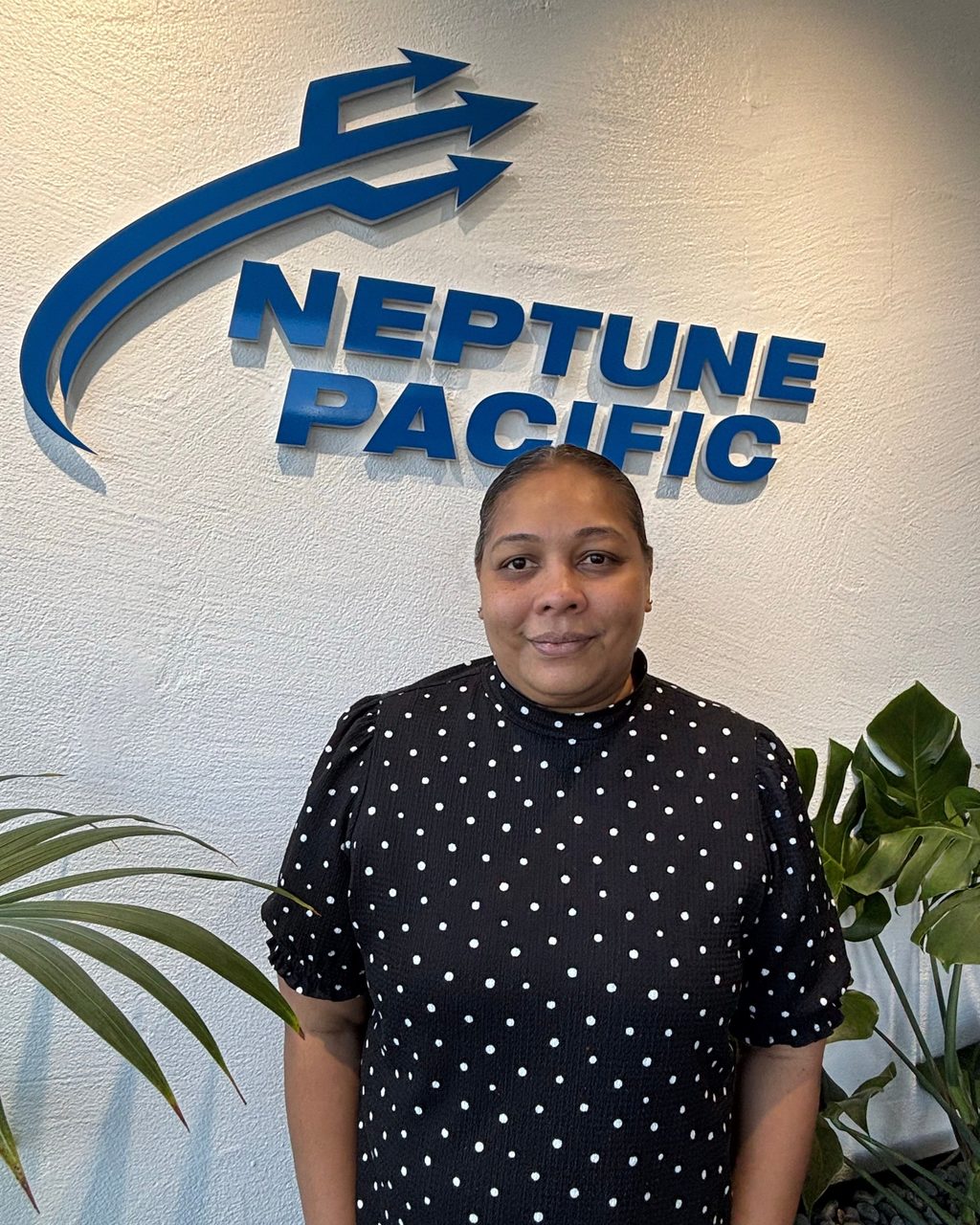
At 43, Elenoa has spent much of her professional life developing that approach. She is the manager – Human Resources at Neptune Pacific, a position she has held for the past eight years.
Neptune Pacific oversees NPT Agency, Transam Fiji and Genea Pacific, covering shipping, transport, freight forwarding, container depots and shared services, with operations across Suva, Lautoka and Nadi.
Working in human resources has reinforced one of her strongest beliefs about leadership: organisations may be built around systems and structures, but their success ultimately depends on people.
“Our people are the ones who make us look great,” she said.
“They are the ones doing the work every day, delivering results and contributing to the success of the organisation.”
That belief has shaped how she leads – with humility, encouragement and a willingness to listen.
Learning to look beyond
Originally from Serea, Naitasiri, with maternal links to Savusavu, Elenoa attended St Anne’s Primary School before completing her secondary education at St Joseph’s Secondary School.
She later graduated from the University of the South Pacific with a Bachelor of Arts, double majoring in Management and Public Administration, and History and Politics.
She also holds a Master of Business Administration from USP.
But some of her most important leadership lessons came outside the classroom.
Elenoa attended the Leadership Fiji program in 2011, when she was an emerging leader. One of her biggest takeaways was the importance of being aware of what was happening beyond her immediate workplace.
The program brought together people from different organisations, industries and backgrounds, allowing her to hear different experiences and approaches to leadership.
“At that stage in my career, I was very focused on what was happening within my own organisation and immediate surroundings,” she said.
Leadership Fiji encouraged her to broaden that view, remain curious and understand that there can be different approaches to the same situation.
More than a decade later, that lesson continues to influence her leadership.
Leading through uncertainty
One of the biggest tests of those principles came during COVID-19.
The pandemic created uncertainty for organisations and placed enormous pressure on employees who were concerned about their jobs, families and futures.
It was a period that tested Elenoa’s resilience and leadership.
Rather than believing she had to navigate the challenges alone, she sought guidance from mentors and developed relationships with people inside and outside the organisation who had faced similar circumstances.
Having trusted people to speak with and learn from proved invaluable.
The experience reinforced a lesson that remains central to her leadership philosophy: leaders do not need to have all the answers.
“Good leadership is not about having all the answers,” she said.
“It is about being willing to listen, seek advice, learn from others, and have the courage to make decisions during difficult times.”
The pandemic also strengthened her belief in open communication and the responsibility leaders have to provide stability when circumstances are uncertain.
Leadership beyond the workplace
Leadership Fiji also gave Elenoa and her 2011 cohort an opportunity to put their ideas into practice through community projects.
In December that year, the 24 leaders organised a Teens Leadership Camp at the Seventh-day Adventist campsite in Deuba.
The camp brought together about 60 young people from Rakiraki, Vatukoula, Tavua, Nausori, Suva and Navua.
Facilitated by members of the cohort and guest speakers from various industries, the camp provided young people with an opportunity to develop their leadership skills and hear different perspectives.
The cohort also undertook a number of community initiatives.
At Homes of Hope in Wailoku, members joined a youth church group for a day of activities, including weeding and planting, under the “Paint a Smile” project.
They also sponsored two children through the Foundation for the Education of Needy Children.
Another project took them to Nokonoko Primary School, about 25 minutes from Sigatoka Town, where they organised a shoe and stationery drive.
Those experiences demonstrated to Elenoa that leadership does not always require grand gestures.
Sometimes, simple acts can make a meaningful difference.
Raising people up
That belief remains important in how Elenoa motivates her team.
When morale or performance is low, she focuses on encouragement and purpose.
She believes people can become consumed by immediate setbacks and lose sight of the bigger picture. A leader’s role, she said, is to remind people of their value and potential and encourage them to keep moving forward.
“Life will not always go according to plan,” she said.
“There will be moments when we falter, face setbacks, or question ourselves. But those moments should not define us.”
Elenoa highlighted that mistakes and failures should be treated as opportunities to learn.
Leaders should acknowledge what went wrong, understand the lessons and use those experiences to improve.
There is little value in dwelling on what could have been because the past cannot be changed.
What can be changed is the response.
“The past is a lesson, not a life sentence,” she said.
The importance of empathy
Empathy is another important part of Elenoa’s leadership approach.
When faced with difficult decisions, she believes leaders should put themselves in another person’s shoes.
How would you want to be treated if you were in that position or if the circumstances were reversed?
Empathy helps leaders make decisions that are fair, balanced and respectful.
She also believes there is no weakness in asking for advice.
Leaders do not always have every answer, and seeking another perspective can lead to better understanding and better outcomes.
That willingness to listen reflects the lesson she first took from Leadership Fiji in 2011.
Never forget where you started
Elenoa’s leadership journey has been shaped by a commitment to continuous learning and personal growth.
Outside work, she enjoys listening to music, Zumba and taking long walks, which give her time to reflect and recharge.
She continues to challenge herself by learning new things, setting goals and working towards them.
But as she has progressed professionally, she has remained conscious of where she began.
She believes leaders should never forget their humble beginnings, the people who supported them or the lessons learned along the way.
“True success is not only about how far you go, but also about how you grow, who you take with you, and how you use your experience to help others succeed.”
Her greatest source of inspiration has been her family, particularly her husband, who she describes as a constant source of wisdom, encouragement and reassurance.
His support, she said, has reminded her that success is rarely achieved alone.
Continuing the journey
As Leadership Fiji marks its 25th anniversary, Elenoa sees the programme as an important milestone in her leadership journey.
Its value, she said, extended beyond speakers and formal learning. It was also about the relationships, shared experiences, community projects and networks created among people from different walks of life.
She encouraged future participants to approach the programme with an open mind, a willingness to learn and the courage to challenge their own thinking, adding that leadership is not simply about personal advancement.
“It is about using what you learn to make a difference in the lives of others,” she said.
Elenoa’s leadership philosophy remains grounded in three simple principles: remain humble, listen to your people and never stop learning.
And after more than a decade since her Leadership Fiji experience, she believes the journey is far from over.