NEARLY 19,000 self-employed women are helping sustain Fiji’s economy, yet many continue to work without regular wages, access to finance or adequate protection.
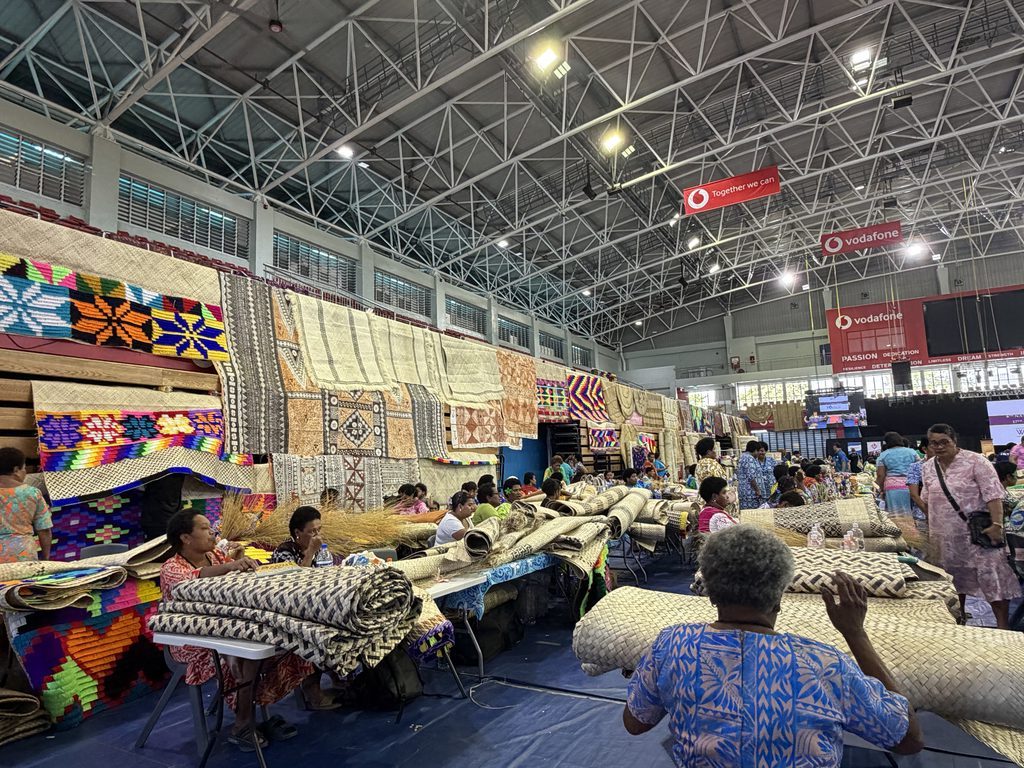
Their contribution, particularly in traditional handicrafts and small businesses, was brought into focus at the opening of the 8th National Women’s Expo at the Vodafone Arena in Suva on Tuesday (November 17).
Deputy Prime Minister and Minister for Industries, Commerce and Business Development, Manoa Kamikamica said the economic contribution of women must be matched by stronger financial support, better market opportunities and protection from violence.
Speaking at the three-day event, he said women were central to the country’s economy, although their contribution was often overlooked.
“These women are not on the edge of our economy. They are holding it up,” Mr Kamikamica said.
More than 5500 women-led micro, small and medium enterprises (MSMEs) operate in Fiji, alongside more than 18,700 self-employed women and about 4650 women involved in handicrafts.
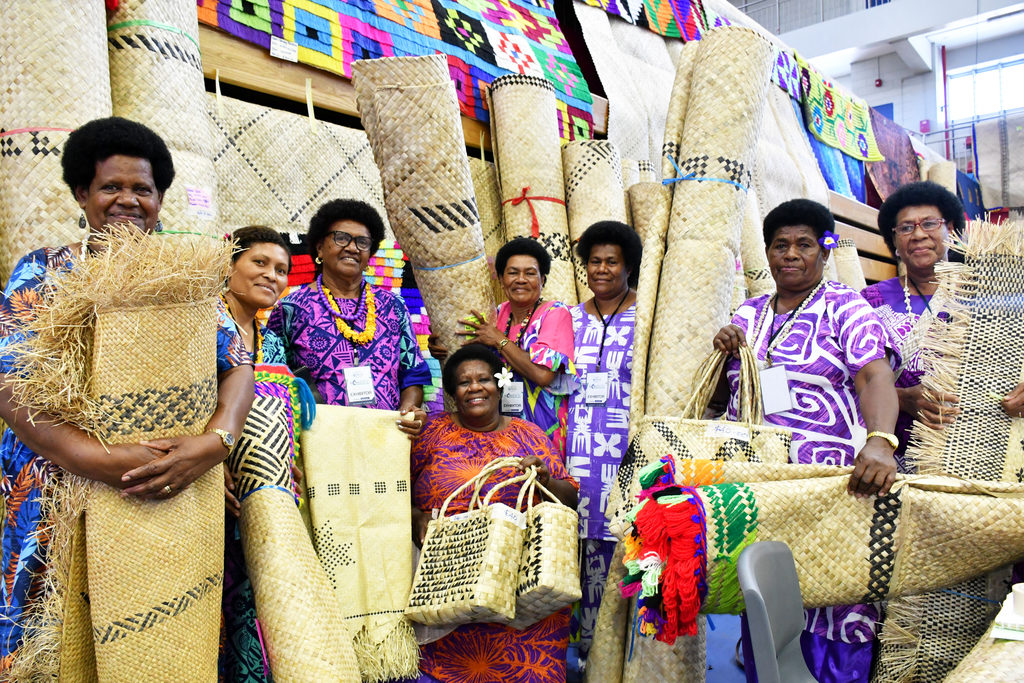
Through weaving, masi making, farming, fishing and small-scale production, many women provide essential income for their households while preserving traditional skills passed down through generations.
Breaking barriers to economic participation
Held under the theme “Her Voice. Her Power. Her Future – Celebrating Women, Advancing Equality, Building a Safer, Strong Fiji”, the expo also highlighted the need to address violence against women as part of efforts to improve their economic participation.
Addressing the day’s theme, Her Voice: Speaking Up, Standing Together, Mr Kamikamica drew attention to the prevalence of violence and economic abuse experienced by women.
Nearly two in three ever-partnered women have experienced physical or sexual violence from a male intimate partner, while one in four women has experienced economic abuse.
Sexual harassment has also affected one in five women in formal workplaces.
“These are not just numbers. They are our mothers, our sisters, our daughters and our colleagues,” he said.
The economic cost is also significant. A 2011 study estimated that violence against women and girls cost Fiji about 6.6 per cent of its gross domestic product through lost productivity, health and justice expenditure, and financial pressures on families.
“Violence does not only break families. It breaks businesses and budgets,” Mr Kamikamica said.
Investing in women’s businesses
Mr Kamikamica during the opening outlined the Government’s Women’s Economic Empowerment National Action Plan 2025–2030, which aims to improve women’s participation in the economy.
Under the plan, women’s labour force participation is targeted to reach 60 per cent by 2030, while the proportion of women-owned registered MSMEs is expected to increase from 19 per cent to 50 per cent by 2029.
Other targets include increasing women’s representation in Parliament from 10 per cent to 30 per cent and their participation on commercial boards from 19 per cent to 50 per cent.
The plan also aims to increase women’s bank account ownership from 78 per cent to 85 per cent.
Mr Kamikamica said increasing women’s participation in the workforce would bring wider economic benefits.
Evidence cited in the plan indicates that a 4.9 per cent increase in women’s workforce participation could lift economic growth by about 8.2 per cent.
“This is not charity. It is among the smartest investments Fiji can make,” he said.
However, access to finance remains a major obstacle for women entrepreneurs.
An Asian Development Bank study found that women-led businesses were 2.5 times more likely to have loan applications rejected than businesses led by men. Unmet credit demand among women-owned MSMEs was estimated at US$111 million.
Proposed measures include mobile business start-up clinics, simplified business registration and licensing, financial literacy training and a review of the MSME Credit Guarantee Scheme.
Consideration is also being given to directing at least 30 per cent of guarantees under the scheme towards women-owned and women-led businesses.
From village markets to export opportunities
The expo, which began in 2014, continues to provide a platform for rural women entrepreneurs to connect with buyers and explore opportunities beyond their local markets.
Mr Kamikamica said the event should serve as more than a marketplace for women to sell their products.
“The Expo should not only be a place to sell. It should be a place to graduate from the roadside stall to the shop shelf and from the village to the export order,” he said.
Support for artisans is also included in the 2025–2026 Costed Operational Plan, with $100,000 allocated to secure a site for a pilot National Emporium.
The proposed facility is intended to provide a permanent marketplace for quality handmade products.
Mr Kamikamica called on banks, retailers, hotels, exporters and Government agencies to strengthen their support for women through inclusive financing and better access to markets.
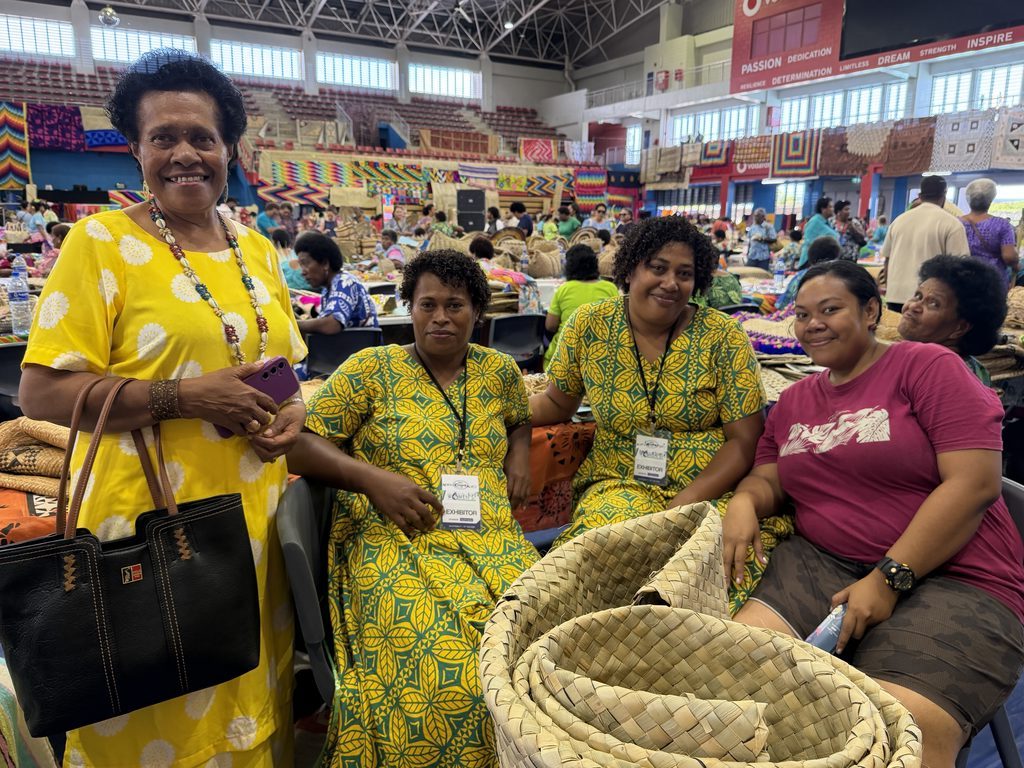
He acknowledged the women artisans and entrepreneurs who had travelled from across Fiji to take part in the three-day event.
Opportunity for Artisans
For Veniana Yagasiri of Dogotuki, Macuata, the Women’s Expo was an opportunity to showcase her craft while learning from other women artisans.
She said she was pleased to be part of this year’s event, which allowed her to connect with women from across the country and gain a wider appreciation of their work.
Yagasiri and her family earned their living through farming and selling fans.
“Being part of the event has widened my perspective on the different types of handcrafted items out there, and learning from other women has been quite fulfilling,” she said.
For Losana Lawakeli of Naimasimasi Village, Tailevu, her handicrafts proved popular even before the expo officially opened.
She had brought her mats to display and sell, but customers bought them before the opening leaving her with only her crochet work and a few other items.
Ms Lawakeli said she looked forward to the event each year because it was the only opportunity she had to display and sell her round mats.