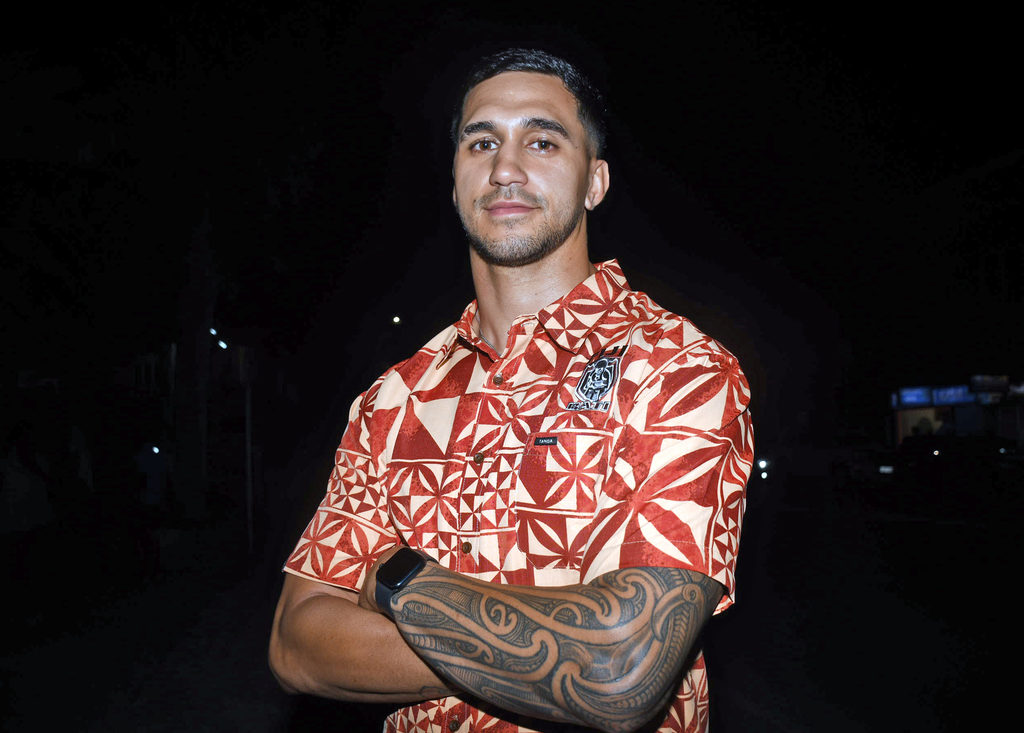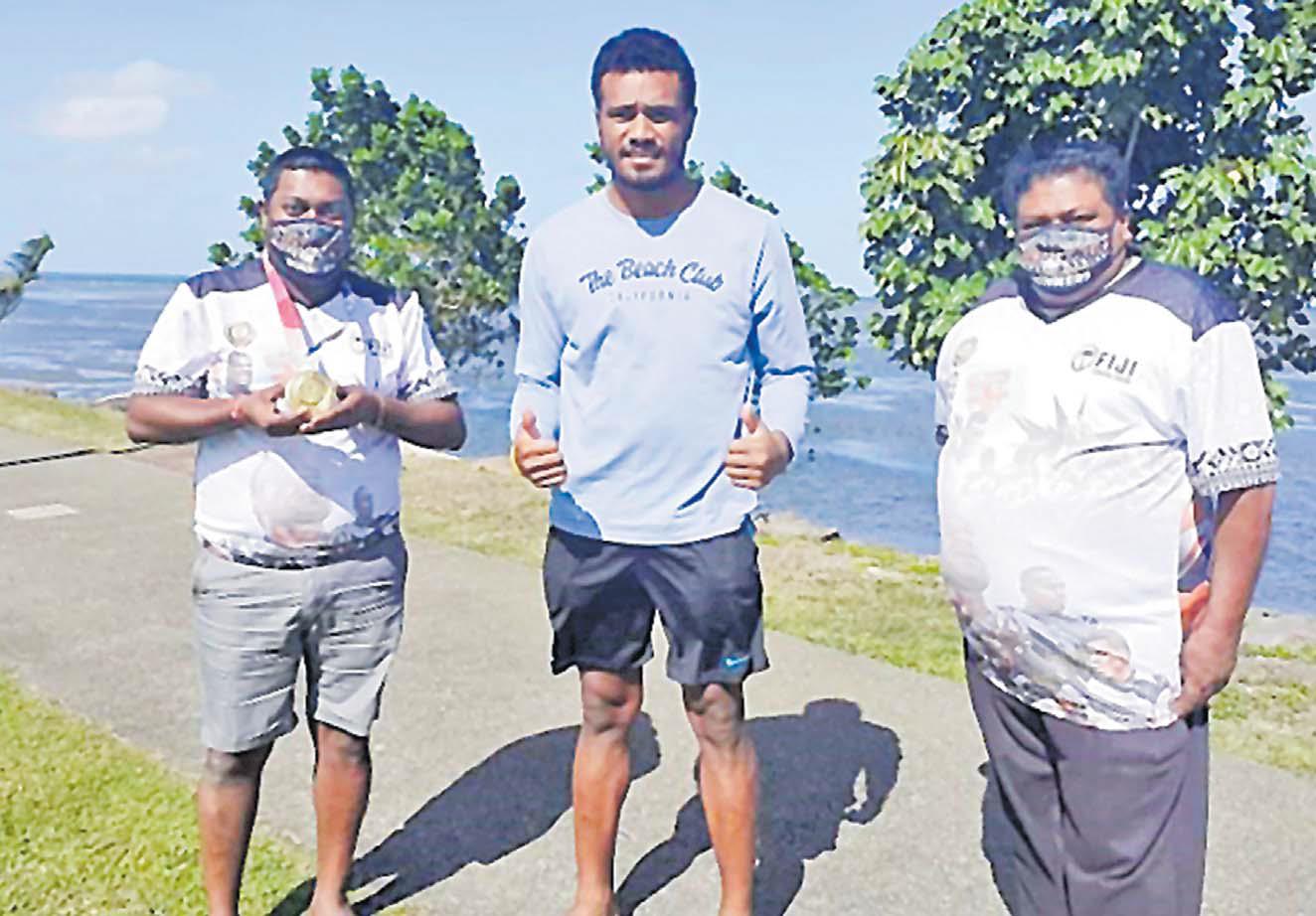
Iosefo Masikau Baleiwairiki has become a household name after delivering a sensational performance at the 2020 Tokyo Olympic Games.
The principles that govern his life are simple. His advice to Fijians is also simple –– always put God first into everything and whatever you do, and work hard in life.
He believes that hard work will always be rewarded, although it sometimes takes time.
I had a conversation with Masi yesterday, and I realised how humble and down-to-earth he was, and that he was not carried away with the gold medal from the Olympic Games.
Masi, who hails from the Garden Island of Taveuni, has done his parents –– Atonio Kawakawa and Aqela Nukunawa, proud.
His achievements and success in Tokyo brought tears to their eyes, and made them realise that their dream of seeing their son don the national jumper and win something big for the national 7s team had been fulfilled. Masi attended primary and secondary school on Taveuni.
After completing studies at Holy Cross College, he joined Suva Grammar School in 2016, and the Lions lost to Meli Derenalagi’s QVS brigade in the Deans U18 quarter-final.
In 2017, he went to Nasinu Secondary School, and he played rugby league for Nasinu.
The side lost to RKS in the U19 rugby league semi-final.
His U19 rugby union team also lost to Lelean Memorial School in the quarter-final.
Hence, Masi did not have a colourful career at secondary school level, unlike his gold medal winning colleagues –– Meli Derenalagi, Jiuta Wainiqolo and Sireli Maqala who won the U18 Deans Cup with QVS and RKS in 2016, 2017 and 2018, respectively.
Masi enrolled at the Fiji National University in Koronivia under the program –– Bachelor of Science in Forestry, which he completed, and is awaiting graduation.
He shared that he had to make endless sacrifices to play rugby, while doing his studies, as attendance at FNU was take seriously.
Masi recalled that he was asked to join the Suva U20 rugby team by current coach Sakaraia Labalaba, and he played alongside flanker Meli Derenalagi and halfback Simione Kuruvoli.
He shared that in 2019 he played for Serevi Selection U19 team at the Coral Coast 7s tournament at Lawaqa Park with other players like Temo Mayavanua, Timoci Tavatavanuwai and Viliame Suwawa.
Masi was drafted into the Tabakau 7s team where he rubbed shoulders with the likes of Beniamino Vota, Jone Vota, Daniele Cakaunivalu, Setefano Cakau, Petero Nakelevanua, Netani Tavo, Terio Tamani, Leo Naikasau, Luke Lutunavanua and legendary Fiji rugby player Nasoni Rokobiau.
He won the 2020 44th Fiji Bitter Marist 7s tournament with Tabadamu who beat favourites Police White 22-19.
Masi, who was sin-binned in the 4th minute of play for tackling a man on the ground, scored two tries for Tabadamu.
However, this year, he was part of the Fiji Shadow side, which was crowned the new champion of the Fiji Bitter Sapphire Marist 7s, after defeating defending champions Tabadamu 31-14.
Last year, he played for the Seremaia Bai coached Eastern Saints side who won the Koroturaga Shield against Navy.
Masi said that the training environment and atmosphere within the national 7s team was different from training at club level, and that training at the sand dune was tough, but he survived. Masi praised Gareth Baber and Naca Cawanibuka.
He said that apart from focusing on diet and the physical component of the game, Naca was the spiritual hero, and he nurtured the boys, well.
He said that a lot of sacrifices had to be made, but they paid off, as he performed exceptionally well in Townsville, and was selected to be part of the Rio Olympic Games gold medal defence.
He recalled crying in his room when he made the cut, and his parents cried when he was selected.
He stated that Baber had informed the boys their performance in Townsville would be monitored, so he worked extremely hard.
Masi fractured his hand against Japan, and missed the games against Canada and Great Britain, but he was back against Australia, Argentina and the All Black 7s.
Masi did not hesitate to share that Fiji’s defence helped them to beat Argentina and NZ.
He said that during the singing of the anthem, he thought about his family’s struggles, and he was relieved when the final whistle sounded. He was a gold medallist, and our warriors won back-to-back gold.
He dedicated his gold medal to his parents who are in Taveuni.
- RAJNESH LINGAM is a regular contributor to this newspaper and the views expressed in this article are his and not of The Fiji Times