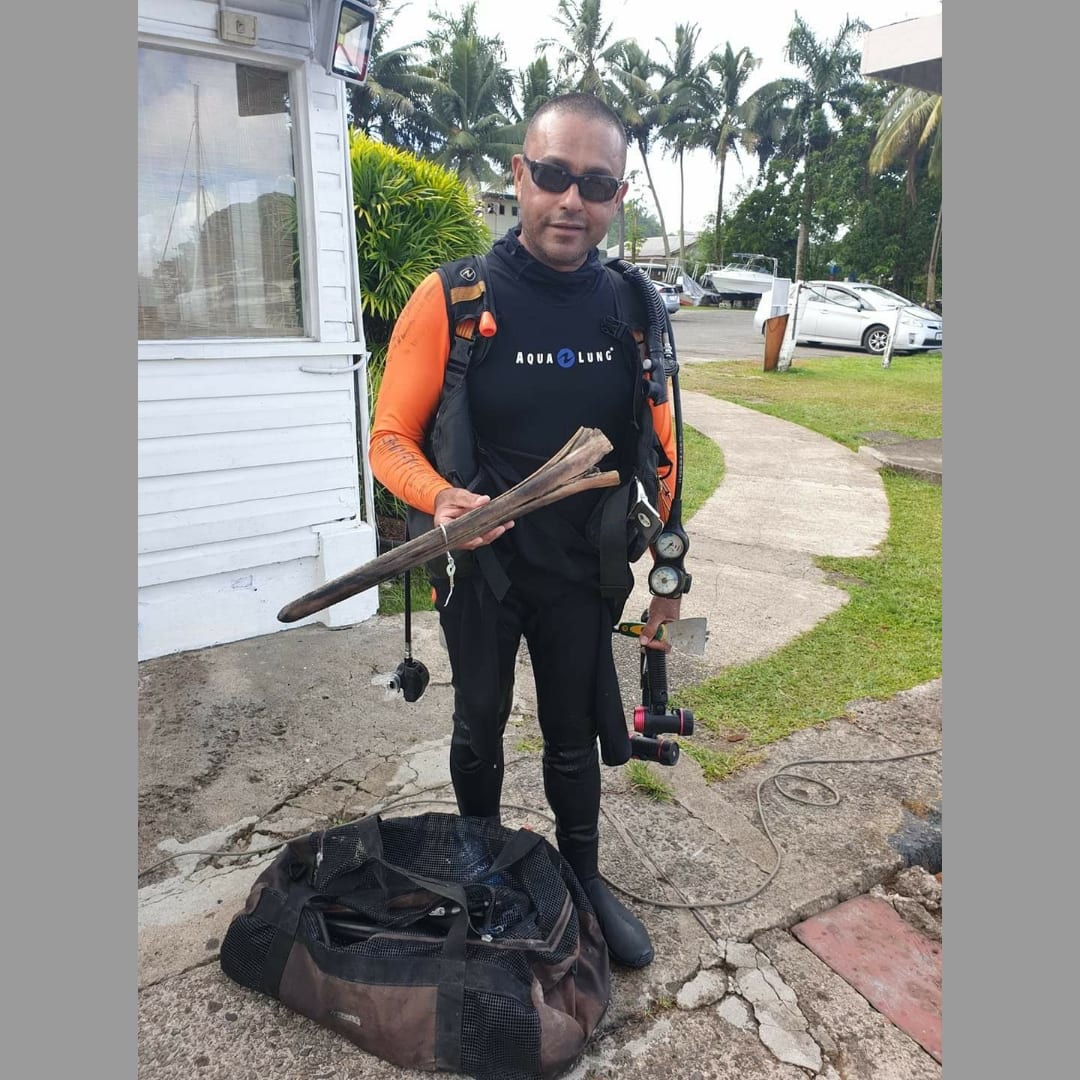
The saying the coconut does not fall far from the tree, rings true if you talk to Captain Johnathan Smith. As early as he can remember young Captain Smith or Skipper as he is commonly known in Fiji was fascinated by the sea.
“My Grandfather, my father and my uncles were all seafarers. So being out on boats was a natural thing growing up,” he said.
It just might be destiny, too, if you throw in the fact about our geography – more sea than land in our part of the world.
“Hearing stories of places they travelled made me want to travel the world.”
The oldest of five siblings, he moved around Fiji in his youth, always with an eye on the sea.
“I was born in Suva, lived all over the place, but grew up in Lautoka – went to Drasa Primary School and Natabua High School.
“After that I headed out to sea, did my cadetship on big container ships, bulk carriers, ended up becoming third officer, second officer, chief officer, and captain.”
But Skipper Smith’s love for the ocean runs deeper than just the surface, sailing on a boat.
“I grew up spear fishing, fishing, diving – I have been diving now for more than 20 years.
“You never really get to know the sea until you start diving, that’s what really got me hooked with the underwater world.”
So as he steps up as a 4FJ Fish Smart champion, asking people to avoid undersize fish and critters, Smith wants you to know, he’s not some warm-and-fuzzy nature lover.
“I’d like to think of myself as an environmentalist – not a tree hugger kind of thing, but being sensible about the environment whether in the ocean or on land, whether its rubbish or how we fish or things like that.”
Earlier this year, Skipper Smith had an encounter with a number of roadside fish sellers in Lautoka.
He stopped to catch a glimpse of the crabs that were being sold and found them to be undersized female crabs.
He purchased the crabs from the sellers and released them at sea.
“I told them (sellers) that I was going to release it and that it was a loss for their qoliqoli and a gain for my qoliqoli as there were always mostly a lot of undersize females in the bundles of crabs.
“The sellers were astonished, someone would waste money that way.
“Then I explained about the females laying millions of eggs and that was what they would need to sustain their qoliqoli qari stocks.
“I told them I would be famous for this.
“Io eh? Were their response, which means that they have not been educated about sustainable fisheries.”
Skipper Smith thinks these interactions are where change happens.
“We need to stop having expensive fisheries workshops in expensive hotels with lavish morning teas, lunches and afternoon teas and use that money to go to the roots, the villages and have the workshops there and invite the mataqali and neighbouring villages and teach them.”
That’s why on more than one occasion, he has visited the market, bought undersize crabs and released them. “If they can’t breed then you won’t catch them anymore.”
Skipper Smith also champions the ocean by using his following on social media platforms to promote the cause, reaching many more people. In 2018, he also began championing for the 4FJ campaign on kawakawa and donu – where he rallied behind the campaign in saying no to the two species in their spawning months from June through to September.
The 4FJ Fish Smart is now promoting more fishing practices that can help revive important food and income species in Fiji.
For communities, these include banning harmful fishing practices, such as night-time spearfishing, laying off peak breeding times and sites, and also respecting community tabu areas, among others. But for people in Fiji’s towns, and capital city, you
can avoid buying and selling
undersize fish.
“The thinking is simple. At our fish markets, we let the fish reach a size where they have bred, and begun restocking our reefs,” said Mafa Qiolele, program manager at cChange, which co-ordinates the campaign.
Skipper Smith believes this approach, consumers telling sellersthey won’t buy undersize, will help send the message to everyone, and ultimately revive our fisheries.
“If you don’t buy undersize seafood then the fishermen will get the message and won’t catch it.”
But he said the Government also needed to step up and do its part.
“We have to be smart about it, the government needs to come in with tough laws, they have got to include the qoliqoli owners, the villages, the people, the fishermen, the middlemen, educate the people who buy fish.
“If we want sustainable fisheries, we have to enforce the laws.”
“So what’s his vision, or in other words, how does he want to be eating the bigger, better fish?
“I Iike my fish just plain boiled with mit,” said Skipper Smith.
“People like to fish, people like to eat fish, you can’t stop them, but the key word is sustainable’ fishing.”