AT two o’clock in the morning, when Rakiraki is still wrapped in misty darkness and silence, Yogita Mala is already preparing for the day ahead.
With her husband beside her, she begins loading flowers and plants for the weekly Saturday journey to the municipal market. There is little time to waste because early birds get the best space. Besides, Mala has learnt that in business, as in gardening, a good start can make all the difference.
By four o’clock, her table is ready. The flowers are waiting for their first customers, and another working weekend has begun for a woman who has spent 15 years turning a modest collection of plants into a flourishing nursery.
Today, Mala, 50, is a familiar face in Rakiraki. Customers know her for her flowers, while others seek out the homemade Indian sweets she prepares to supplement her income.
But behind the colourful blooms and the growing business is a childhood marked by hardship, and a promise she made to herself that her children would have opportunities she never did.
A childhood shaped by hardship
Mala left school after Class Eight. Her parents were simple folks, and the family could not afford to send her to high school.
“They were labourers and could not afford to send me to high school,” she says.
The decision was not born out of a lack of ambition. It was the consequence of poverty, which often forces children to put their dreams aside before they have had the chance to discover them.
Mala began working as a babysitter. The pay was modest, but she had a curious mind and an instinct for making the most of what little she had. She was learning to earn a living long before she had a business of her own. Her interest in flowers developed gradually, through backyard gardening and the pleasure of watching plants grow.
She discovered she had green fingers, and with that discovery came an idea: she could make a living from flowers.
The beginning was small. There was no sprawling nursery, no thousands of pots arranged across a garden, and certainly no guarantee that the venture would succeed.
“I started with two or three plants,” she says.
Two plants and a growing dream
Fifteen years later, those first plants have multiplied into a collection of about 5,000 potted plants, packed into the backyard of her family home on a quarter-acre property in Wairuku, outside Rakiraki town.
There is little wasted space. Plants of different shapes, sizes and varieties occupy almost every available corner, transforming the backyard into a living catalogue of colour and foliage.
Roses are among her prized collections. Mala grows about 50 varieties of roses, alongside 30 types of hibiscus, 20 varieties of bougainvillea and five kinds of frangipani. Ferns and ornamental foliage plants add texture and variety to the collection, while other species find their way into customers’ gardens and, in some cases, restaurants in Suva.
Each plant represents the time she spends tending, watering and nurturing. This nursery has never been something that could be built overnight.
“I started the nursery from scratch because I wanted to support my husband and send my two children to school and realise their full potential,” she says.
It is a familiar dream for many parents. But for Mala, it carries the weight of her own unfinished education. She knows what it means to watch opportunities slip away because money is scarce. She wanted her children to have the freedom to pursue theirs.
Her nursery has become the means through which she works towards that promise.
The business, however, does not rely on flowers alone. At home, Mala also sells live fish kept in a series of tanks. The fish provide another source of income, while Buddha statues occupy spaces around the property.
She believes the fish and statues bring good luck, a comfort she values as she navigates the uncertainties of running a small business.
“Both the fish and Buddha bring good luck. As a growing businesswoman, I need luck, especially to cushion the effects of the drought we are facing and the high cost of doing business,” she says.
Keeping the flowers alive through hard times
Those challenges are part of the reality behind the beauty of her nursery. Plants need care even when sales are slow, and drought can threaten the very stock on which her livelihood depends.
With Rakiraki experiencing drought conditions associated with El Niño, watering has become an added expense. Keeping thousands of potted plants alive requires more money, placing further pressure on a business already grappling with the high cost of doing business. For Mala, the challenge is to protect what she has spent 15 years building. Her plants are her livelihood, and allowing them to wither is not an option. She must find ways to keep them thriving even as the cost of watering eats into her earnings.
Mala meets these pressures by diversifying. Indian sweets, prepared and sold from home, provide another stream of income. It is a practical extension of the same philosophy that shaped her nursery: make use of the skills and opportunities available, and do not depend on one source of earnings alone.
She now employs a full-time worker to help manage the business. Her husband remains a constant support, while her grown-up children lend a hand when they return home for the weekends from the towns where they live. At those times, the nursery becomes a family undertaking, with everyone contributing to the work that has grown from Mala’s original handful of plants.
Rooted in faith
Her ambitions have grown alongside the business.
Recently, she bought a new quarter-acre freehold property for $20,000, with financial help from family members who wanted to support her expansion plans. She hopes to establish another nursery there, giving her room to pursue the vision she has carried for years.
She would also like government assistance with materials to build nursery facilities and expand the business further.
For now, she continues to tend the plants she has, trusting that patience and steady work will carry her towards the next stage.
A successful nursery owner, she believes, must be committed, patient and hardworking. There will be setbacks, she warns, and moments when giving up seems easier than carrying on.
“When you are running a business, expect bad times to come. Have patience and work hard so that these moments go away,” she says.
“Success doesn’t come easy, and sometimes you will fail many times and feel like giving up, but hold on to hope.”
Faith is another part of her daily routine. Mala says she prays every morning and evening, crediting God as a source of inspiration and strength throughout her journey.
She also has a habit that offers a glimpse into the woman behind the business.
Each morning, she talks to her plants and fish, encouraging them to grow and flourish.
“I reflect the goodness I receive to all my flowers and fish. I have a conversation with them every morning by telling them to grow big and beautiful. They obey by giving out their most beautiful colours even on a gloomy day,” she says.
It is a tender ritual in a life shaped by hard work, one that seems fitting for someone who has spent years watching small things grow into something remarkable. Mala does not speak of retirement as an approaching milestone. For her, work is not simply a way to earn money; it is something she loves, something that gives purpose to her days and keeps her looking towards the future.
“I know I will be in business until I die. There won’t be any retirement because I love my job too much,” she says.
Flowers, she believes, will always be part of her life, alongside her pet fish and homemade sweets.
From the schoolgirl who had to leave her education behind to the woman now nurturing thousands of plants, Mala’s journey has been made possible through years of effort rather than sudden success.
Her nursery stands as a reminder that growth is possible when determination is put in.
In her garden, the flowers keep reaching for the light. And every morning, Mala keeps reaching for the skies.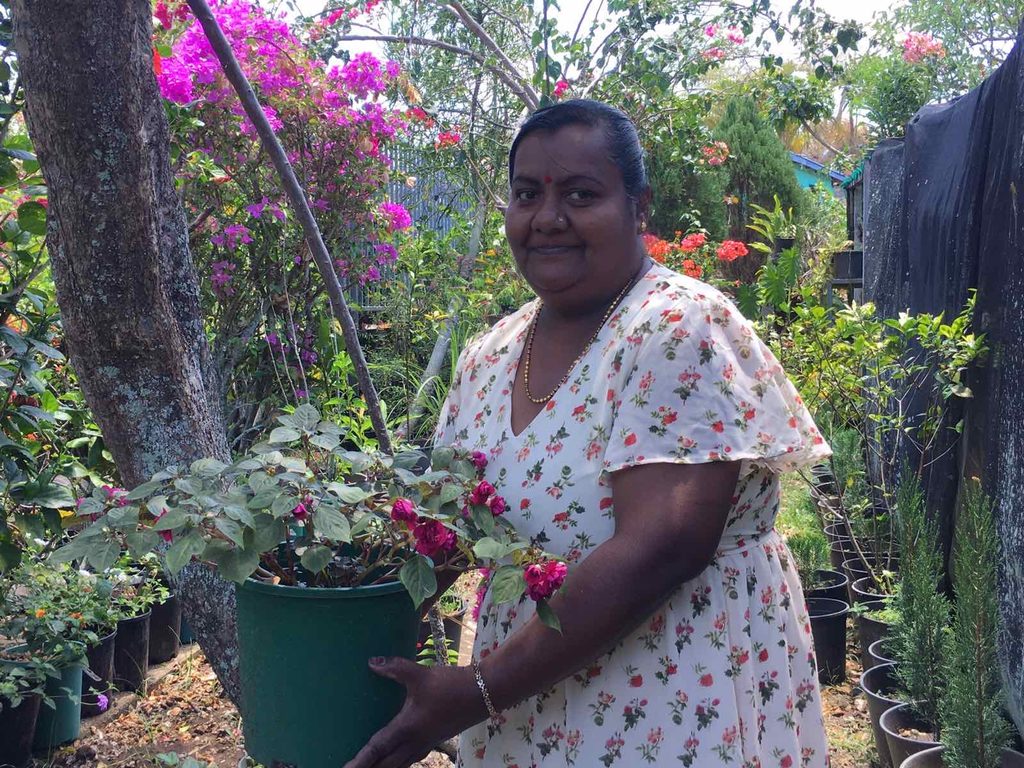
Her 50 varieties of roses are among her prized items. Picture: SUPPLIED
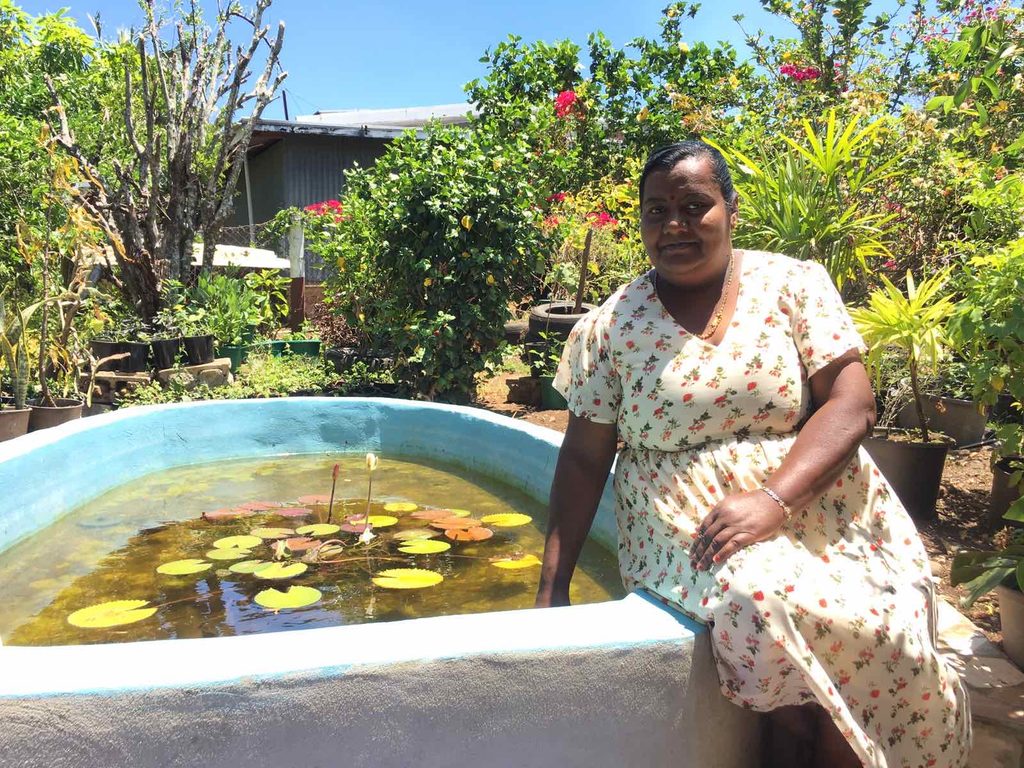
Cooling off in her ornamental garden pool. Picture: SUPPLIED
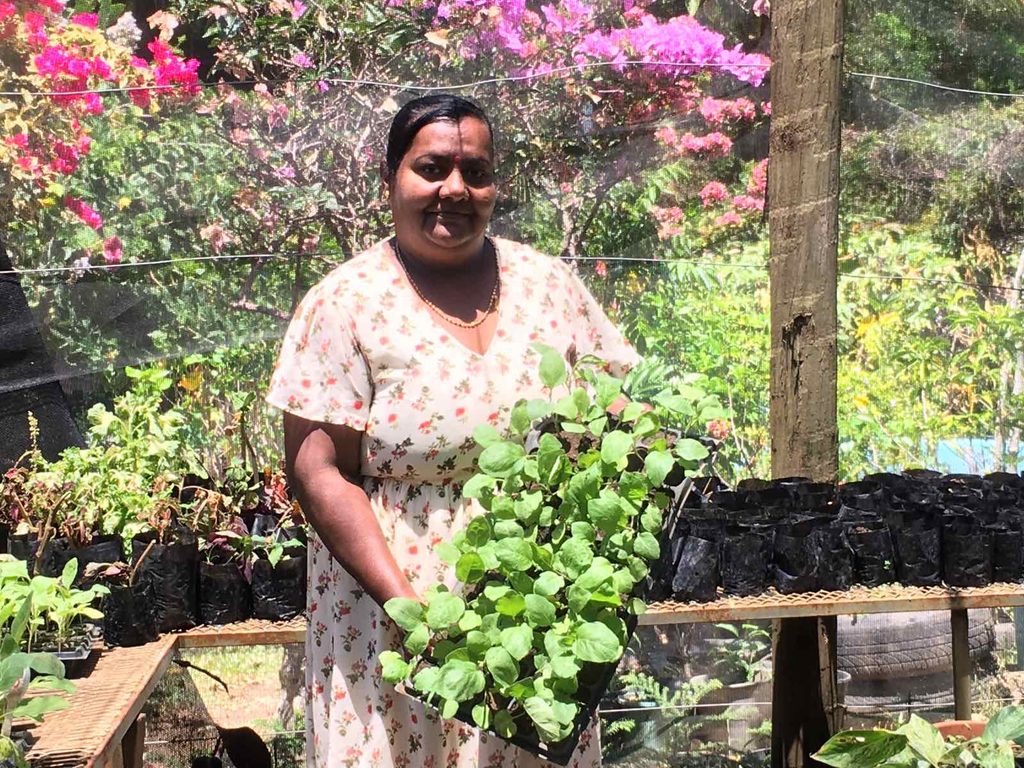
Inset: Showing off her egg plant pots.
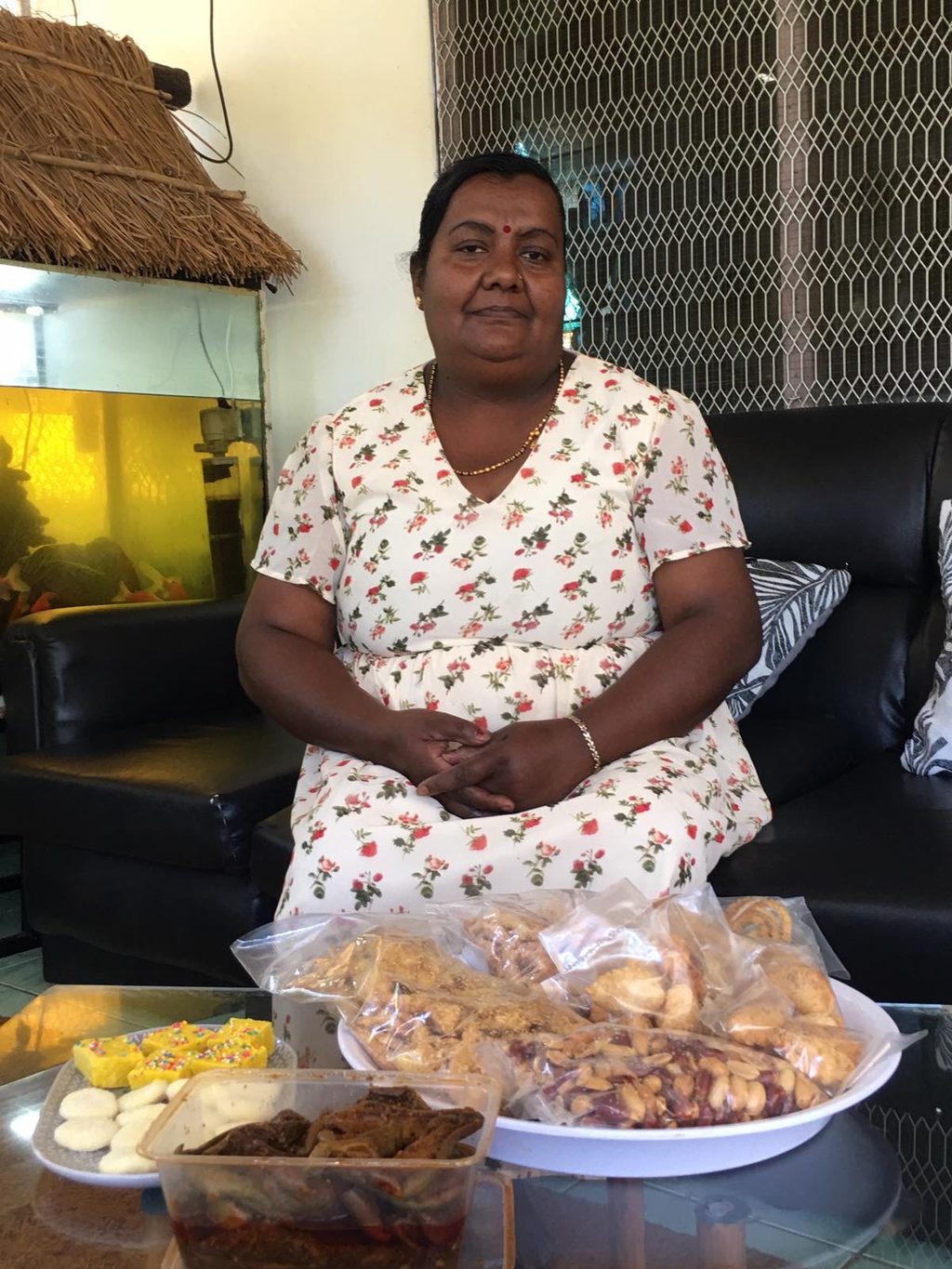
Mala and her homemade sweets and savories.