SOME of the objects displayed recently at the exhibition Fiji 1838: Face to Face / Fidji 1838: Face à Face had waited nearly two centuries to be seen again.
Among them were a necklace made from the lower jaws of the Fijian ‘beka’, or fruit bat, three ‘liku’, a piece of masi reputed to be about 200 years old and two spears, each almost four metres long.
For co-curator Samson Verma, these were more than objects brought together for an exhibition in Chartres, France.
They are fragments of a Fijian world — objects that carry questions about status, spirituality, craftsmanship, social organisation and the encounters between Fijians and Europeans in 1838.
Several had never been displayed publicly before and were carefully restored by the Musée du quai Branly — Jacques Chirac in Paris, where the objects are held in its collection and reserves.
The exhibition held at the Musée des Beaux-Arts de Chartres from April 4 to August 2, 2026, brought these objects together with the drawings of French artist Ernest Goupil, creating a visual and material record of Fiji at a significant moment in its history.
Objects brought back into view
The collection was not selected simply because the objects were old or visually striking.
Verma said the selection was based on objects that corresponded with those represented in Goupil’s sketches.
That approach allowed visitors to see the relationship between what the French artist recorded on paper and the objects that survived in French museum collections.
Among the objects were a piece of masi described as one of the oldest pieces in the world, reputed to be about 200 years old.
The masi, the beka necklace and three liku had never previously been seen by the public.
“They were carefully and remarkably restored by the Quai Branly – Jacques Chirac Museum in Paris, where it is held in their collection and reserves,” Verma said.
Two long spears presented another remarkable example.
Each was almost four metres long, Verma said they may not have seen daylight since arriving in France in 1840, unless they had been exhibited in the Louvre’s naval museum.
Their condition provided another clue to their history.
“They are also intact which is dramatically rare with objects of such dimensions, frequently cut to fit in crates and boxes, on board the European ships or later on, in old museums,” he said.
The beka necklace
Among the objects, the necklace made from the lower jaws of the ‘beka’, or fruit bat, particularly captured Verma’s attention.
Its rarity was only part of what made it significant.
The ingenuity of its construction and the nature of the material raised questions about why it had been made and who had used it.
“Personally, I find the necklace of the lower jaws of the Fiji ‘beka’ or fruit bat to be fascinating, in its rarity and the ingenious manner in which it was put together,” Verma said.
He noted that the beka is a totem animal in certain parts of Fiji and is sacred to its people.
“So such an object made out of the jaws of a sacred animal must carry spiritual significance and divine importance which raises the inevitable question: Who owned it? And who wore it?” he said.
The necklace does not simply show what Fijians could make. It invites consideration of the person who possessed it, the circumstances in which it was worn and the meaning it held within the society from which it came.
A material record of a changing Fiji
For Verma, the importance of revisiting the collection lies partly in understanding the world in which these objects were made and used.
The Fiji of 1838 was very different from the Fiji of today.
Yet it was not an isolated society.
Fijian society remained under the authority of traditional leaders while Fijians were already in contact with Europeans and Americans and participating in global trade.
The objects therefore preserve evidence of a society standing between two worlds.
“We are living now in a world that has vastly changed from when these objects were first collected and brought to Europe, namely France,” Verma said.
“They represent a unique period of time where Fiji was between two worlds – Fijian society was still in the hands of their traditional leaders, in touch and contact with Europeans and Americans, and part of the global trade network.”
For Verma, the objects effectively sealed a moment in time – even as the world they represented was already changing through the introduction of foreign technologies and ideas.
Giving Fijian voices a place
One of the central challenges of the exhibition was ensuring that the collection was not presented solely through a French exploration narrative.
The exhibition brought together drawings and engravings produced in connection with Dumont d’Urville’s expedition, but Verma and fellow co-curator Stephanie Leclerc-Caffarel also sought to introduce contemporary Fijian perspectives.
“The challenge that Stephanie and I faced was exactly this: The balance not only between French exploration narratives and Fijian perspectives and voices but also how the drawings and engravings illustrate this,” Verma said.
Fijians from diverse intellectual and professional backgrounds were invited to contribute their views to the catalogue accompanying the exhibition.
The objects could therefore be examined not simply as items collected during a historic expedition, but as part of a material culture belonging to a society with its own institutions, hierarchy, diplomacy and divisions of labour.
A sophisticated material culture
Verma hopes Fijian visitors, descendants and researchers will leave with a greater awareness of the sophistication of Fijian material culture.
In particular, he points to the creative work of Fijian ancestors and the contribution of women, whose skills and traditions continue in Fiji today.
“My sincere hope is that they will take back with them images and awareness of the sophisticated material culture, which points to the rich creative geniuses and aesthetic power of the Fijian ancestors then, especially with regard to the work produced by women, which is carries on to this very day in Fiji,” he said.
Fijian leaders were aware of the growing presence of Europeans, their goods and their trade, and recognised that the new arrivals and their technologies could be used to pursue their own political ambitions.
“They immediately understood that these foreign actors could be very useful to their political ambitions and so they traded and negotiated and took advantage of the new technology that was now present on their shores,” Verma said.
For him, this challenges simplistic assumptions about the encounter between Fijians and Europeans.
The exhibition, he said, acts as a “time capsule” that breaks down stereotypes of incapacity or inferiority.
Personal connections to the collection
For Verma, the experience of working with the collection was also deeply personal.
“I must admit that I had to contain my emotions when I first saw the drawings, especially of our own nobility, as sketched so realistically by Goupil,” he said.
The drawings of Ovalau and Levuka held particular significance because Levuka was the seat of his paternal grandmother’s family, with links to the tikina o Levuka, Naqalivaka Bau, and Lovoni Na Yavu Tu.
For Fijians, the objects can carry connections to ancestors, places, traditions and family histories.
A conversation that continues
Verma does not believe one exhibition can capture the full complexity of Fiji’s past.
“Fiji’s past is vast and one exhibition is not enough to encapsulate or justify the entirety or complexity that Fiji’s ‘past’ merits,” he said.
What the exhibition does offer is a concentrated view of the two weeks in which the French interacted with Fijians in 1838 – a “face-to-face” encounter.
Verma connects that encounter with the Fijian concept of vei qaraqaravi, an inherent part of Fijian diplomatic protocol.
He hopes visitors recognise that the conversation between Fiji and France continues into the 21st century through cultural exchanges, military cooperation and the growing Fijian community in France, including Fijian players in French rugby clubs at all levels.
The objects, drawings and images from 1838 therefore remain part of a living conversation.
They travelled from Fiji to France nearly two centuries ago, survived in museum collections and reserves, and were brought together again in Chartres.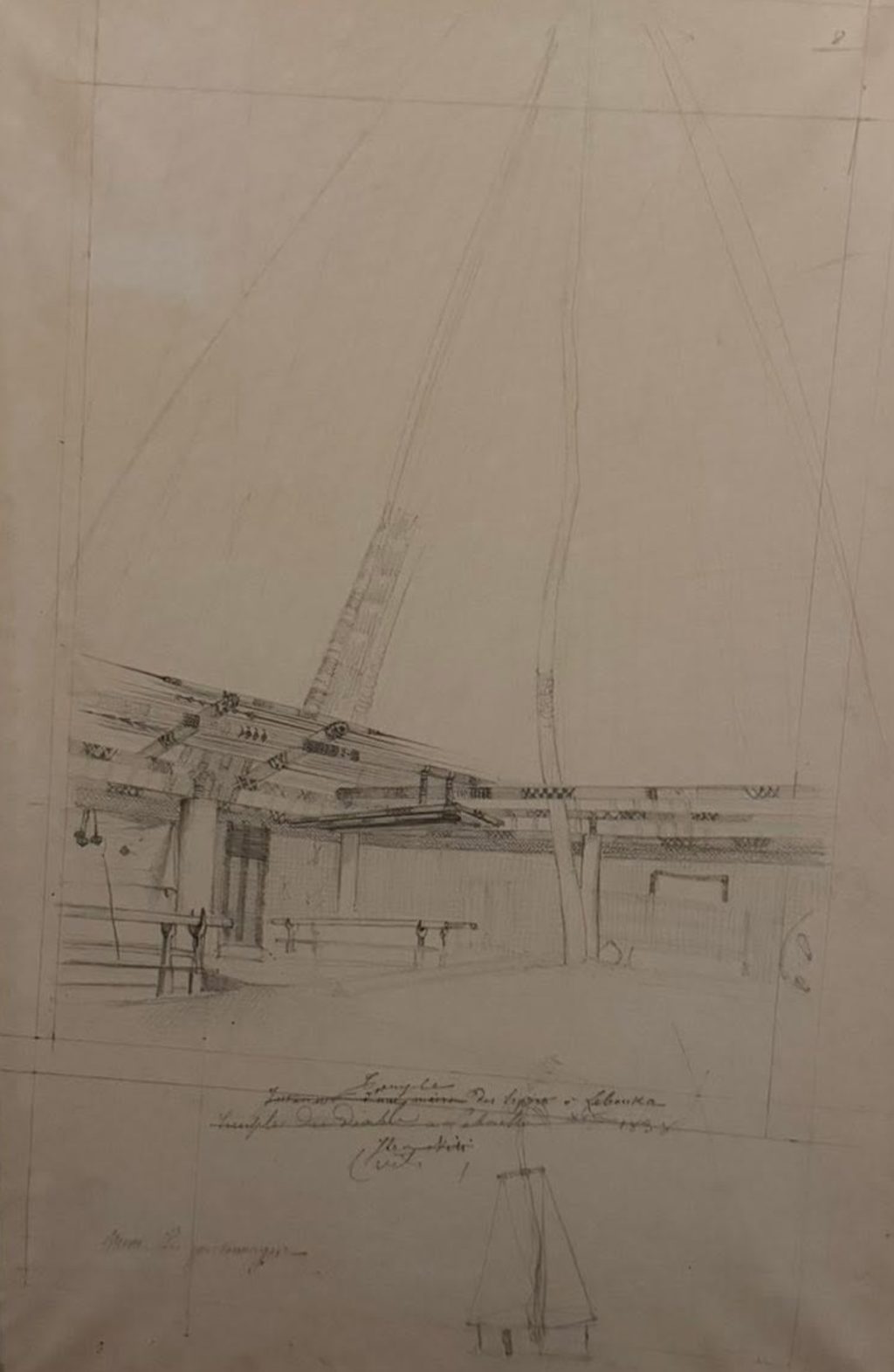
Left: The exhibition brought together drawings and engravings produced in connection with Dumont d’Urville’s expedition. Picture: MARAMA TALK
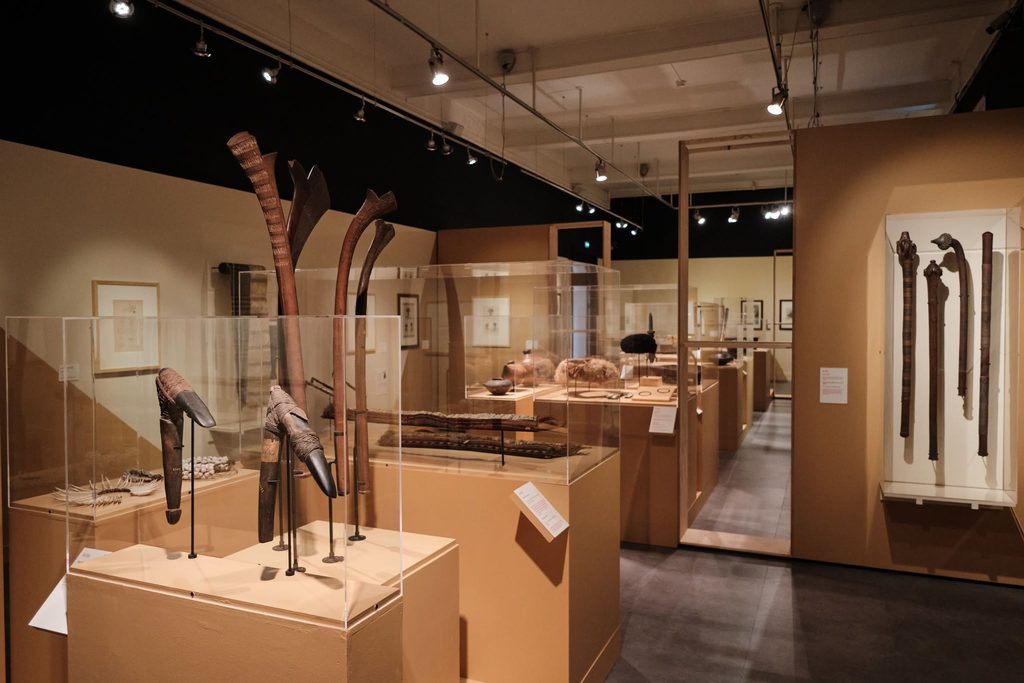
Right: The objects are fragments of a Fijian world — objects that carry questions about status, spirituality, craftsmanship, social organisation and the encounters between Fijians and Europeans in 1838. Picture: MUSÉE DU QUAI BRANLY – JACQUES CHIRAC
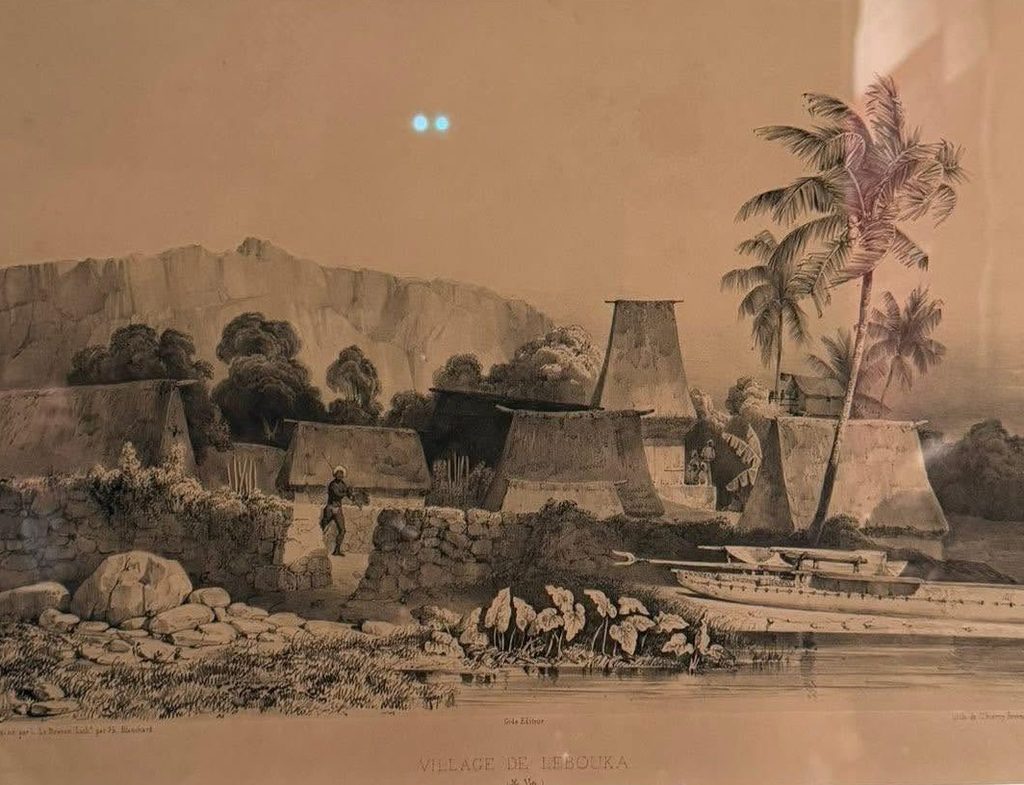
Right: The exhibition brought these objects together with the drawings of French artist Ernest Goupil, creating a visual and material record of Fiji at a significant moment in its history.
Picture: MARAMA TALK
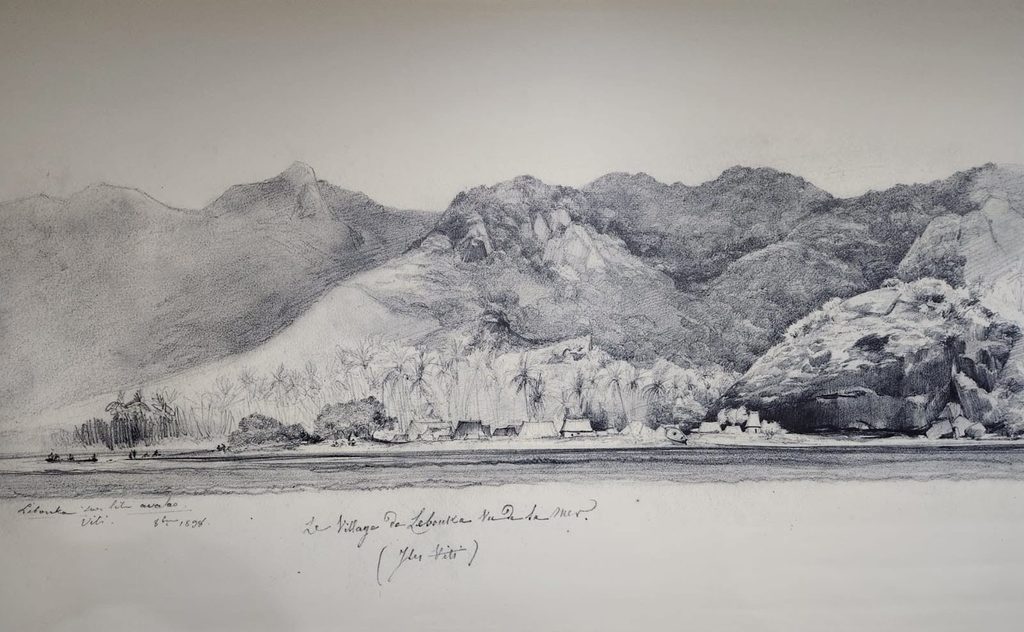
The importance of revisiting the collection lies partly in understanding the world in which these objects were made and used. The Fiji of 1838 was very different from the Fiji of today. Picture: FRENCH EMBASSY IN FIJI (MAIN PHOTO TO BE USED
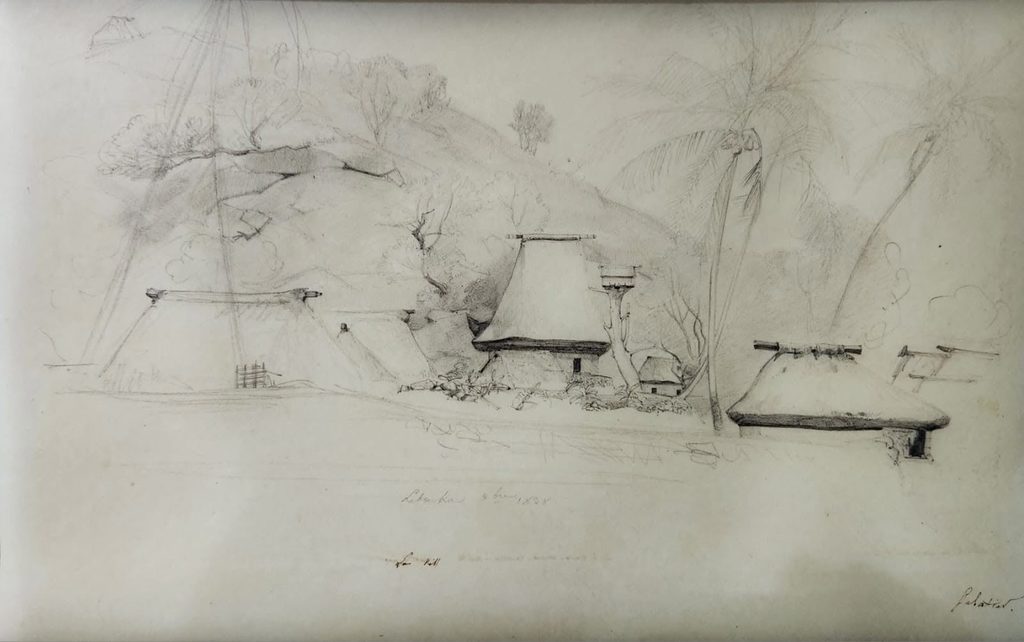
Above: One of the sketches on display during the exhibition.
Picture: FRENCH EMBASSY IN FIJI
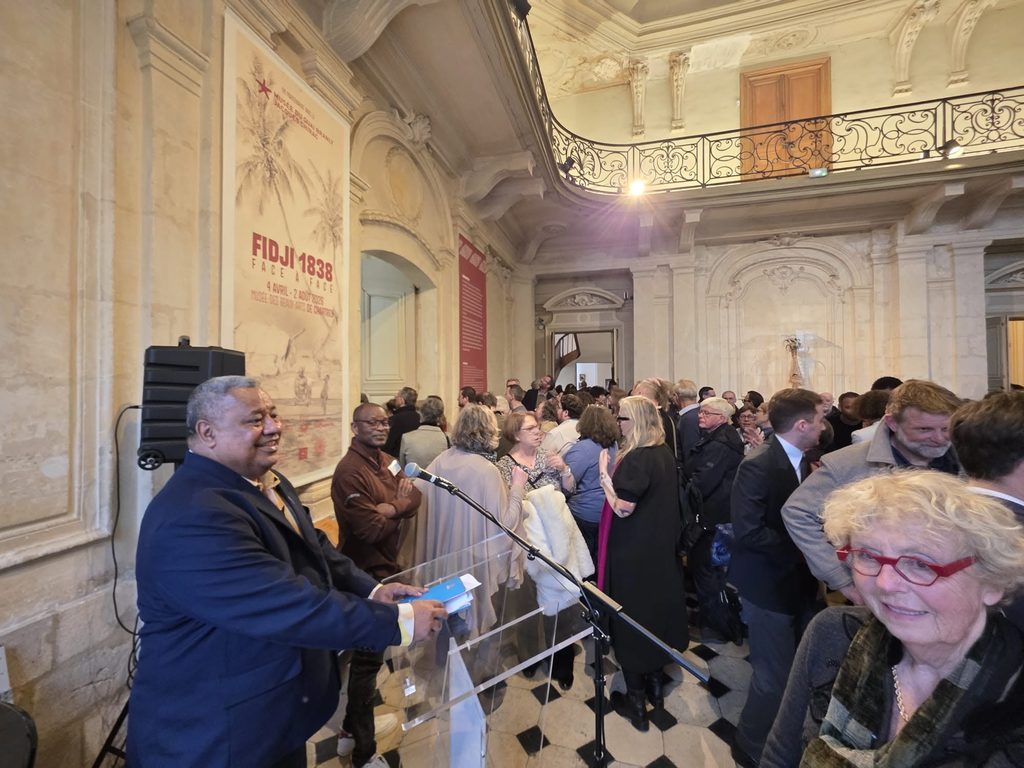
Above: The exhibition was held at the Musée des Beaux-Arts de Chartres from April 4 to August 2, 2026. Picture: FIJI MISSION GENEVA
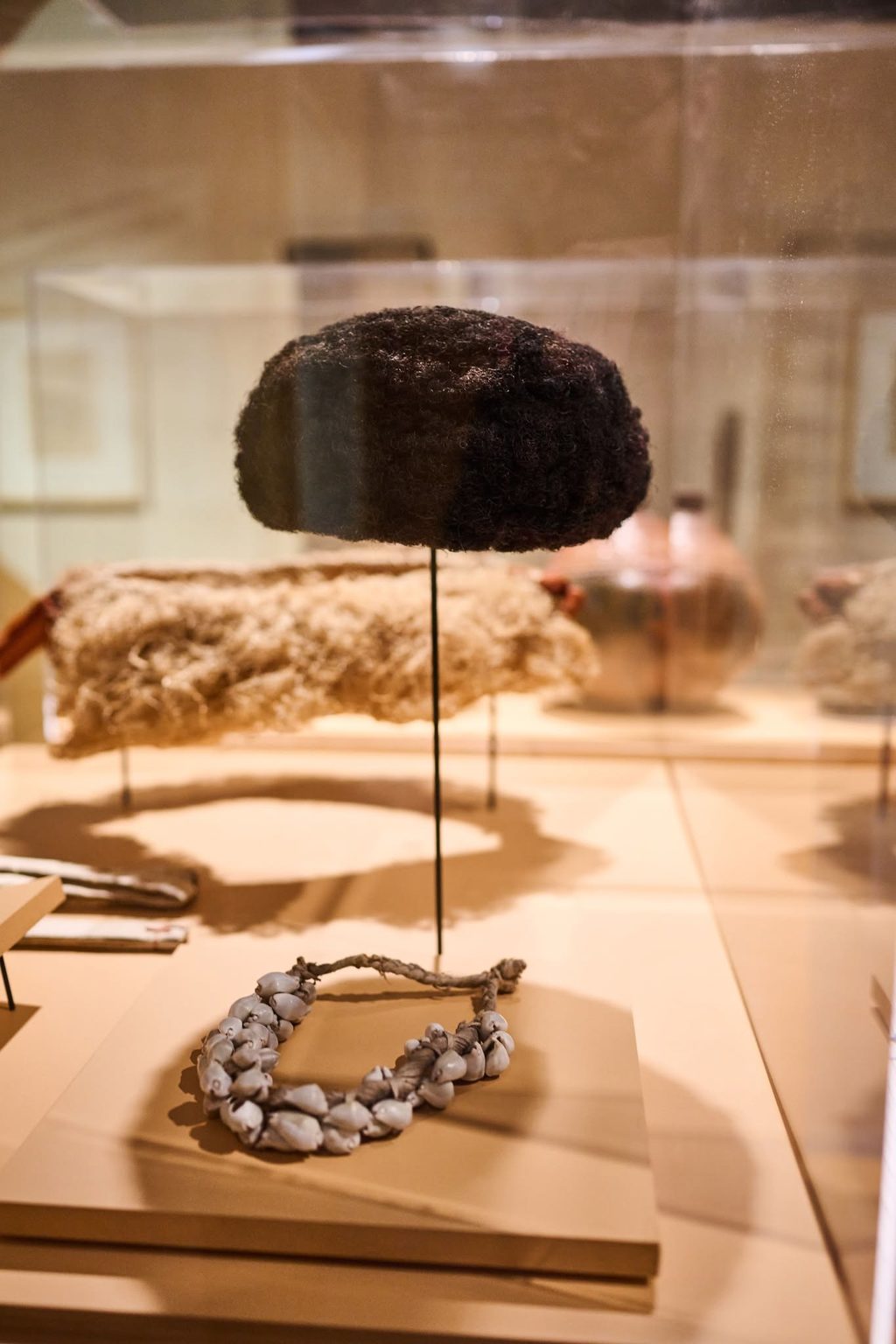
Below: The collection was not selected simply because the objects were old or visually striking, it was selected based on corresponded with those represented in Goupil’s sketches. Picture: MUSÉE DU QUAI BRANLY – JACQUES CHIRAC