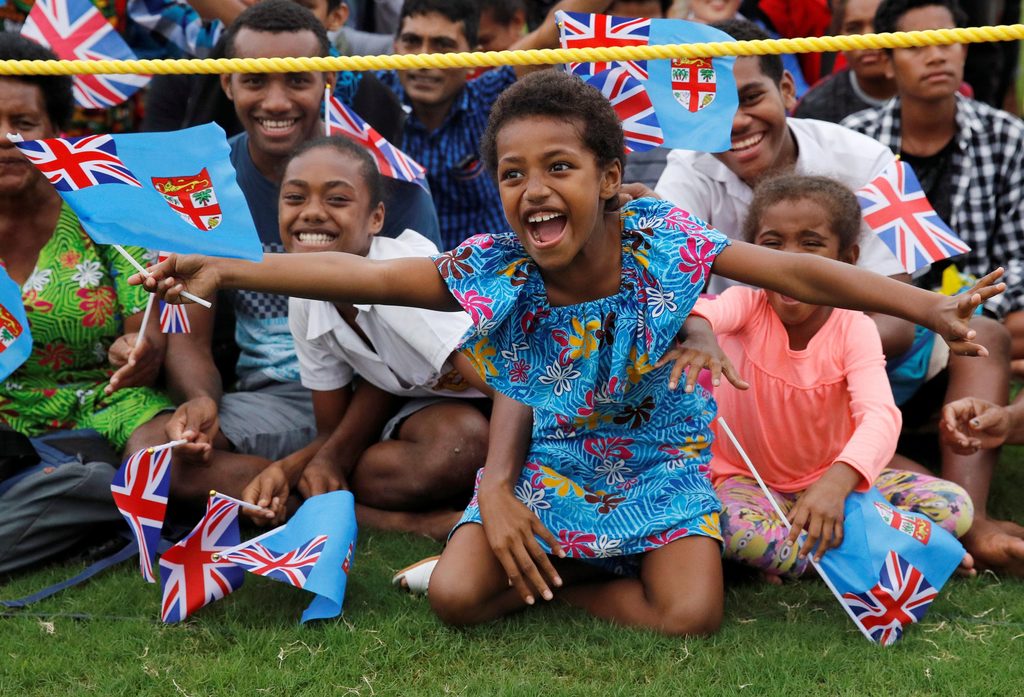
On October 10, Fiji will mark 56 years of independence.
Every year, the occasion gives us a chance to look back at where we have come from. But it is also a chance to ask a more important question: where are we going?
For me, one thing has become increasingly clear through the people I have met and the stories I have had the privilege of telling — Fiji is much bigger than its politics.
And this year has certainly given us plenty to talk about.
The country has been on something of a roller coaster, much like the term of the Coalition Government led by Prime Minister Sitiveni Rabuka.
The Coalition’s arrival in power in December 2022 was historic. Ten days after the polls closed, a new government was sworn in, bringing an end to the more than decade-long rule of Voreqe Bainimarama and Aiyaz Sayed-Khaiyum.
There was a genuine sense of optimism.
For many, it felt like a new chapter.
A government of change —
and challenges
The Government moved on several of its election commitments. The Media Industry Development Act was repealed, TELS debt was abolished and funding to the University of the South Pacific was restored. The Great Council of Chiefs was also reinstated.
There were other decisions that carried a strong personal and historical significance, including the lifting of the immigration ban on the late Professor Brij Lal and his wife, Dr Padma Lal as well as the return of Ratu Tevita Uluilakeba Mara leading to his historic installation as paramount chief of Lau.
But the Coalition’s journey has hardly been smooth.
The controversy surrounding the appointment of former FICAC Commissioner Barbara Malimali eventually led to a Commission of Inquiry. The increase in parliamentary salaries and allowances earlier on in the government’s term sparked widespread public debate.
There have also been questions surrounding ministerial conduct, political disagreements within the coalition, such as the aborted appointment of Filimoni Vosarogo as Attorney-General, removal then reinstatement of Aseri Radrodro and concerns over the size and cost of Government.
The legal cases involving Deputy Prime Minister Biman Prasad and Deputy Prime Minister Manoa Kamikamica have added another layer of political pressure, while the country’s worsening drug problem and HIV and AIDS situation remain serious national concerns.
These are important issues.
But they are not the whole story of Fiji.
Beyond Parliament
Because while we spend much of our time talking about politicians, political parties and governments, something else is happening quietly around the country.
Ordinary Fijians are getting on with the job.
Over the past year, I have had the opportunity to meet and write about some of these people. Their stories have reminded me that hope in Fiji is not an abstract idea.
It has a face and a name.
Take 22-year-old Epeli Salele Tikoyawa, a public health graduate and youth advocate determined to challenge the negative stereotypes surrounding communities such as Wainibuku and Nakasi.
Instead of accepting the narrative that these communities are defined by crime and social problems, he wants people to see their potential.
Then there is Rakesh Deo of Lautoka, a law graduate and former Suva City Council employee who chose a different path from what many might have expected.
He turned to agriculture, challenging the idea that university graduates must necessarily pursue conventional office careers.
Janet Reddy, granddaughter of the late Justice Jai Ram Reddy, grew up on a small semi-rural farm outside Lautoka. Her early connection with nature eventually led her to pursue a PhD in marine science and conservation at Duke University. Today, she is also an advocate for social cohesion and national unity.
Margaret Tabutoa, meanwhile, has broken ground in a traditionally male-dominated field. As the only woman currently serving in the Hydrology Division of the Fiji Meteorological Service, her story is a reminder of the contribution women can make across every part of Fiji’s economy and society.
And the stories continue.
In Namuaimada along the Ra coastline, women have turned diving for nama, or sea grapes, into an important source of livelihood and are the economic backbone of the village.
On Beqa, Eroni Dolodoi has spoken openly about his time in prison and how returning home to work the land helped him rebuild his life with dignity and purpose.
From Labasa, young content creator Anush Maharaj has used TikTok to achieve two Guinness World Records while advocating greater responsibility among Fiji’s growing online community.
Then there is Semisi Qalica, who has spent two decades building SIMS The Barber Fiji, modernising his business while remaining grounded in the iTaukei concept of veiwekani.
I could go on.
There are teachers, farmers, nurses, entrepreneurs, scientists, tradespeople, community workers and young people across this country quietly doing their part.
They may not make the headlines every day or stand behind a parliamentary podium.
But they are moving Fiji forward.
The Fiji we choose
That is worth remembering as we approach another election.
Government matters. Parliament matters. Political parties matter.
But they are not Fiji.
We are.
The people who wake up every morning, go to work, tend their farms, run businesses, raise families, study, create, innovate and serve their communities are the people who ultimately keep this country moving.
That does not mean Government has no responsibility. Quite the opposite.
Fiji needs leadership that creates the conditions for its people to succeed — through effective institutions, responsible public spending, quality education, skills development, opportunities for young people and an economy capable of competing in an increasingly challenging world.
But choosing the political direction Fiji takes next belongs to its citizens.
Our reason to hope
As we celebrate 56 years of Independence, I keep coming back to the people whose stories I have encountered.
They remind me that Fiji’s story is not simply about who sits in Parliament or which party holds power.
It is about the young person, the graduate, the aspiring scientist, the woman breaking barriers in her profession, the man rebuilding his life, the novice content creator navigating the digital world, and the entrepreneur modernising a traditional trade.
These are some of the faces of Fiji.
And perhaps that is what we should remember this Fiji Day.
Fiji still has plenty of challenges ahead.
But there is also plenty of reason to hope.
That hope is not sitting somewhere in Suva waiting for a politician to deliver it.
It is already here in our villages, towns, cities, farms, schools, workplaces and communities.
It is in our people.
And 56 years after Independence, perhaps that is the Fiji we should be celebrating.