THERE is something fascinating about seeing Fiji through the eyes of someone who visited our shores almost 200 years ago.
More so when those observations were captured by hand, long before cameras, photographs and modern recording equipment existed.
Fijian-French artist, writer, poet and baritone singer Samson Verma believes these historical illustrations are more than beautiful works of art because are windows into a past that many Fijians today know very little about.
Having spent nearly three decades in Paris, France, Mr Verma has become an important cultural link between the Pacific and Europe, with a particular interest in preserving and sharing indigenous knowledge.
I had the privilege of joining Nai Lalakai editor Sailosi Batiratu on a tour of the Fiji Museum’s newest gallery of indigenous art and artefacts, guided by Mr Verma.
What began as a walk through the gallery quickly became an absorbing lesson in Fiji’s history, traditional spirituality and the often-overlooked stories behind some of our most treasured cultural objects.
A young artist’s journey to Fiji
One of the most interesting accounts centred on a young French artist named Ernest Goupil, who visited Fiji in 1838.
In the 19th century, it was customary for European expedition teams to have an artist or sketcher aboard their vessels.
Photography had yet to become commonplace, so these individuals were responsible for documenting the people, landscapes, architecture and encounters along the way.
Goupil was just 24 when he joined a French expedition to Fiji. During the two weeks he spent here, he sketched almost everything he encountered.
The expedition entered Fiji through the Lau Group, travelling island by island with instructions to make enquiries at Bau.
The French voyage was reportedly seeking information, and possibly further action, against Fijians who had attacked a French vessel and killed much of its crew.
At the time, Bau was emerging as a major political and military power under Vunivalu Ratu Tanoa Visawaqa, father of the future Vunivalu, Ratu Seru Cakobau.
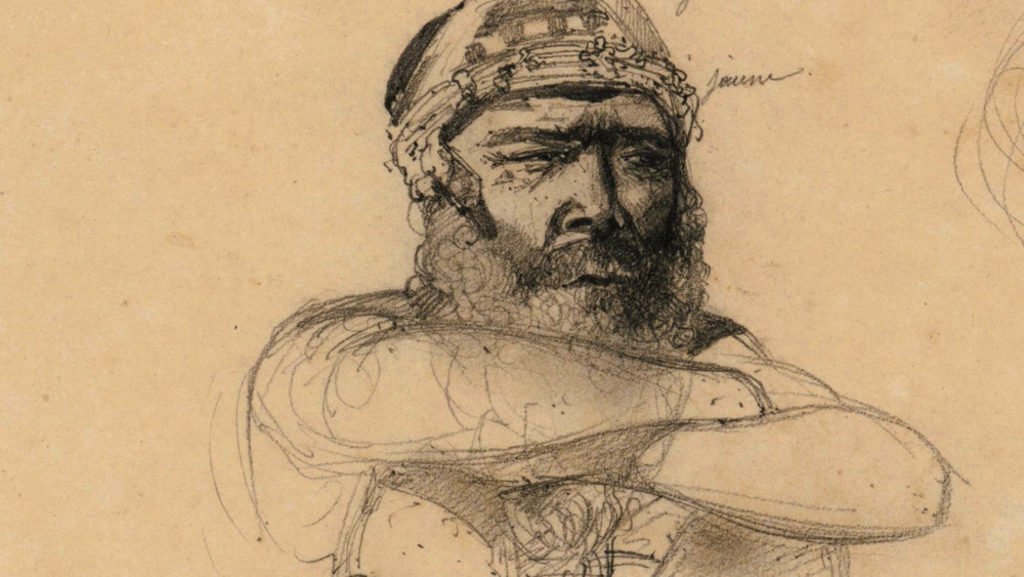
A striking portrait of Ratu Tanoa now displayed at the Fiji Museum is an exact replica of Goupil’s original 1838 sketch.
But it is not simply the chief’s appearance that makes the illustration remarkable. It is what he wears.
Ratu Tanoa is depicted wearing a wakula, a rare and highly sacred chiefly headband decorated with the vibrant red and blue feathers of the kula bird.
Such adornments were reserved for chiefs and priests of particularly high standing.
Mr Verma explained that very few examples of the wakula remain today, with some held by the Smithsonian Institution in the United States.
He also noted that Goupil’s written description recorded the colours as red and yellow.
When history is altered
Sadly, Goupil never made it home to France. He became ill during the return voyage and died in Tasmania, Australia.
His death had consequences beyond the loss of a young artist. Ordinarily, he would have supervised the engravers in France responsible for reproducing his sketches as wooden printing blocks.
Without his guidance, the engravers introduced their own interpretations and alterations.
Mr Verma believes this is an important distinction when examining historical European illustrations of Pacific Islanders.
European artists and publishers sometimes approached the Pacific with preconceived ideas about its people.
When original observations were altered to suit those expectations, the resulting images helped reinforce racial stereotypes and misconceptions about early Fijian society.
This is why the Fiji Museum’s decision to give prominence to Goupil’s original sketches is so important. They offer a closer look at what an artist actually witnessed, rather than a later interpretation of what others imagined Fiji to be.
Levuka through the eyes of a French artist
Another illustration that caught our attention was Goupil’s drawing of Levuka village on Ovalau.
Apart from showing the architecture of the settlement, the sketch provides a glimpse of the surrounding natural environment, offering a historical comparison with the landscape we see today.
As Mr Verma pointed out, such drawings are increasingly valuable in understanding how Fiji’s coastal environments have changed through time, including the effects of rising sea levels and climate change.
However, it was an illustration of a bure kalou, or traditional spirit house, that perhaps sparked the most intriguing discussion during our visit.
Within the structure, a tree appeared to grow directly through its centre, almost as though the building had been constructed around it.
I began to wonder what the significance of the tree was.
Mr Verma shared that he had discussed the illustration with indigenous knowledge advocate Simione Sevudredre, who introduced him to the traditional account of the vesi vuka associated with Vagadaci village in Levuka.
According to the story, the leaves of this particular tree do not fall in Levuka but somehow end up in Bua, on Vanua Levu.
Mr Batiratu suggested a possible connection with the people of Solevu in Bua, who may have served as the bete, or traditional priests hence their connection to the spirit house in Levuka.
The spiritual world of the bure kalou
Mr Verma also explained the significance of the sala ni kalou, sometimes called the sala ni tukutuku.
Traditionally, this was a large white masi tapestry hanging from the ceiling towards the ground inside a bure kalou.
It represented the pathway through which a spirit god or deified ancestor communicated with the priest.
Could the tree depicted in Goupil’s illustration have served a similar purpose?
It is a fascinating possibility, although one that invites further research and consultation with traditional knowledge holders.
What became increasingly clear during the discussion was that traditional Fijian spirituality was far more complex than the simple idea of a single village having one place of worship.
Mr Verma explained that villages traditionally had multiple bure kalou, belonging to the different clans and sub-clans, each with their own spiritual identities and deified ancestors known as Vu or Kalou Vu.
There were also smaller, portable versions of these sacred structures.
These were not miniature models, as some people in France had assumed, but functioning shrines that families and chiefly groups could carry when travelling by canoe or overland.
Within them were sacred representations, including figurines known as Kalou Yalewa or Kalou Vu.
The mystery of Radini Waimaro
One particularly significant example was the now-missing Radini Waimaro figurine. Meaning Queen of Waimaro, the nine-inch ivory carving was made from the tooth of a sperm whale, or tabua, and was believed to possess spiritual mana.
Last documented by Australian National University researcher Aubrey Parke in 1997, its disappearance sent shockwaves through the heritage community.
It remains listed on the International Council of Museums’ Red List of endangered cultural objects, with hopes that it will one day be located and returned to its traditional home in Naitasiri.
Preserving more than artefacts
Stories such as these remind us that our museums are not simply buildings filled with old objects.
They are repositories of identity, knowledge and memory.
Every drawing, carving, ornament and artefact carries a story, sometimes one that has survived generations and sometimes one that is still waiting to be properly understood.
Mr Verma also raised an important point about the need for adequate funding and support for the Fiji Museum.
It is difficult to disagree. If we are to preserve our cultural inheritance, we must invest in the institutions and people responsible for safeguarding it.
Perhaps the greatest lesson from our visit was that Fiji’s history is not confined to the pages of textbooks or the recollections of our elders.
Much of it is still sitting in our museums, waiting for someone to take a closer look. And sometimes, all it takes is an old drawing, a curious tree and a willingness to ask questions.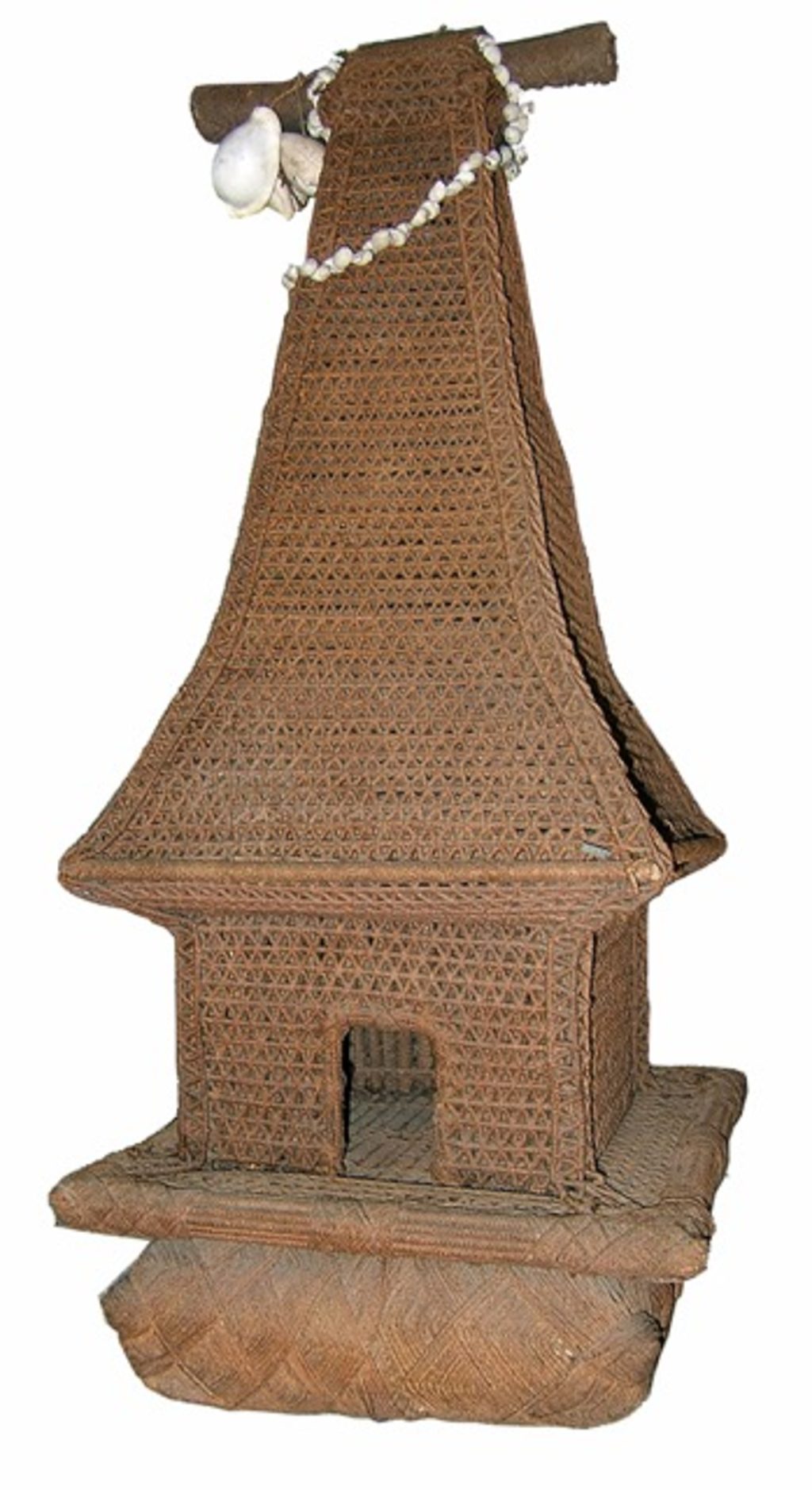
A model of the Bure Kalou that would hold Kalou Yalewa and Vu idols or figurines. Picture: OCEANIC ART SOCIETY/ROD EWINS
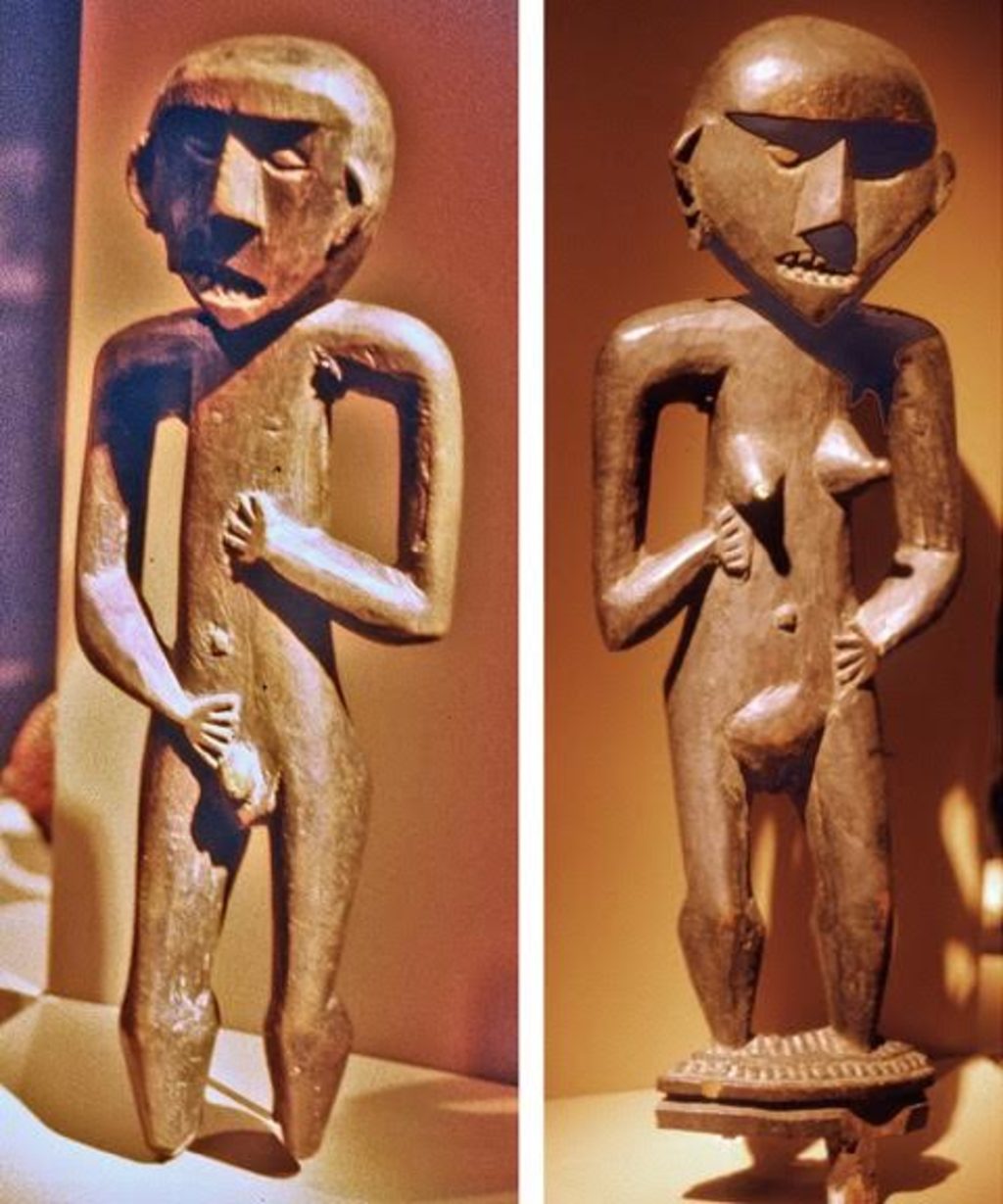
Left: Kalou Vu and Kalou Yalewa idols. Picture: OCEANIC ART SOCIETY/ ROD EWINS
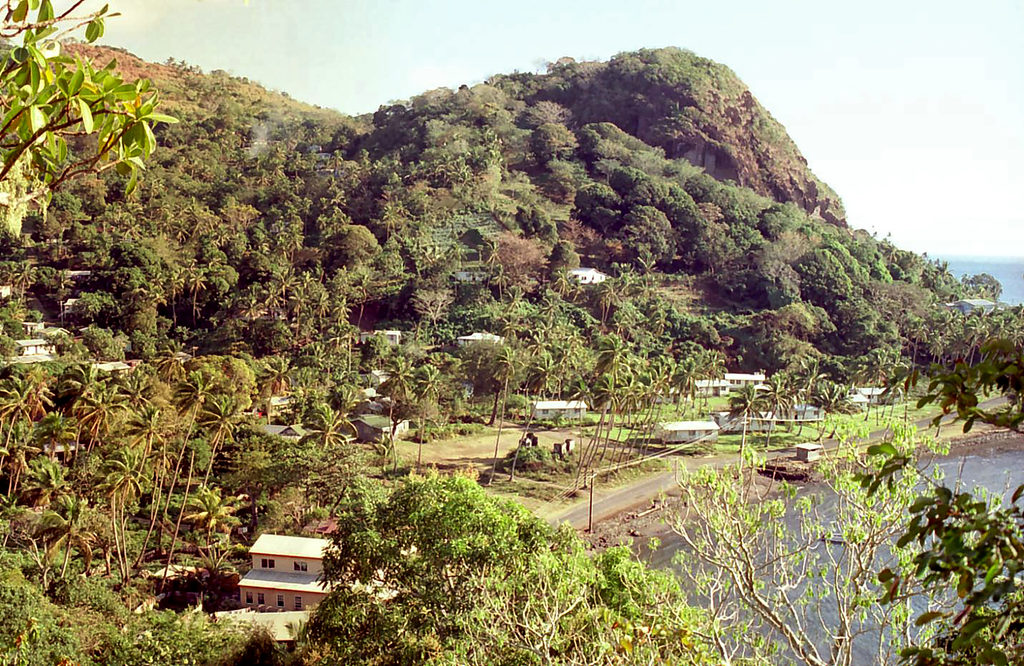
Vagadaci village in Levuka, Ovalau, where traditional accounts of the vesi vuka tree offer a fascinating glimpse into the spiritual beliefs and indigenous knowledge of Fiji’s past. Picture: IAN FEGENT
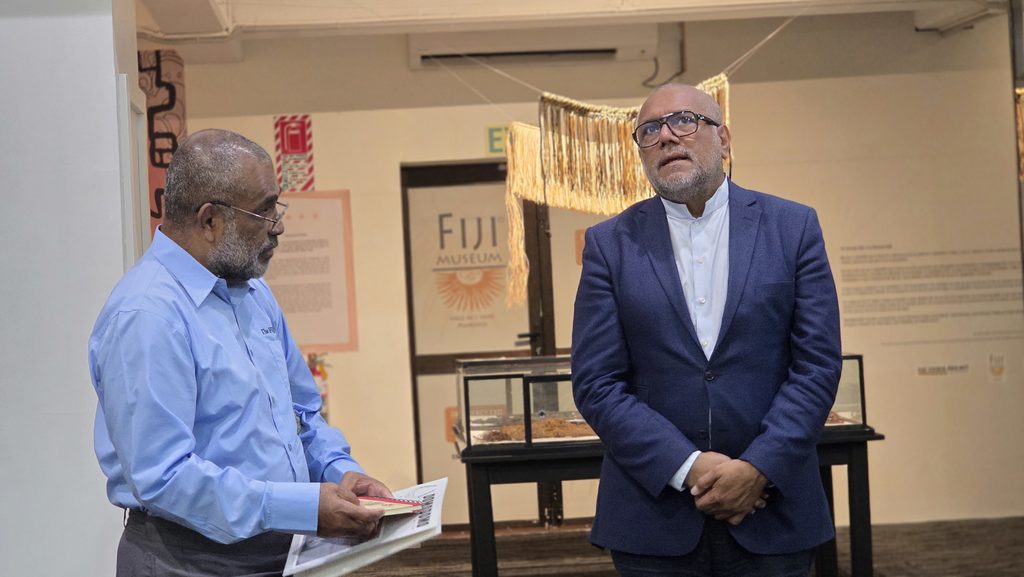
Fijian-French artist Samson Verma (right) shares historical insights with Nai Lalakai editor Sailosi Batiratu during a tour of the Fiji Museum’s newest gallery of indigenous art and artefacts. Picture: ALIFERETI SAKIASI