It has been exactly 31 years since I was last there, yet I have carried with me so many cherished memories. I still remember the canteen lady who always had a kind heart for students who were short of money. Then there was Master Shukala, who was so tall he could reach up and stop the ceiling fan with his hand.
Holy Trinity Anglican School sits nestled along McGregor Road, in the shadow of Fiji’s tallest building next door. Each time I pass by on my way to work, I am reminded of the memories and nostalgia attached to the place.
Spearheaded by the Holy Trinity Anglican Church, which was first established in Levuka in 1870, the school has a history closely linked to the Anglican Church’s educational mission in Fiji.
The Church came under the administration of the Diocese of Polynesia, established following the consecration of its first bishop in 1908. The parish cathedral in Suva was constructed in several stages, beginning in the 1930s.
There is very little information about the school’s history available online. While it was initially described as a school for part-European children during the colonial period, historical documents obtained by this newspaper confirm that its Anglican foundation was dedicated to providing a multi-racial, ecumenical and inclusive education.
Its history in the 1960s was therefore one of both achievement and challenge — a young school finding its place in Suva while responding to a demand that was already greater than its capacity.
From its beginnings in the Parish Hall to its move into the colonial-era property along McGregor Road in 1961, and its growth to about 200 pupils by 1968, Holy Trinity School (HTS) had established itself as an important part of the Anglican Church’s educational mission in Fiji.
Humble beginnings
The Diocesan authorities, with support from the Williams Trust in New Zealand, secured a large property in central Suva to become the permanent home of Holy Trinity Primary School.
The property, formerly the residence of the manager of the Bank of New South Wales, had more than 6000 square feet of floor space.
Although the purchase had not yet been fully paid for, the school had taken possession and moved in its equipment, with minor alterations underway to convert the building into classrooms.
A new sanitation block was the main addition required, with hopes that the school would be ready to open at the property at the beginning of the new school year on January 30, 1961.
The move was described as an unexpected development, particularly as the school had only opened in temporary premises at the Parish Hall in 1960. The centrally located property was regarded as a major opportunity for the school and a venture of faith.
HTS’s early years were marked by modest beginnings, rapid growth and a determination to provide children with a Christian education in Suva.
After its first two years, the school had begun moving beyond the limitations of temporary accommodation. Extensive interior alterations to its premises provided three classrooms, a library and an office, while another area housed the piano and served as an assembly room or additional classroom when required.
A smart noticeboard outside the school, with white lettering against a rich blue background, announced its presence to the wider community. The substantial galvanised piping used for its frame appeared to symbolise something more permanent — a school intended to remain and grow.
The beginnings, however, were far more humble.
When Holy Trinity School first opened, it was housed temporarily in the Parish Hall. The location was considered unsuitable for a permanent school, with continual traffic passing its doors. As the school demonstrated its value and began attracting more pupils, the Anglican Church recognised the need to secure a more suitable property.
That opportunity came when a house formerly occupied by the manager of the Bank of New South Wales became available.
The purchase placed a considerable financial burden on the Church, but assistance came from the H. & W. Williams Memorial Trust, which responded to an appeal with an interest-free loan of £5000. The bank also provided a favourable mortgage arrangement for the remaining £15,000 of the purchase price.
The new premises gave Holy Trinity School room to develop and marked an important milestone in its history.
The school opened its doors at the new property on January 30, 1961, welcoming 74 old and new pupils. Earlier reports had anticipated an increased roll of up to 70 pupils, with further room available for expansion.
The first weeks were far from straightforward. Staff and pupils had to adjust to the new quarters, which had been prepared and occupied in great haste.
Construction of a new toilet block added to the disruption, with the noise of a concrete mixer regularly interrupting lessons.
The heat was another challenge, with temperatures reportedly remaining around 90 degrees.
Despite these difficulties, the school’s new home was described with considerable pride. The property consisted of an older-style colonial house of generous proportions, standing on approximately two and a half acres of lawns, spreading trees and palms.
The surroundings provided Holy Trinity School with an environment in which it could establish itself and grow.
Yet the move did not mean the school’s challenges were over. Instead, the Church saw the growing school as becoming increasingly important to its wider development and mission.
At just 17 months old, Holy Trinity School was still operating from an old house and had a long way to go before it could be regarded as an established educational institution.
But the vision was already there — to build something that would serve the community for generations.
Early students at Holy Trinity School
The early story of Holy Trinity School was not simply about buildings and classrooms. At its heart were the children.
The school’s philosophy was rooted in the words of Christ: “Suffer the little children to come unto Me, and forbid them not.”
The school’s early accounts describe a diverse roll of children drawn from different cultural and religious backgrounds.
Indian children included pupils with names such as Yasmin, Ramesh, Nazreen, Lachmi, Mangesh, Muazam, Shakuntala and Nirmala.
There were also Fijian and Tongan children, including Iliatia, Aliti, Semesa, Isekeli, Supileo, Tevita and Filimone.
Biblical names were also common, with pupils including Paul, Rachel, Mark, Sarah, Joseph, Martha, Abraham, Mary and Luke.
The school’s early writings emphasised that these children were much more than names on a roll. They came from different families, communities and circumstances, but shared the same classrooms as pupils of Holy Trinity
One example was a nine-year-old Chinese boy who was the eldest of four children. Two of his younger sisters also attended the school.
Outside school hours, he helped his father in a flourishing general store, weighing goods and serving customers.
Despite having attended school for only about 18 months, he was already progressing through his English reading program.
Another pupil described was an eight-year-old Indian girl known for her bright smile and lively personality.
She was in Primer Four, progressing well with her schoolwork and showing considerable initiative. Her father sold native tobacco at the Suva Market.
These individual stories illustrated the character of the young school and the diversity of the children it served.
More than a mission school
Holy Trinity School was established as a mission school, but its purpose extended beyond the narrow idea of a place where children simply received religious instruction.
The early account challenged the popular image of a “mission school” as little more than a five-day Sunday school, or of missionary teachers as distant figures concerned only with preaching.
Instead, Holy Trinity was developing as a school within a changing Fiji, bringing children together for education while maintaining its Christian foundation.
Its early years reflected the wider mission of the Anglican Church in Fiji — serving communities through education, faith and practical engagement.
The school’s growth also reflected a significant need within the community.
Challenges in 1968
By 1968, Holy Trinity School was in its ninth year and facing a serious problem: demand for places was far greater than the school’s capacity.
The roll had grown steadily, although slowly, to about 200 pupils.
That represented considerable growth from the school’s early years, when the roll had stood at around 50. However, the school’s leaders believed the figure could have been much higher.
The fundamental problem was space.
The school could accommodate only about 200 children, meaning that for every child admitted, three or four others were turned away.
The school’s account described the situation as urgent, stating that the failure to address the problem had resulted in hundreds of children being denied the opportunity to attend Holy Trinity over the preceding years. Some found places in other schools, while others were left without formal education. The problem was therefore not simply one of expanding the school roll. It was about meeting an unmet educational need in Fiji.
Holy Trinity’s experience demonstrated how quickly a small mission school could grow once a community recognised its value.
And that sense of community and belonging would continue to define the school decades later.
Strong support from parents and ex-scholars
Fast-forward to 2026, and that connection remains strong. School hopes to get a new building constructed.
Joined efforts by parents, teachers, old scholars and the Anglican Church raised more than $64,000 towards the second phase of a school project, demonstrating their commitment to giving back to the institution that helped shape their lives.
Former pupil and Parents, Teachers and Friends Association member Salanieta Nayacalevu expressed her gratitude to ex-scholars, both locally and overseas, for their overwhelming support and contributions. She said the strong turnout and willingness of former students to give back to their alma mater demonstrated the true meaning of the school’s motto, “Unity in Holy Trinity”.
Ms Nayacalevu said the funds were raised through various contributions and fundraising efforts, with the school expected to provide an official update once the final tally was completed.
She described the occasion as a historic success and thanked everyone who attended or contributed towards the cause.
“This is just the beginning of our HTAS Old Scholars,” she said, adding that further updates on future plans would be shared soon.
She said the support reflected the strong bond former students continued to share with their school and their commitment to its future.
“Vinaka vakalevu to all old scholars for making a difference. Old Scholars pool remains open to any soli or donation per year for this project,” she said.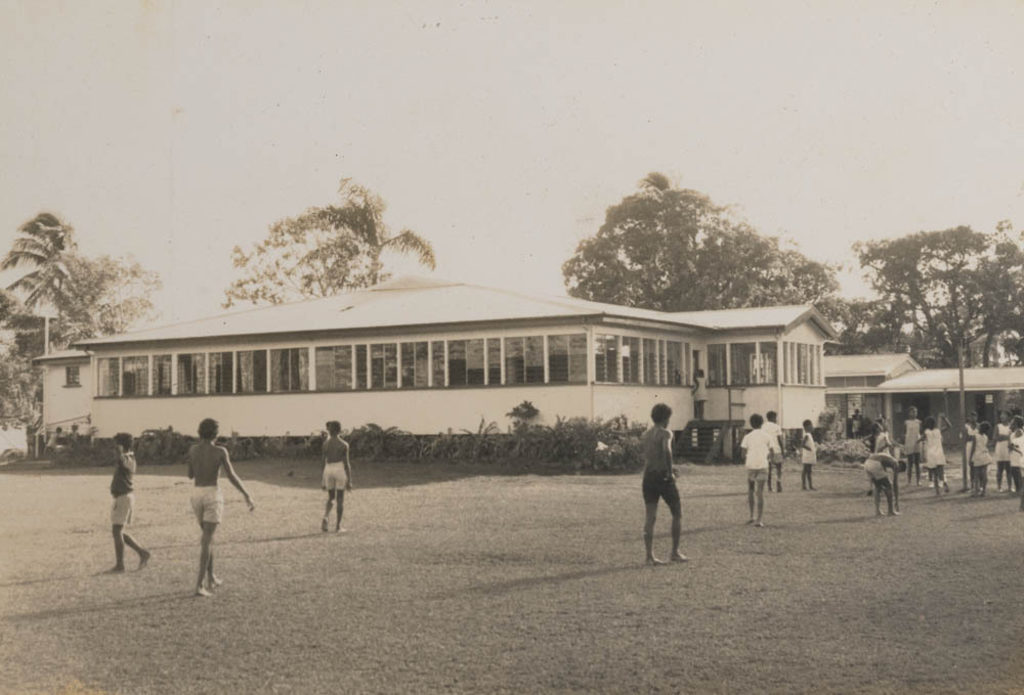
Right: Play Time… The playground where memories and friendship were forged. Picture: Courtesy of Holy Trinity Church Archdiocese, Suva
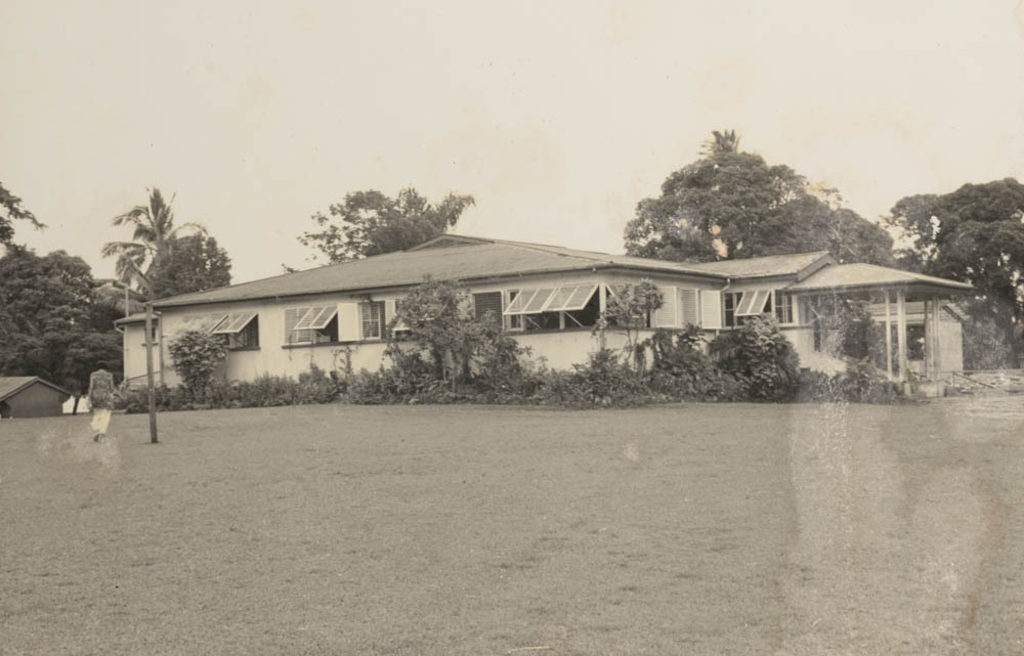
The old school in it original form. Picture: Courtesy of Holy Trinity Church Archdiocese, Suva
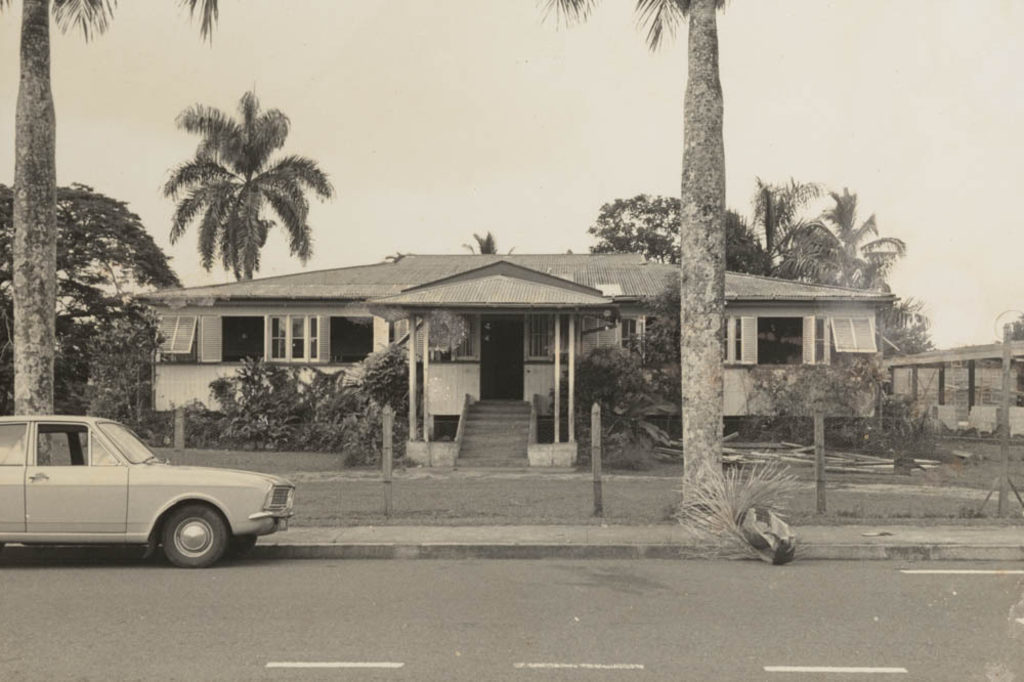
The front view of the old school and on the far right the construction of new classroom. The palm stand as a icon guarding the school.
Picture: Courtesy of Holy Trinity Church Archdiocese, Suva
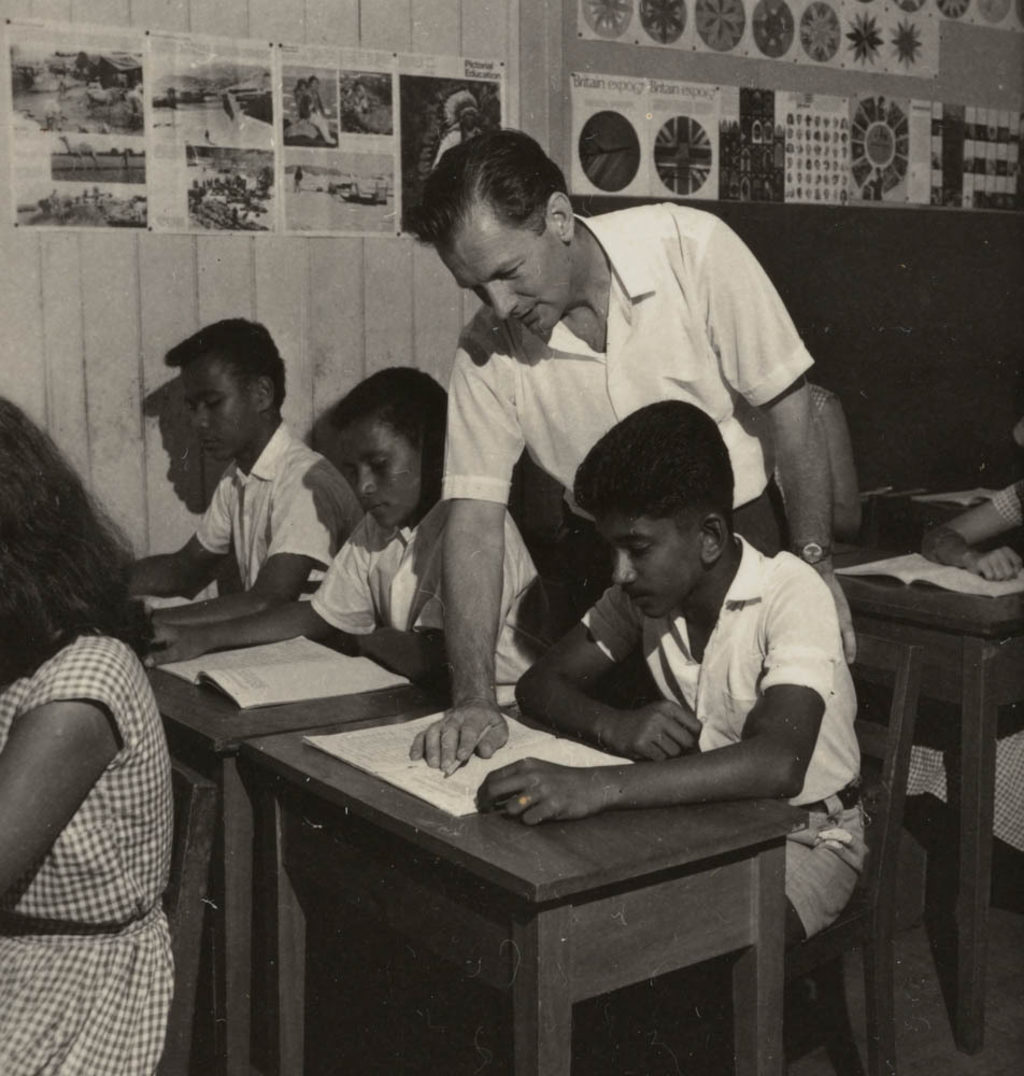
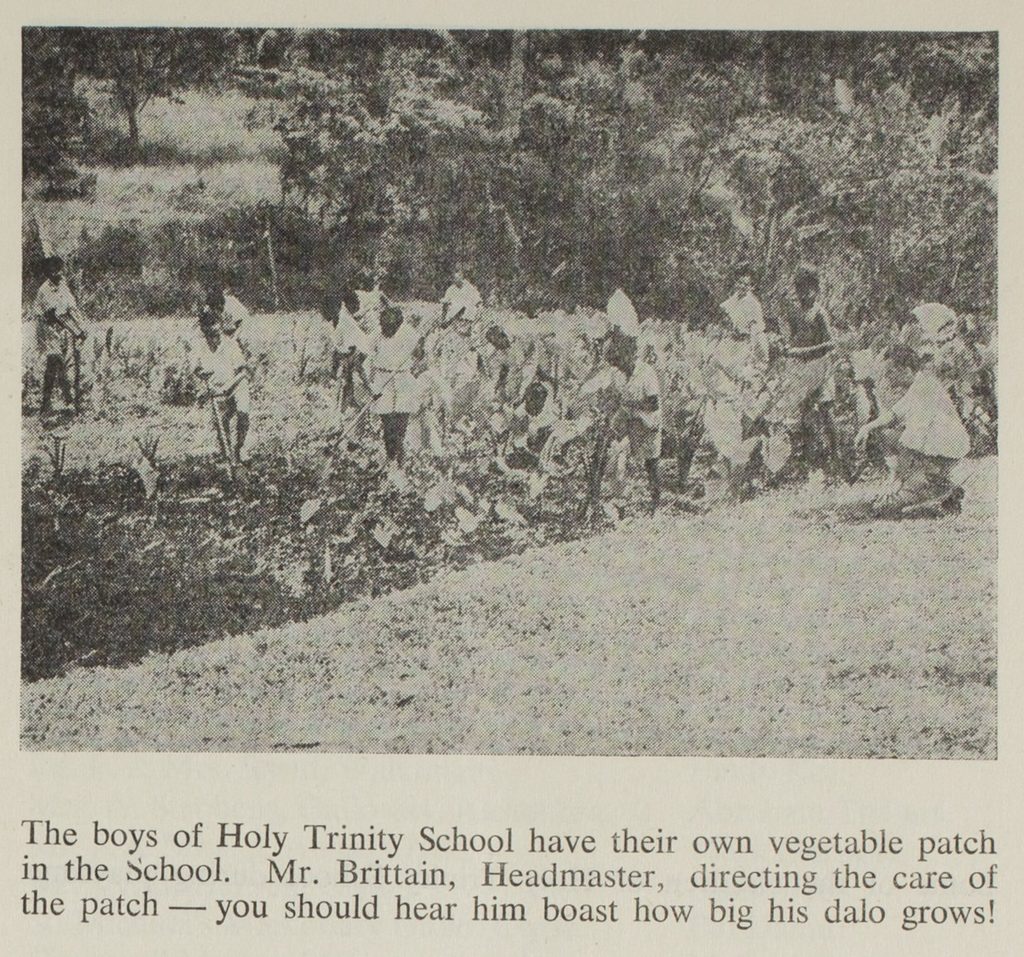
Master Laurie Brittain during class. Picture: Courtesy of Holy Trinity Church Archdiocese, Suva
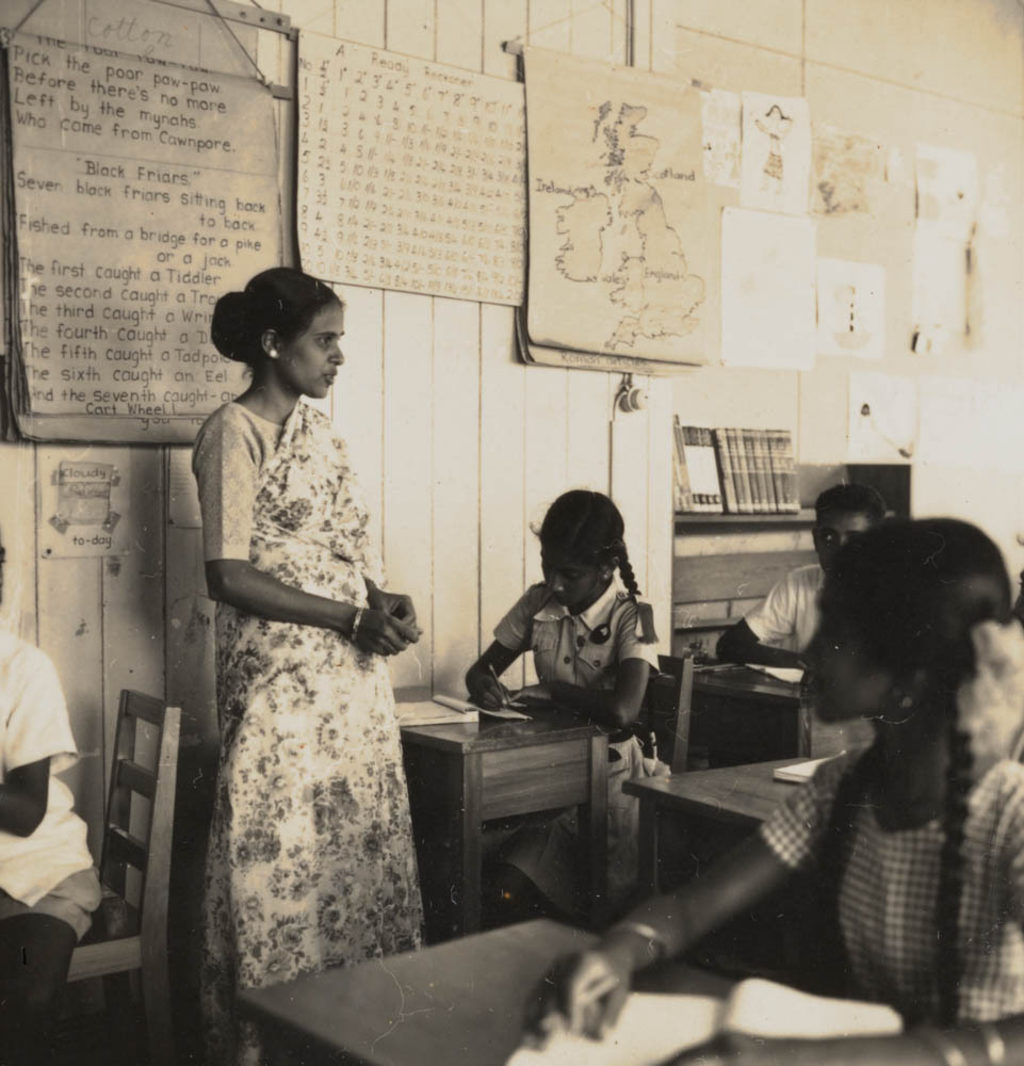
school teacher Mrs Singh remain for many early with HTAS. Picture: Courtesy of Holy Trinity Church Archdiocese, Suva
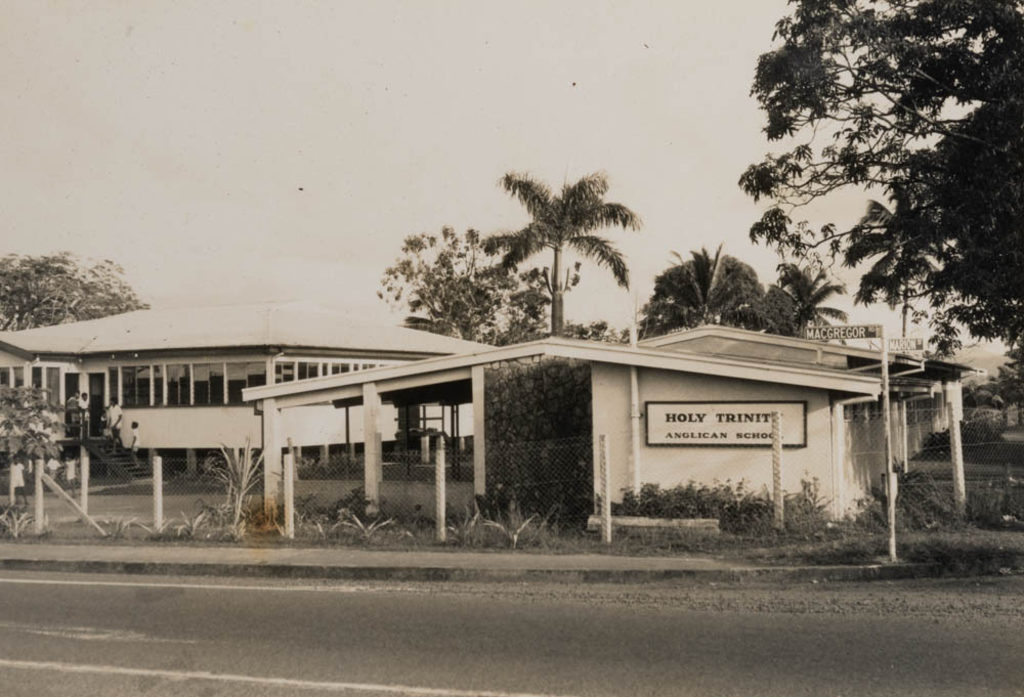
The school pictured here in the late 70s and early 80s. Picture: Courtesy of Holy Trinity Church Archdiocese, Suva
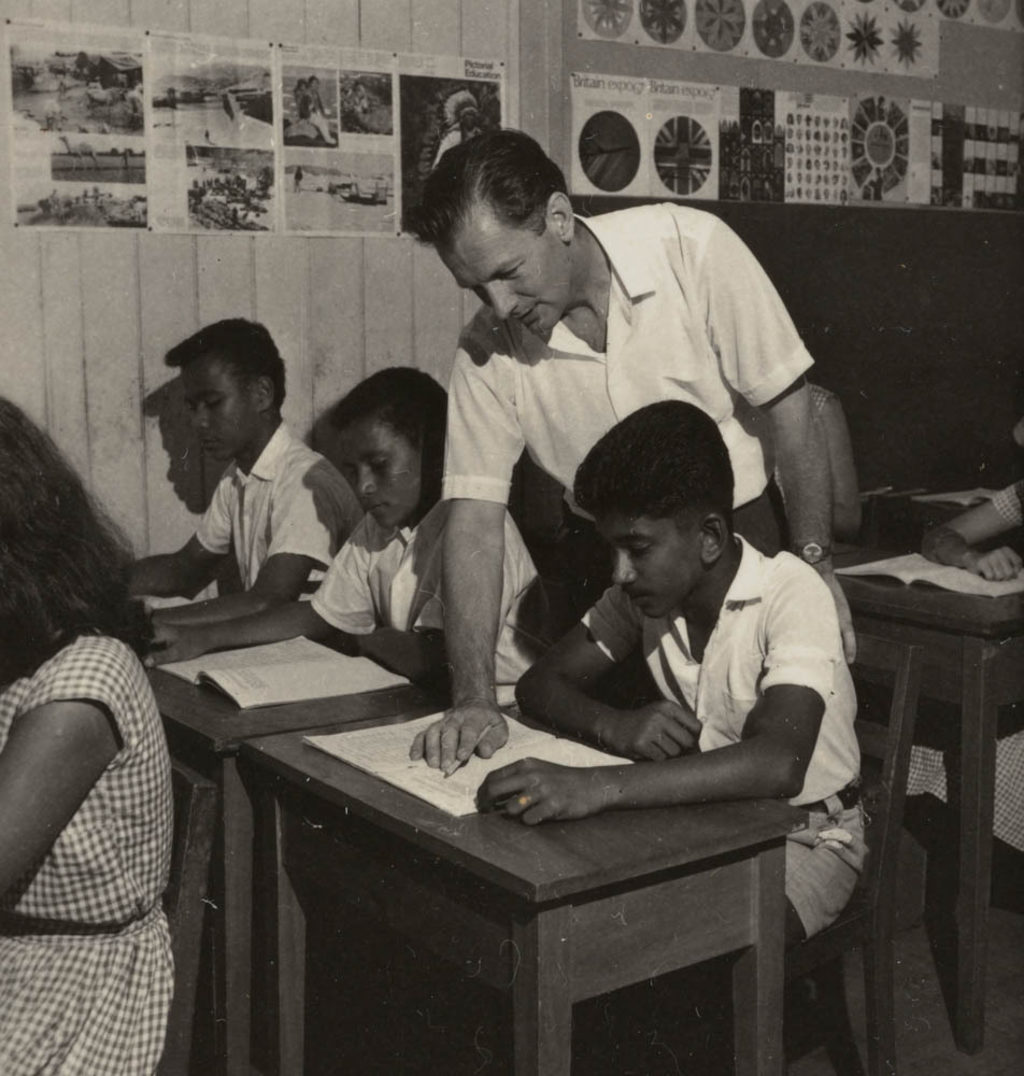
Holy Trinity School first headmaster Laurie Brittain in class.
Picture: Courtesy of Holy Trinity Church Archdiocese, Suva
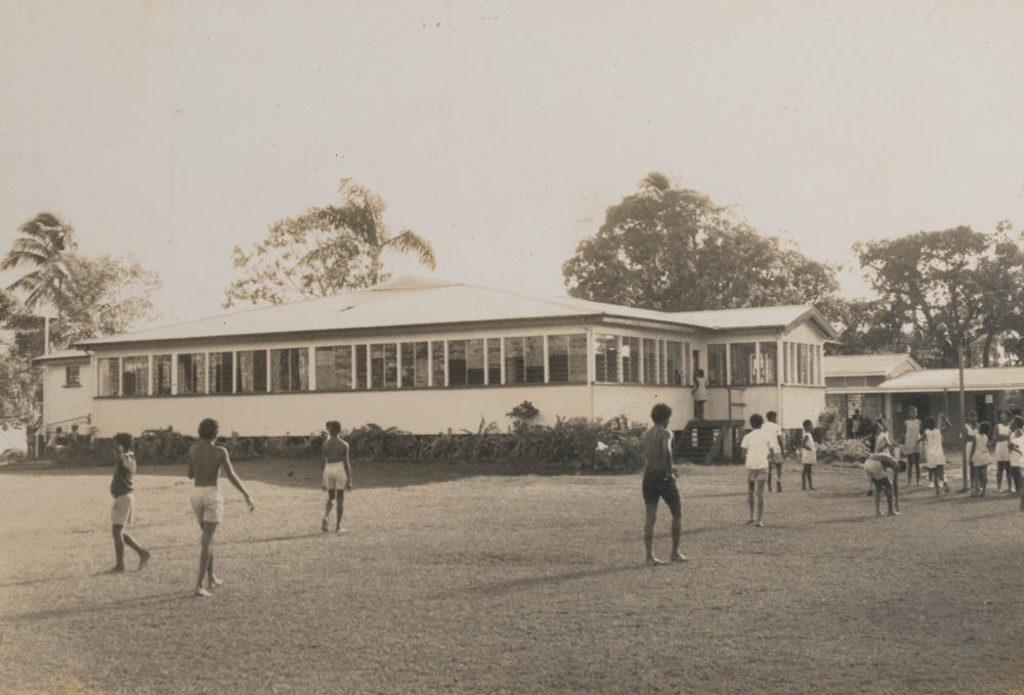
Play time… this was a favourite time. Picture: Courtesy of Holy Trinity Church Archdiocese, Suva
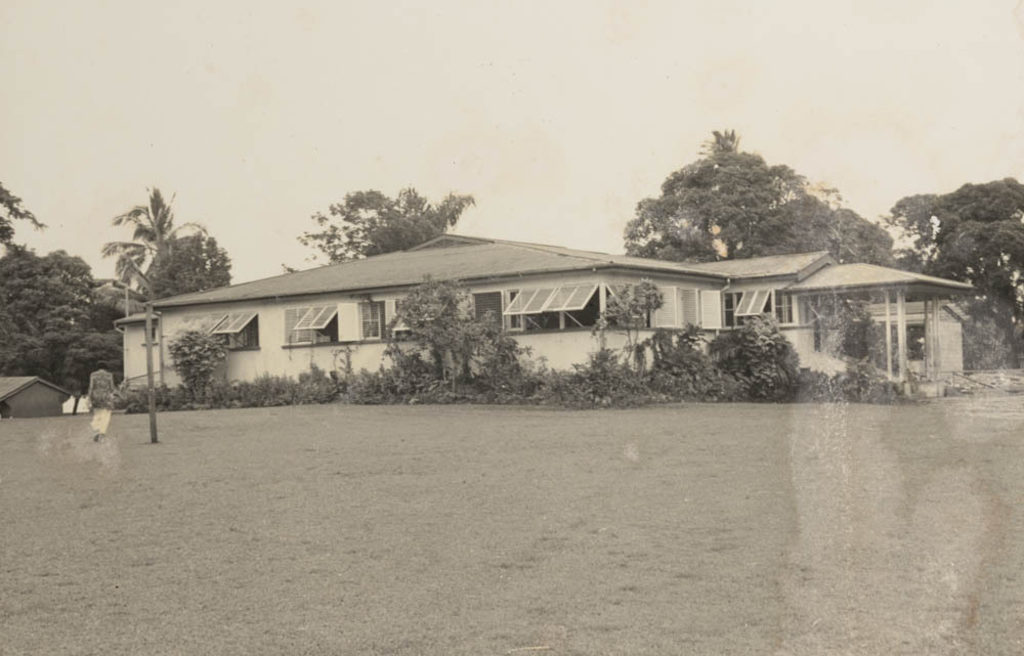
The original building after the school acquired the property in 1961.
Picture: Courtesy of Holy Trinity Church Archdiocese, Suva
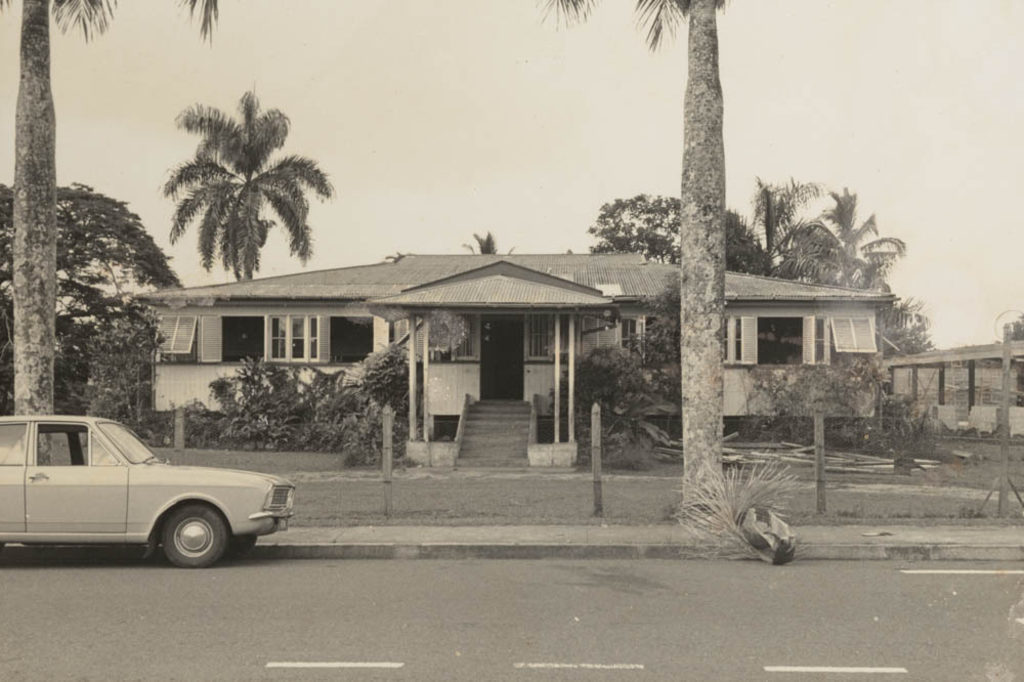
The original building and on the far right construction work for new classroom in progress. Picture: Courtesy of Holy Trinity Church Archdiocese, Suva
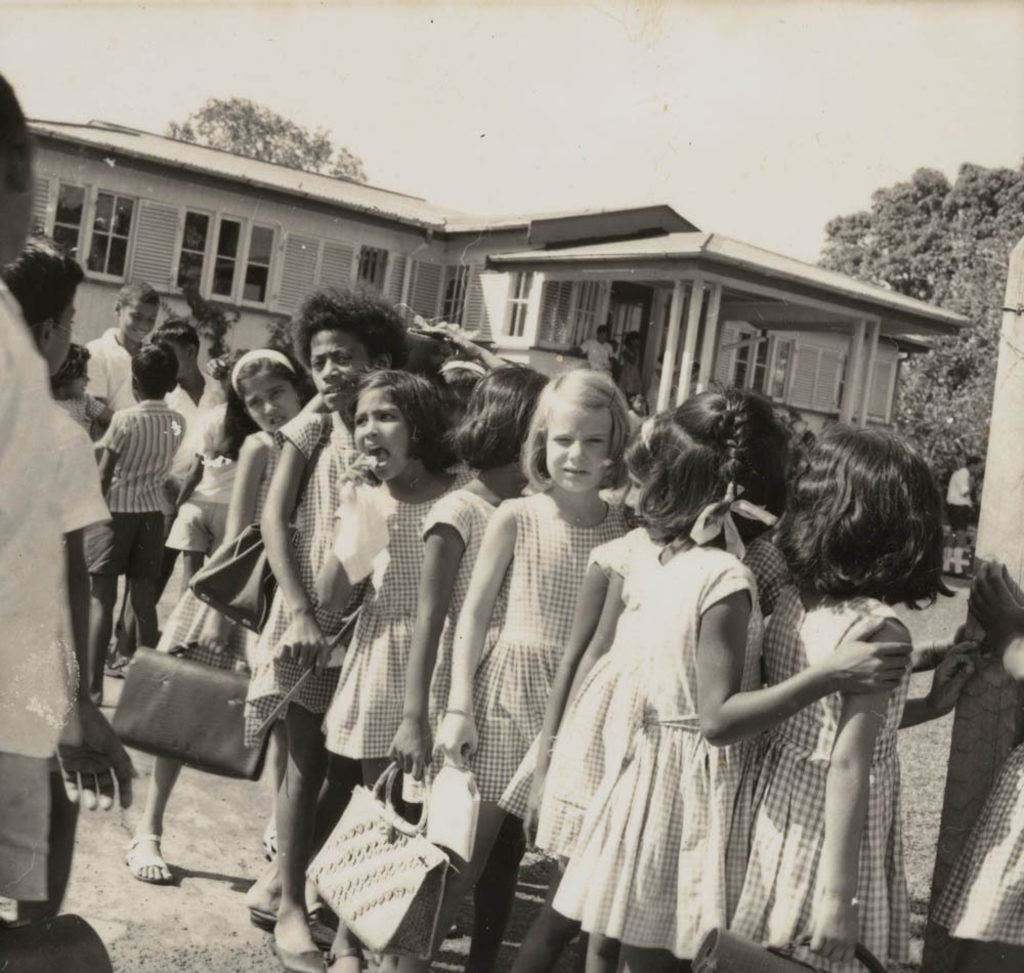
The old school uniform back in the 70s.
Picture: Courtesy of Holy Trinity Church Archdiocese, Suva