
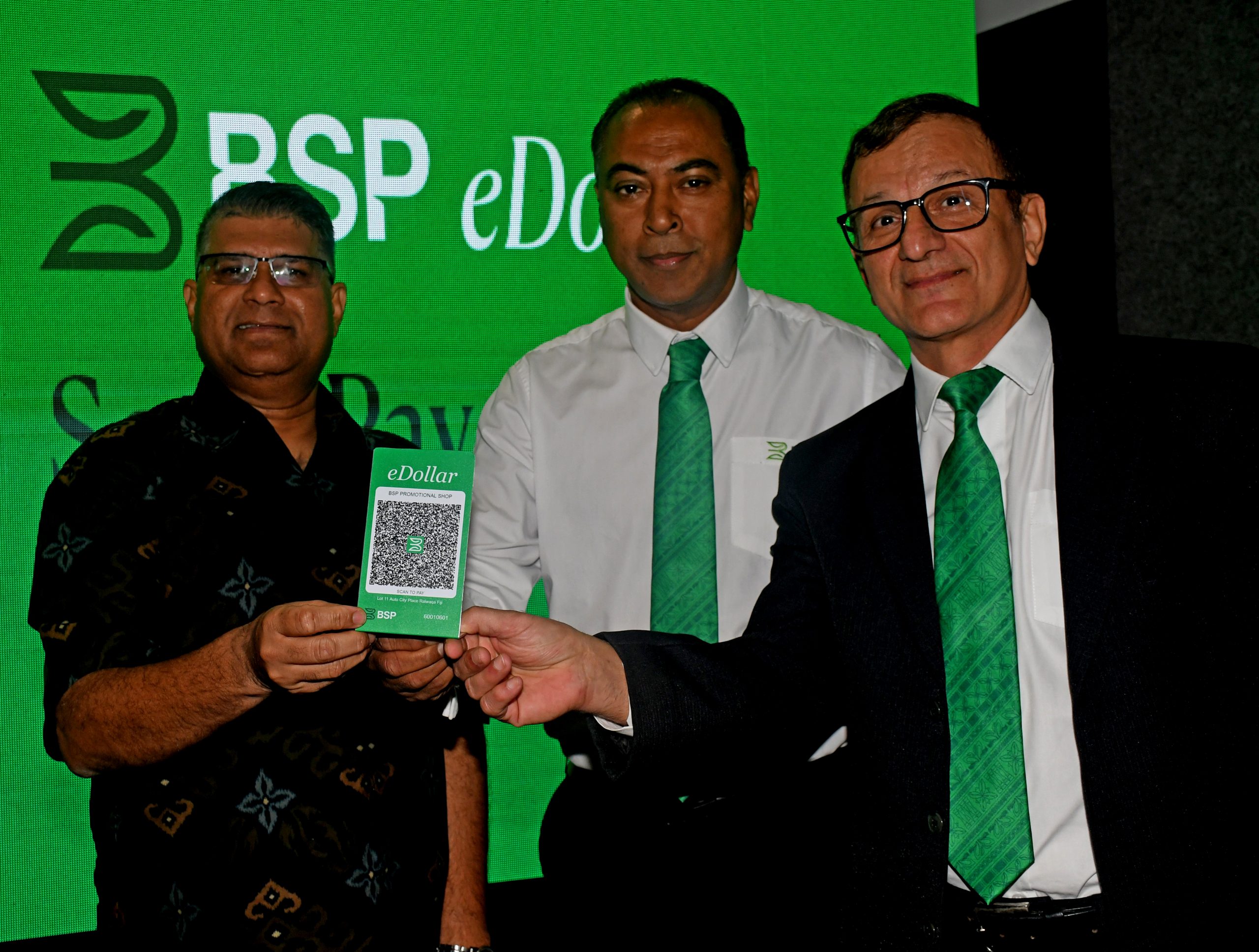
BANK South Pacific (BSP) Fiji yesterday became the first commercial bank in the country to launch a bank-backed electronic wallet that marks an important milestone for banking in Fiji.
Called eDollar, the digital platform is anticipated to bring the reach of Fiji’s largest banking network directly to its customers through their mobile phones, allowing for greater choice, control and convenience in how they manage and move their money.
BSP Fiji relieving country head Maikash Ali said through the app, customers could create and manage up to five eWallets, each with its own unique account number and the option of domestic or international access.
“They can move funds between their BSP accounts and eWallets, transfer funds to other BSP customers, and transact across participating banks and mobile wallets,” Mr Ali said at the launch held at the Holiday Inn.
A standout feature is the QR payments allowing customers to generate their own QR code for each eWallet, enabling instant transfers between individuals and instant payments at any BSP QR merchant location.
“As banking becomes more digital, we are committed to ensuring no customer left behind. BSP eDollar empowers our valued customers with greater access to manage their own accounts, more flexibility in how they move funds plus the ability to pay by other people or businesses via QR code.”
Reserve Bank of Fiji (RBF) governor Ariff Ali said the launch marked a landmark achievement for the bank and Fiji’s financial sector, and the country’s digital transformation journey.
He said the launch was closely aligned to the central bank’s payment system modernisation agenda that sought to build a payment system that was safe, efficient, inclusive and resilient.
“In an increasingly digital and interconnected world, the ability to send and receive funds instantly is not a luxury, it has become a necessity,” Mr Ali said.
“Hence, modern payment infrastructure is no longer simply a convenience, it is the cornerstone of the financial sector and an essential component of economic development.”

