MILLIONS of dollars have been invested in Pacific meteorological infrastructure, but the region is still losing one long-term climate data set every two years.
That is the reality facing Pacific meteorological services as ageing equipment, high maintenance costs, limited technical staff and the region’s geographic isolation threaten the systems relied on for weather forecasts, climate information and early warnings.
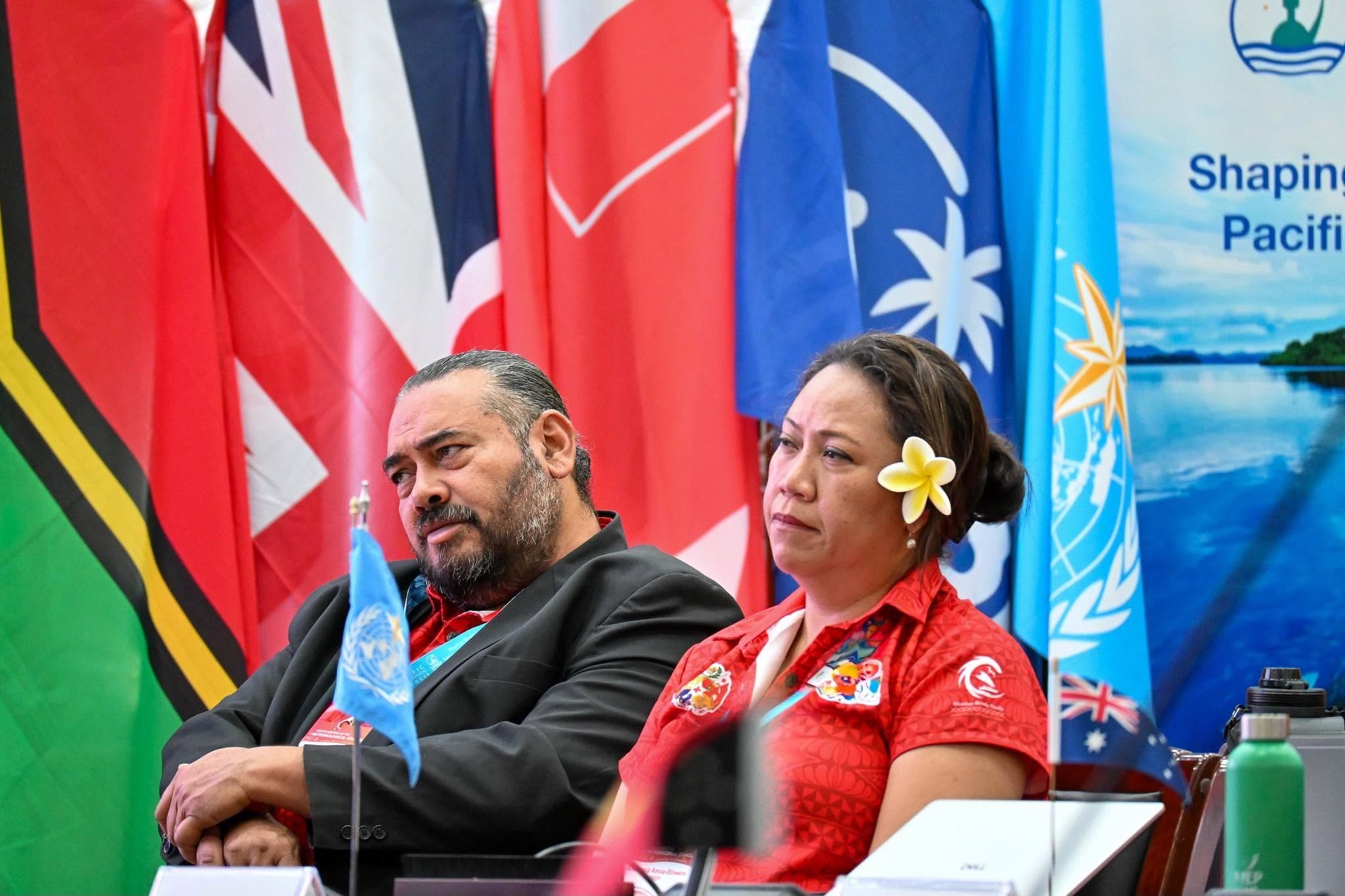
Weather Ready Pacific Programme Manager at the Secretariat of the Pacific Regional Environment Programme (SPREP), Ofa Fa’anunu, told the Pacific Meteorological Council meeting in Nuku’alofa, Tonga, that the problem was no longer simply about securing investment in new equipment.
Mr Fa’anunu then presented a proposal for the establishment of a Pacific Regional Hydro-met and Multi-Hazard Early Warning Systems Sustainable Maintenance Facility.
The proposed facility would provide a regional mechanism to sustainably maintain ring-fenced hydrometeorological and early-warning infrastructure and assets.
It follows a task given at PMC 7 to analyse possible solutions to the region’s operations and maintenance funding gap.
Mr Fa’anunu said financial consultants had identified an endowment structure as a possible primary financing mechanism for a permanent solution, although the details still needed to be developed.
Under the proposed model, funding from donors would be placed into a pool and invested, with returns then supporting maintenance and related activities for beneficiaries.
The maintenance gap
The challenge according to Mr Fa’anunu, is that much of the investment entering the Pacific is directed towards capital projects rather than the long-term cost of keeping equipment operational.
“Donor funding focuses on capital investments. Not many of the traditional donors would like to fund maintenance,.
“They will give you the piece of equipment. But then they expect your national governments to look after it.”
He said this has created a cycle where equipment is installed through donor-funded projects, operated until it breaks down and then replaced through another funding request.
“While you wait for that another gift, another station closed down.”
The consequences are visible in the region’s long-term climate observations.
According to the performance data presented to the meeting, Pacific long-term climate stations have declined progressively since operational responsibility began shifting back to Pacific meteorological services around 1980.
Mr Fa’anunu said Australia and New Zealand had historically being funding equipment, salaries and other requirements for Pacific meteorological services.
But as responsibility shifted towards national services, the ability to maintain the infrastructure did not keep pace with the cost of doing so.
The problem is particularly significant because meteorological observations are the foundation for forecasts, warnings and long-term climate records.
“The data will lose its value.”
A system under pressure
The maintenance challenge is also being compounded by the growing amount and complexity of equipment being installed across the region.
Mr Fa’anunu said three weather radars had already been installed in the Pacific, with the number expected to reach 11 by this time next year.
That raises another question: whether the region has enough technicians to maintain the systems.
“Do we have the workforce? Do we have the technicians to go around and fix these things?” he asked.
The Pacific’s geography makes that challenge even more expensive.
Mr Fa’anunu gave the example of travelling from Rarotonga to Penrhyn in the Cook Islands, saying it could cost about $100,000 to travel there to change official equipment on an automatic weather station.
The remote location of some stations means maintenance cannot simply be treated as a routine national operating expense.
Geographic isolation, limited technical workforces, weak asset life-cycle planning and the increasing dependence on digital systems are all contributing to the problem.
At the same time, spare parts and replacement equipment may not be readily available when systems fail.
Mr Fa’anunu said infrastructure maintenance could account for up to 70 per cent of full life-cycle costs, based on discussions through the inaugural Weather Ready Pacific Liaison Platform.
Yet that component remains consistently underfunded.
Looking for a long term fix
The proposed maintenance facility is not being presented as a single answer to the problem.
The Liaison Platform concluded that the funding gap could not be addressed through one source alone and supported the maintenance facility as one component of a wider financing mix.
The proposed endowment structure is also intended to complement existing regional mechanisms, including the Pacific Resilience Facility and the compliance phase of the Systematic Observations Financing Facility.
For Mr Fa’anunu, the issue is ultimately about ensuring that the millions already invested in meteorological infrastructure continue producing value.
Without sustainable maintenance, investment in new stations, radars and other equipment risks creating systems that Pacific countries cannot afford to keep operational.
“These are the questions that we have to talk about now in the investment phase,” he said.
“Otherwise we are going to find ourselves stranded.”
The maintenance facility proposal will now require endorsement by the Pacific Meteorological Council before it can proceed to the ministers.
For a region increasingly dependent on accurate weather information and early warnings, the challenge is no longer simply putting new equipment in the field. It is keeping it working.