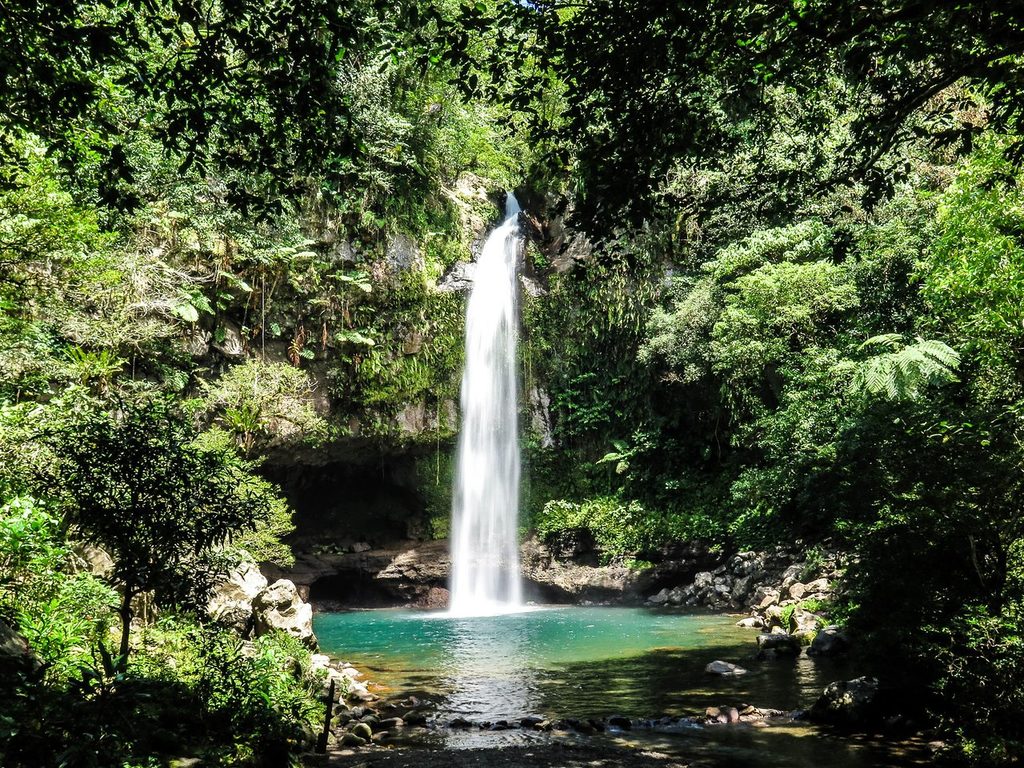
TAVEUNI Island, known as the “Garden Island” of Fiji, represents a profound developmental paradox. Spanning 42 kilometres in length and averaging 11 kilometres in width, it is the third-largest island in the archipelago, supporting roughly 17,000 residents.
Economically, it is a vital driver of Fiji’s agricultural success, producing over 80 per cent of our export dalo and yaqona, while serving as a key engine for tourism revenue.
Yet, for those who call this island home, the “Garden Island” is a landscape of profound institutional neglect.
While Suva’s corridors of power prioritise the mainland, Taveuni’s southern districts—Vuna, Navakawau, Ura, Waimaqera, and Salialevu—languish in systemic deprivation.
This is not a series of unfortunate accidents; it is the predictable outcome of decades of governance viewing Taveuni as a resource to be extracted rather than a community to be nurtured.
The anatomy of administrative neglect
The crisis facing Taveuni is a matter of political will. Across successive administrations—from the FijiFirst government to the current Coalition—the pattern of neglect remains constant.
During the Bainimarama era, residents endured a decade of transport crises, including chronic bus service suspensions from 2016–2018 caused by failing infrastructure and regulatory indifference.
Today, the script has merely changed titles. We have moved from bus suspensions to total supply chain collapse.
The July 2026 shipping crisis was the inevitable consequence of a government that failed to proactively manage the maritime regulatory environment.
Rather than protecting the status quo by resolving licensing and crewing disputes in a timely manner, the state allowed these issues to escalate, causing a preventable collapse in the delivery of essential fuel and food.
The maritime death spiral
The supply chain collapse of July 2026 serves as a definitive case study in governance failure.
When shipping lines Goundar Shipping and Interlink halted voyages over regulatory disputes with the Maritime Safety Authority of Fiji (MSAF)—specifically regarding the failure to approve experienced international crew members to address the domestic deficit of Class 1 and 2 Boat Masters—Taveuni was effectively placed under siege.
This was not a natural disaster; it was a regulatory one. MSAF’s failure to resolve seafarer licensing issues, coupled with the government’s lack of contingency plans, brought the island to its knees.
That an island generating the bulk of our export revenue can be cut off for weeks demonstrates a complete absence of institutionalized emergency reserves.
The Chaudhari intervention: A damning indictment
When fuel pumps ran dry and the government remained silent, private citizen Rohil Chaudhari, owner of Suncity Supermarket, was forced to act.
As the island faced total paralysis, Chaudhari personally secured 14,000 litres of mixed fuel via a private barge that arrived on July 7, 2026. Because a fire had destroyed his station’s automated pumps, his staff manually distributed the fuel using measured containers—a gruelling, archaic process.
Customers travelled over 20 kilometres, some from as far as Lavena Village, to secure a 20-litre ration to keep livelihoods alive.
That a private merchant had to step into the role of the state is a searing critique of our national leadership. It highlights a dangerous precedent: when the state abdicates its primary duty, citizens are left to fight for survival alone.
The economic toll of isolation
The shipping freeze did more than empty supermarket shelves; it crippled Taveuni’s export economy. As vessels remained docked in Suva, hundreds of tonnes of dalo and kava destined for overseas markets began to spoil.
Farmers in Vuna, who rely on these exports, were left with rotting crops and zero income. Simultaneously, resorts at peak occupancy faced the harrowing prospect of guest evacuations as generator fuel evaporated.
That our national export revenue is being sacrificed because of a bureaucratic spat between MSAF and private operators is not just incompetence; it is economic sabotage. The systemic failure to manage maritime logistics directly undermines our national post-pandemic recovery.
The water paradox: A monument to incompetence
Perhaps the most egregious symbol of this neglect is the Navaca Desalination Plant. Built in 2015 at a cost exceeding $1 million, it failed within months due to operational ineptitude.
Today, it remains a rusted tomb for taxpayer funds while 4,200 residents in the south survive on a “fractured” water-carting regime. This is a government that can find millions for vanity projects but cannot provide a consistent, gravity-fed water supply to the very farmers who prop up our national economy.
Residents scavenge from contaminated sources—a reality that would be deemed a national scandal if it occurred in the Suva-Nausori corridor.
The failure to address this, despite the 2017 Israel-aided hydrological survey confirming the viability of a gravity-fed project at Salialevu, is an insult to every citizen in the south.
The heavy truck penalty
The state’s failure to provide a reticulated water system creates a compounding cycle of destruction.
Because the government refuses to build pipelines, it relies on heavy, multi-ton water-carting trucks to service the southern districts.
These trucks, operating daily, pulverise the unsealed South Coast Road, rendering it a gauntlet of potholes.
When the road becomes impassable, the only bus company is forced to pull services, trapping students and farmers in geographic isolation.
The state breaks the water infrastructure, which destroys the road, which destroys public transport, which destroys the future of our rural youth. It is a seamless loop of institutionalised neglect and failure.
Energy exclusion: The
grid-terminal divide
The island’s electrical grid, managed by Energy Fiji Limited (EFL), offers a stark geography of inequality. The line terminates abruptly at Wairiki, leaving the entire south in darkness.
This exclusion forces households to rely on private, fossil-fuel-powered generators.
This reliance imposes a crushing economic penalty on families, consuming the capital needed for nutrition and education. Without refrigeration, food spoilage is rampant—a cycle of poverty reinforced by the absence of state-funded energy infrastructure.
In a nation that promotes renewable energy, the failure to extend the grid to Taveuni’s southern agricultural hub is baffling.
We are taxing our most productive agricultural families for the “privilege” of living in the dark.
A cry for accountability
The root cause is a glaring democratic deficit. Taveuni has no dedicated local government body with the power to compel action, and the islanders feel abandoned by Suva-based MPs who treat the island as a peripheral concern. This disconnect is fuelled by a governance culture preoccupied with centralized control. The Taveuni Residents & Farmers Association recently submitted a desperate plea ahead of the 2026/2027 National Budget, detailing the crumbling bridges at Nalele and Nayalayala and the lack of basic street lighting and footpaths. Their voices risk being forgotten by a government that is clearly not listening to the rural heartbeat of this nation.
The tourism trap and export reality
Fiji is currently crying out for tourism dollars to fuel our recovery, yet we are actively undermining the destinations we sell to the world. Investors and tourists alike expect reliability; when infrastructure fails, they look elsewhere.
The “Garden Island” branding is a marketing asset, but it is one being cheapened by the government’s failure to provide basic services. We are selling a tropical paradise to the world while those who live in that paradise struggle for basic necessities like clean water. A resilient Taveuni is not just a moral imperative; it is an economic necessity that we can no longer afford to ignore.
A mandate for structural rectification
The path forward is clear and requires immediate political courage. We must abandon the failed, high-cost technical “fix” of desalination and implement the gravity-fed Salialevu water project. We must prioritise the extension of the electrical grid to the south as an economic prerequisite for rural development. We must seal the South Coast Road, ensuring it is climate-resilient and capable of supporting year-round public transport. Most importantly, we must reform MSAF’s regulatory processes to ensure maritime links are anchored in security rather than regulatory dysfunction. The government needs to wake up. Taveuni is not an extraction point; it is another spine and backbone of our nation. Just like many other maritime islands, the Garden Island cannot be neglected in this obscene manner. It is time for the government to stop the talk, fix the pipes, light the villages, ensure the shipping is operating and the roads fixed. Garden Island is waiting, and the neglect and abandonment of our Taveuini community must end now.
Dr Sushil K Sharma BA MA MEng (RMIT) PhD (Melbourne) — World Meteorological Organisation (WMO) Accredited Class 1 Professional Meteorologist. Former British Aerospace, The Royal Saudi Air Force and Bahrain Air Navigation Directorate Aviation Meteorologist. Former Associate Professor of Meteorology, Fiji National University, and Operational Meteorologist and Manager, Climate Research and Services Division, Fiji Meteorological Services.