
It is encouraging to know that Pacific Island countries are being urged to strengthen regional cooperation on waste management.
This comes in light of the reality that shrinking landfill space, growing environmental pressures and the impacts of climate change are intensifying recycling challenges across the region.
This certainly isn’t one of those glamorous topics that attracts a lot of attention. It isn’t one that would normally capture the imagination of the masses, so to speak. Perhaps that is why it should be highlighted as one of the biggest challenges facing us all.
The call for greater regional collaboration followed discussions between the Pacific Recycling Foundation (PRF) and the Naoero Rehabilitation Corporation (NRC) on strengthening recycling systems, resource recovery and community-based solutions across the Pacific.
PRF founder Amitesh Deo believes the region’s waste crisis requires a united response.
Many Pacific Island nations, he said, face the same obstacles, including limited recycling infrastructure, high transportation costs, shrinking landfill capacity and few opportunities to recover reusable materials.
His message is that the Pacific does not have to tackle these problems in isolation. There is value in sharing experiences, building stronger regional partnerships and identifying practical solutions that can be adapted and expanded across island nations.
Rather than constantly searching for new ideas, he believes the focus should be on strengthening programs that are already successful and finding ways to replicate them in other Pacific countries.
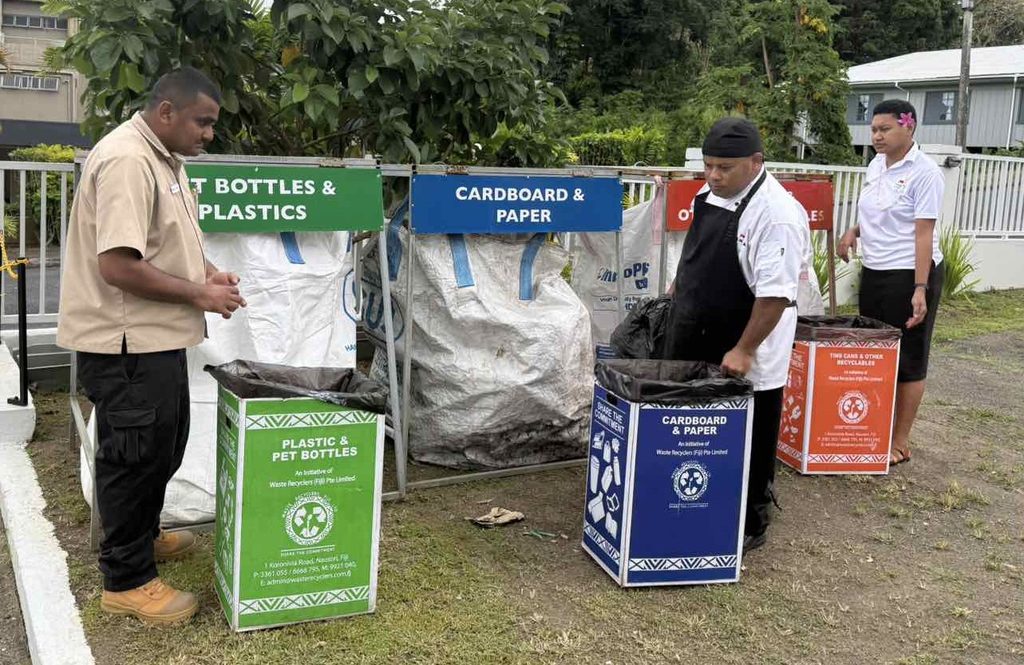
Drawing on more than three decades of experience through Waste Recyclers Fiji Ltd, Mr Deo believes community participation remains at the heart of any successful recycling initiative. Waste management in the Pacific, he said, differs significantly from that of larger nations, requiring practical, inclusive solutions suited to our geography, economies and communities.
We say this is an important discussion because it speaks directly to the realities we face. Think about it. If we fail to manage our waste responsibly today, tomorrow’s challenge will be finding enough space to dispose of it. As populations grow, so too will the volume of rubbish generated daily. Land is finite, particularly for small island developing states, making better waste management an urgent priority.
That is why awareness and education are important. Every household, business, school and community has a role to play in reducing waste, separating recyclables and disposing of rubbish responsibly. Small changes in daily habits can produce significant long-term benefits for our environment.
There are valuable lessons to be learnt from successful recycling initiatives across the Pacific. So, we should be working together, sharing knowledge and investing in practical solutions and protecting our islands for future generations. We say the key is in responsible waste disposal, stronger recycling systems and a commitment to safeguarding the limited land and fragile environment that sustain us. Sure. Waste management may not make headlines every day, but we say it will shape the future health, beauty and resilience of our islands in the Pacific!

