
The United Nations Secretary-General António Guterres made a special statement yesterday in his message on World Press Freedom Day.
He spoke about shining a spotlight on the essential work of journalists and other media workers who seek transparency and accountability from those in power, often at great personal risk.
Throughout the COVID-19 pandemic, he said, many media workers were on the frontlines, providing accurate, sciencebased reporting to inform decision-makers and save lives.
At the same time, he said, journalists who covered climate, biodiversity and pollution succeeded in bringing global attention to this triple planetary crisis.
But the threats to the freedom of journalists and media workers, he noted, were growing by the day.
From global health to the climate crisis, corruption and human rights abuses, he said, they faced increased politicisation of their work and attempts to silence them from many sides.
Digital technology, he said, had democratised access to information.
It had also created serious challenges.
The business models of many social media platforms were based not on increasing access to accurate reporting, but on increasing engagement – which often meant provoking outrage and spreading lies.
Media workers in war zones, he said, were threatened not only by bombs and bullets, but by the weapons of falsification and disinformation that accompany modern warfare.
They may be attacked as the enemy, accused of espionage, detained, or killed, simply for doing their jobs.
Digital technology also made censorship even easier.
Many journalists and editors around the world, he said, were at constant risk of their programs and reports being taken offline.
And digital technology created new channels for oppression and abuse. The methods and tools change, he noted, but the goal of discrediting the media and covering up the truth remains the same as ever.
The results were also the same: people and societies that were unable to distinguish fact from fiction, and could be manipulated in horrifying ways.
Without freedom of the press, he said, there were no real democratic societies. Without freedom of the press, there was no freedom.
“On World Press Freedom Day, we honour the essential work of the media in speaking truth to power, exposing lies, and building strong, resilient institutions and societies,” he said.
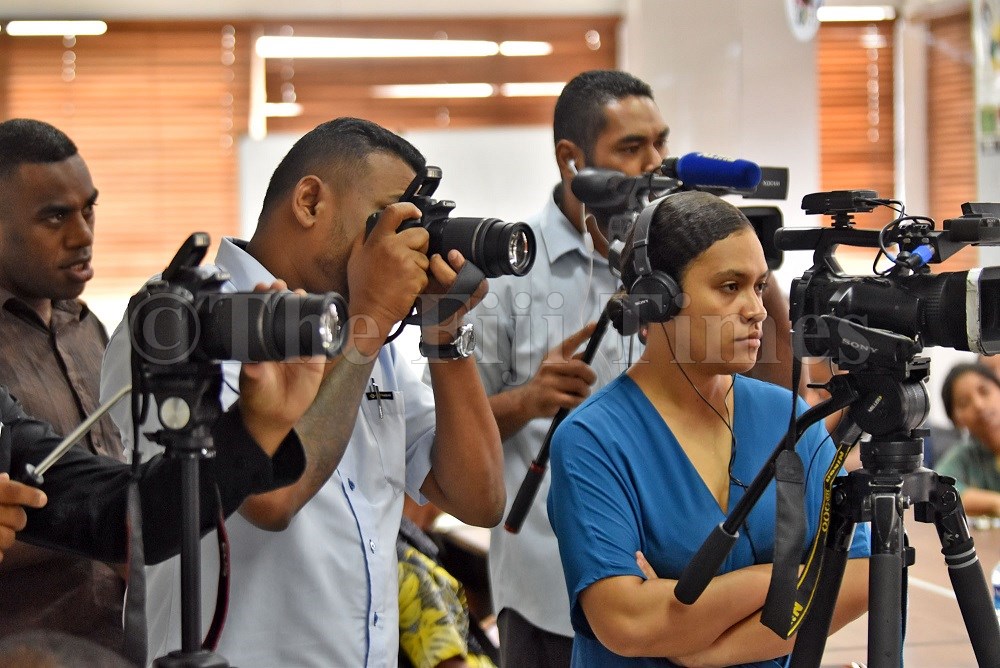
On the home front, yesterday was about acknowledging the work of journalists. It was also about empowering young and upcoming journalists, remembering the fallen, and offering the Fijian audience an opportunity to understand the work of the media.
Like other first responders, journalists are on the frontline.
They are expected to report on critical issues that will empower the masses.
While there is a duty to hold power to account, there is also an expectation to disseminate information that will allow people to make well informed decisions daily.
Journalists and media houses are not immune to the negative impact of the virus for instance, or circumstances.
They face various other obstacles, but passion can be a great motivator.
They work according to set guidelines and a code of ethics.
There are interviews to be recorded, programs filmed, bulletins prepared, stories to be written, and pictures and videos shot. We reflect on the importance of freedom of the press. Yet life moves on!

