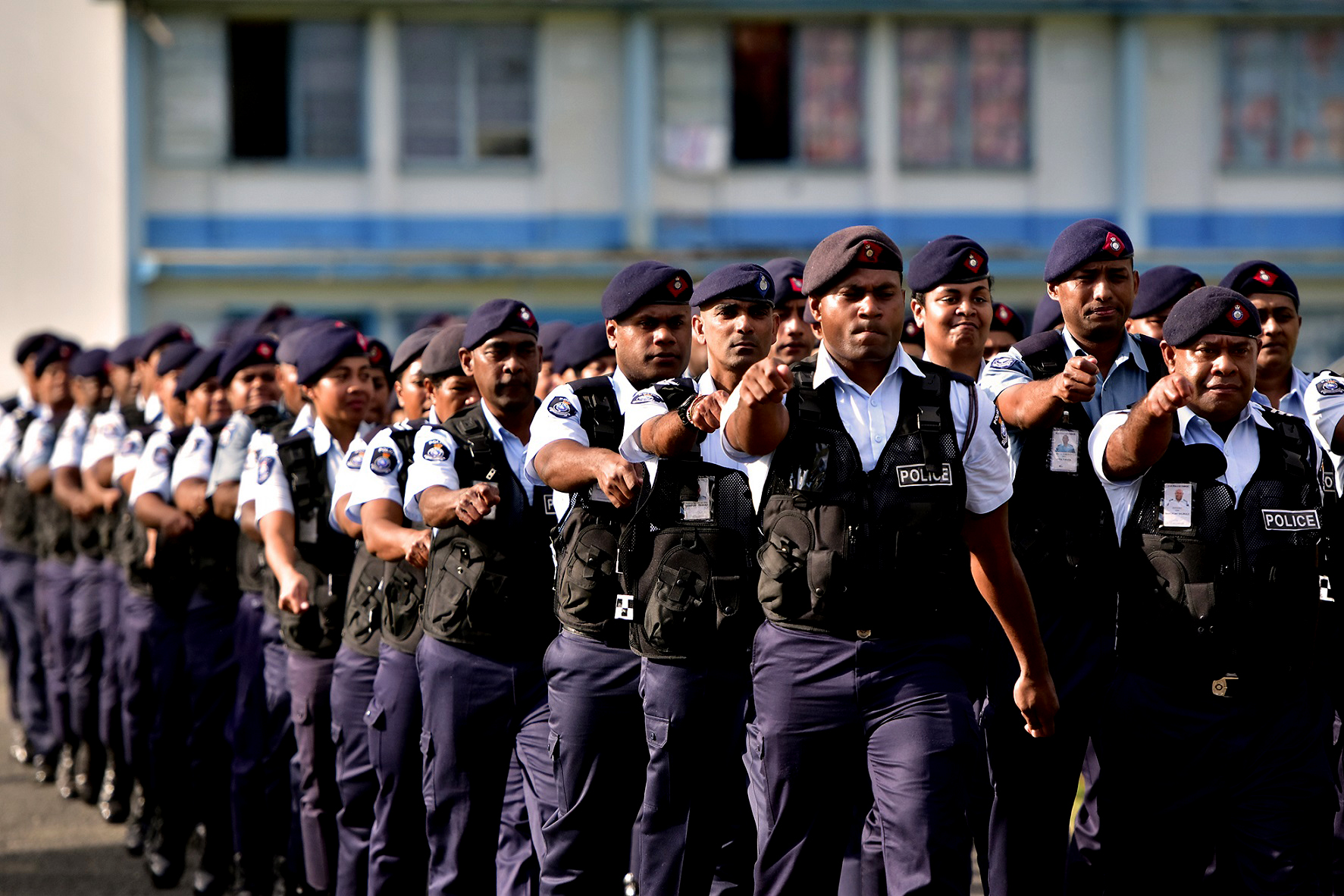
THE revelation that the Fiji Police Force will take operational control of any terrorist incident in the country is bound to attract attention. We learn that this expected move will allow for military support, where necessary, but only under strict civilian authorisation.
This is outlined in the National Counter-Terrorism Strategy 2026–2030, launched in Suva last week. The strategy designates the Fiji Police Force as the operational lead agency for responding to a terrorist incident, with responsibility for identifying, locating and detaining those responsible.
Police will also secure and contain the crime scene, establish when an incident has ended and determine whether there is a risk of further attacks before launching an investigation.
According to the strategy, the force will be supported by medical personnel, first responders, emergency services and other Government agencies during the response.
The Ministry of Policing and Communications will provide strategic leadership and coordination during national security events, including support to the Prime Minister, National Security and Defence Council, Cabinet and relevant ministers.
And in the face of this, the Republic of Fiji Military Forces (RFMF) may be called upon to support police operations and communities during or after a terrorist incident.
Within the strategy, the RFMF’s constitutional role is to help maintain Fiji’s peace and security, and it has the training and equipment to assist law enforcement and emergency responses.
However, military deployment will not be automatic.
The RFMF can only be deployed following a request from the Commissioner of Police and authorisation by the RFMF Commander, in consultation with the Ministers for Defence and Veterans Affairs and Policing and Communications.
This process is designed to ensure civilian oversight and control of military involvement.
Interestingly, this comes in the wake of revelations earlier this year, in March, that the police force was strengthening its tactical response unit as part of a broader push to modernise policing and confront high-risk crime.
Minister for Policing Ioane Naivalurua said at the time that the force was reviewing and enhancing the specialised capabilities needed to deal with increasingly complex law-enforcement situations.
His remarks followed a call from former senior police officer Tevita Ralulu for the Government to revive and strengthen the Police Mobile Unit to better confront the growing drug trade.
Mr Ralulu, a former Mobile Unit trainer, maintained that operations within the capability of a properly equipped police tactical unit should remain with police rather than the armed forces.
While the public knew little about the Unit’s internal operations, it was set up in November, 1973, was fully armed and maintained a constant state of readiness, with its weapons secured in the armoury at its base in Nasinu until it was removed by the military coup in 2006.
The Unit was originally designed for situations ordinary police stations could not handle and its officers underwent intensive specialist training, including firearms, survival and tactical operations.
The debate over specialised policing capabilities has therefore resurfaced at an important time.
As organised crime and illicit drugs continue to threaten communities, Fiji needs a police force equipped to respond effectively to serious and complex threats.
The issue is not about choosing between the police and the military. It is about ensuring each institution understands its role and operates within the law.
If the police are expected to lead, then they must have the tools, training, resources and confidence to do the job properly. And that responsibility must be matched by accountability, professionalism and civilian oversight. Fiji’s security must be protected by institutions that are strong enough to respond to threats, but disciplined enough to remain firmly within the law.