
IF there’s an issue that stands out this week, it will have to be the draft Police Bill 2020.
For what it’s worth, this proposed Bill has attracted attention across all imaginary demarcation lines.
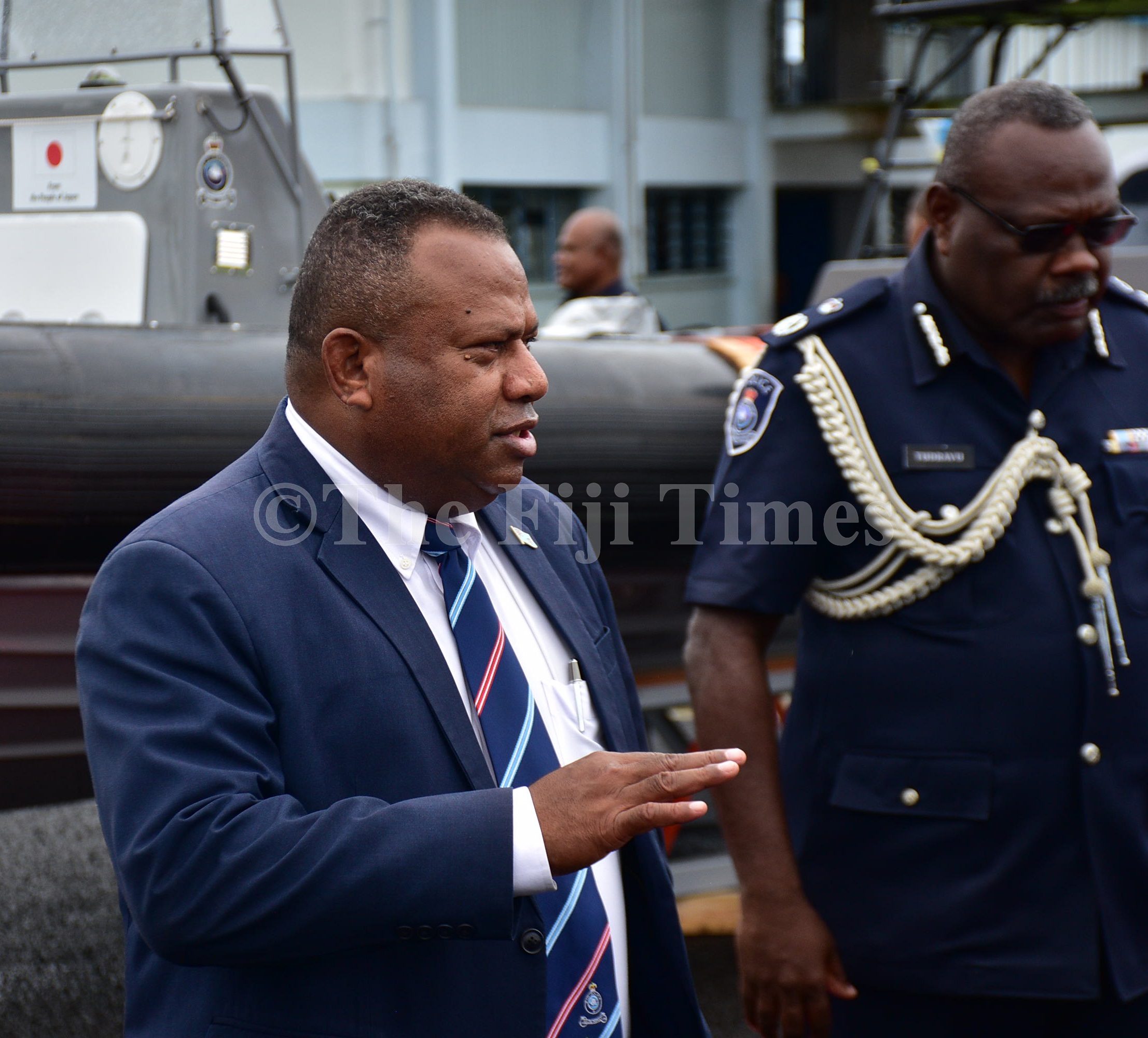
It has been tagged draconian, and inched out alarm in some quarters. Defence Minister Inia Seruiratu, however, insists the draft Bill aims to provide additional enforcement power to the force to address new forms of crime.
Mr Seruiratu said it aimed to provide legal powers for the use of modern technological aids to combat complex and organised crimes, and further institute deterrent penalties in comparison to the outdated penalties now in force.
It’s when you read into the proposed Bill that a number of factors stand out.
The flood of opinion in our open columns suggests a wave of emotions concerned by it.
From the outset, under the proposals, police will have sweeping powers to monitor communications and forcefully enter premises to place tracking devices.
Police will have the powers to secretly or forcefully enter any premises to place tracking devices under the draft law.
Police can also secretly monitor and record “communications” of persons about to commit a crime or have committed a crime if the draft law is passed in its current form.
Police will be allowed to “use reasonable force” to enter any telecommunications facility and take control of it if the draft Bill is turned into law.
Police can gain access into the facility to secure evidence, and any evidence collected through this means “shall be admissible in any legal proceedings”.
Police will have the powers to ask a telecommunications service provider to “freeze” data in their possession that maybe subject to an investigation.
Interestingly, a person and companies would be required to seek permission from the Fiji Police Force before taking any photographs and video recordings at a crime scene, according to the draft Bill. A crime will be committed if a person or company engages in conversation, or conducting any interviews “in any way of any person, whether police employee or otherwise” at a crime scene.
The draft Bill states a person will also commit a crime for “making or causing or authorising any media release or dissemination of any information in any form and by any means of any crime scene or person or police animal therein in any way whatsoever.
“Any person who fails to comply with the provisions of this section commits an offence and shall be liable upon conviction to imprisonment not exceeding five years.
“If such person is acting on behalf of or the order, instruction, or authority of a body corporate, such body corporate, in addition, shall be liable to a fine not exceeding $100,000.”
It’s a part of the proposed Bill that will place the work of the media under pressure, and should place a lot of social media users on notice.
Clearly there are aspects of the proposed Bill that are raising eyebrows.
This is why it is critically important that we are involved in planned public consultations.
The draft legislation is now open to public submissions and will replace the Police Act of 1965 once passed by Parliament.
According to the minister, public consultations would be held in 21 centres across Fiji, focusing on rural and maritime areas such as Rotuma, the Yasawa Group, Kadavu, Ovalau, Taveuni and the Lau Group from March 8, 2021.
We can also submit views virtually through the Ministry of Defence, National Security and Policing website.
For a proposed Bill that has attracted so much attention and outcry, the challenge is on the State to ensure there is appropriate awareness created about the consultation process, the venues, and it must engage the people.

