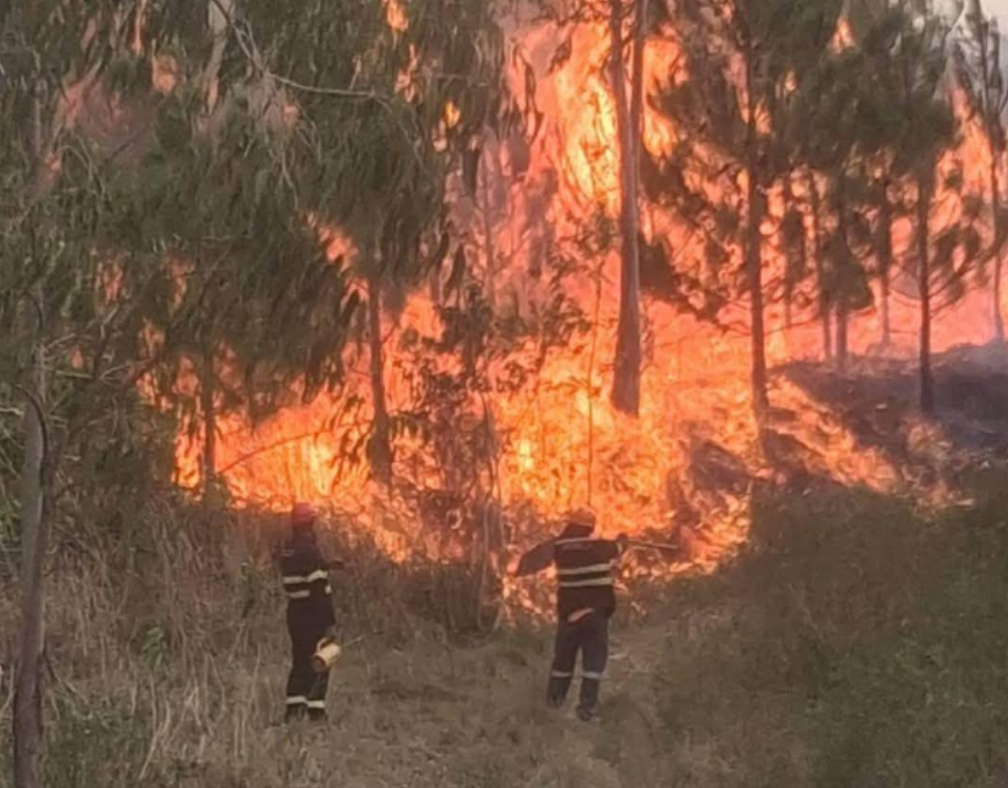
EL NINO-driven dry conditions are fuelling a growing fire threat in the Western Division, where more than half of the 2870 emergency calls recorded between January and October this year were fire-related, with 88 per cent involving cane and bush fires.
Speaking in an interview, National Fire Authority chief executive officer Puamau Sowane said prolonged dry spells and higher temperatures had left vegetation and sugarcane fields highly vulnerable to ignition, increasing the risk of fires spreading rapidly.
Of the 1556 fire-related calls recorded during the 10-month period, 1368 involved non-property fires, and 12 per cent accounted for structural, vehicle, and ship fires.
“These statistics expose the extreme level of dryness across the region,” he said.
Mr Sowane said the growing fire risk was being compounded by concerns over water availability, with prolonged drought conditions depleting local water sources.
He warned that reduced water pressure and depleted supplies could severely undermine the ability of firefighters to respond, particularly if multiple fires broke out simultaneously.
He explained that a standard residential house fire can require between 2000 and 3000 litres of water to extinguish, while large commercial and industrial fires can consume between 5000 and 15,000 litres or more.
According to Mr Sowane, the authority used approximately 1.476 million litres of water for structural fires in 2024, followed by 1.449 million litres in 2025.
He said by September this year, another 1.088 million litres had already been used.
Mr Sowane explained that a single house fire could consume more than twice the daily water needs of an average family of four to five people.
“One thing to consider during this period of national drought is that we use potable water to fight fires.”
He warned that continued dry conditions could place homes, businesses, sugarcane crops and critical infrastructure at greater risk.