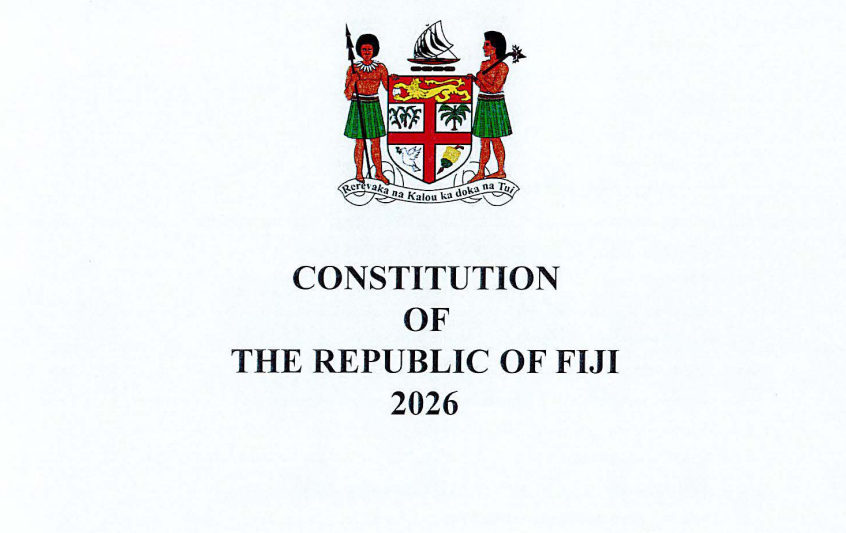
Fiji’s proposed 2026 Draft Constitution provides for a 19-member Senate, with eight members appointed by the Bose Levu Vakaturaga (BLV) and the remaining seats shared among nominees of the Prime Minister, Opposition Leader, Rotuma Island Council and Rabi Council of Leaders.
Under the draft, the Senate’s primary role would be to review Bills passed by the House of Representatives, along with other responsibilities assigned by the Constitution or written law.
Of the 19 senators, eight would be appointed by the BLV, five by the Prime Minister, four by the Leader of the Opposition, one by the Rotuma Island Council and one by the Rabi Council of Leaders.
The Draft Constitution states that appointments made by the BLV, Prime Minister and Opposition Leader must reflect Fiji’s diversity, including minority groups.
Anyone appointed to the Senate would also have to meet the eligibility requirements for candidates seeking election to the House of Representatives.
Senators would vacate their seats if they are convicted of an offence punishable by at least 12 months imprisonment, lose their right to be a registered voter, miss two consecutive Senate sittings without permission, or become a candidate for election to the House of Representatives.
All Senate seats would become vacant immediately before the Senate’s first sitting following a general election.
The Senate would elect its own President and Vice-President from among its members following a general election. The President of the Senate could be removed through a resolution supported by at least two-thirds of senators.
The proposed Senate forms part of the Draft Constitution’s move towards a bicameral Parliament, with the Senate operating principally as a reviewing chamber for legislation passed by the House.
The provisions are contained in the Draft Constitution released as part of the Constitution Review Report and remain proposals rather than law.