WHEN you hear his mother sharing the story of this gentle rugger, the life of the fictional character Tarzan would come to mind.
This is no fictional character; this is someone who did not spend much time with children when he was brought up but mostly spending time playing with animals that were looked after by his parents —— dogs that were pets and cows in the paddock.
They were friends to Fiji’s Olympics gold medallist Masivesi Dakuwaqa when he was brought up at Savai, a settlement on the mainland, away from his mother’s village of Lasakau, on Bau Island.
His name when dissected could tell a lot; masi is a bark cloth made in the Pacific and also a traditional wear in Fiji, vesi is a tree which can grow to 50metres with a scientific name of Intsia bijuga, used mostly by wood carvers in Kabara, Lau, because of its strength.
And the name Dakuwaqa is significant to Fiji because it belongs to that of a shark God.
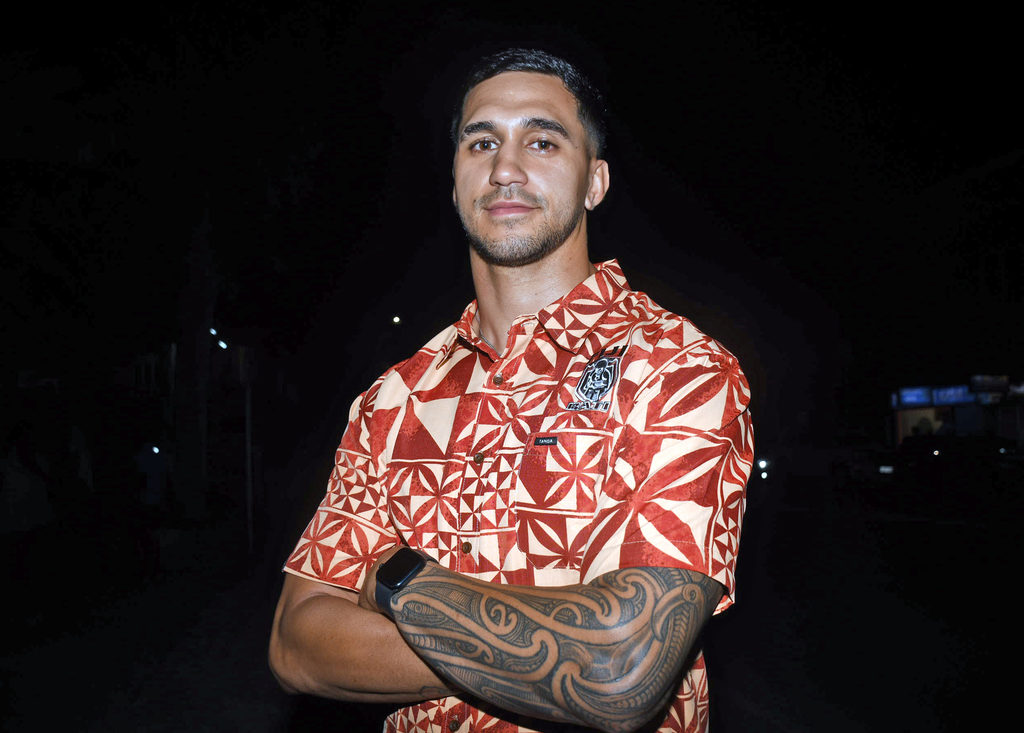
But Masivesi Dakuwaqa is no shark god; just a Olympic Games gold medallist who is the youngest in his family, a child whom his mum, Kelera Daunimawamawa Vuetibau said was different from all her children because Masivesi was one that couldn’t keep still.
Masivesi is the player in the Fiji 7s team whose left eye was injured when he was a primary school student and his mum recalled that it was also the reason a call was made by the Education Ministry then, to see that parents and teachers prevent students from playing with rubber bands.
Telling her story to this newspaper, Vuetibau said her son grew up in a challenging environment where they struggled for their everyday living but there was one thing that didn’t go amiss in their lives —— thanking the almighty God for his provisions to the family.
An active child he was, his parents had a program where they would go up a mountain every Friday’s for their prayer sessions and Dakuwaqa would go with them.
“We would continuously tell him that he could always ask God for anything he wants.
“In one of these sessions, he told me that he’s always been asking God for one thing and that was to become a rugby player, this was when Serevi was still playing and Masi had probably just started kindy education,” Vuetibau said.
She said her son did not have kids his age when they lived in Savai and would only play with pet dogs and cows in their paddock and whenever he got a chance to be with kids, Masi would show his strength.
“I would observe him when he played, because when he runs a race, he would reach the tape when his opponents were still about half-way, Masi would run back to the starting point and have another run to beat his opponents again the second time.
“On the rugby field he wouldn’t give up easily to try and take his opponents down, that was how he was and I believed it may have been because of the companionship he had with animals during his early childhood years.”
Life for them was never easy, his mum recalled, there were times when she would hear relatives speak words that shouldn’t be spoken, but silently they would pray together as a family and support each other.
From Savai settlement, they left for Cakova Village in Moala, Lau as Dakuwaqa’s dad was not working and Vuetibau said her son left with them and continued his primary school days in Lau.
“Masi would always go out to find coconuts and gather firewood early in the morning before he would go to school and that was his chores every day.
From Moala, they came back to Suva where Dakuwaqa finished his primary school education at St John’s School in Wailoku and just four years ago he found a job and before he forced his way in to the national team, his father, Jone Waqa died with Dakuwaqa by his side.
From the injury to his eye, to the death of his dad, Dakuwaqa did not let any of this dampen his spirits to continue shooting for the stars.
“He would continue to go training and before he started working as a security officer, it was always hard to buy a rugby boot, but Masi would continue to train, when his boots got damaged, he would tape it or try to stitch it himself, and he would also do the same with his training shorts if it got torn.
“Sometimes the team manager would buy him some training shorts; all this has made him a humble man.”
Emotional when she was talking about the humble beginnings and how it has taught his son who loves to be with children and help the needy when he sees one, Vuetibau said her son’s prayers and that of those who support her had been answered.
And she has asked her son one thing; that would be to get a house so that when he decides to marry, his wife does not go through what they went through together as a family.
“For all this, I don’t see myself as the reason for my son’s achievements but all credit goes to Him who hears our prayers.
“I knew from day one that Masi was going to play in Rio, I kept thanking God, in my prayers I said, God you alone can change hearts and I thank you for putting Masi in that team.”
Like most parents who believe in their children to achieve greater heights despite their humble beginnings, Vuetibau is one as such, she knew her son wasn’t just going to Rio for the sake of being a travelling reserve, he was going there because God allowed him to and that he would show the world what his God-given talent could allow him to do.