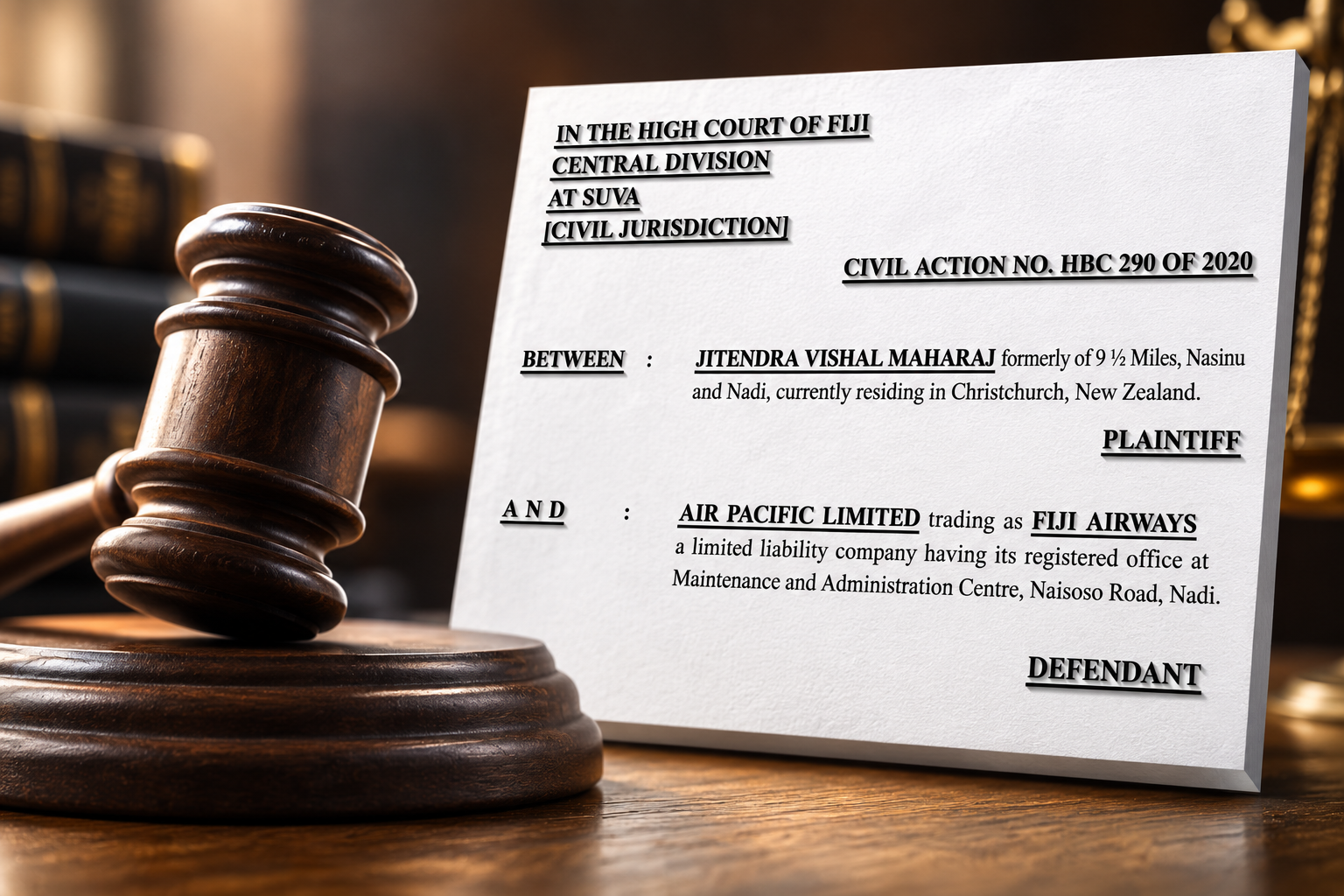
The High Court has ruled that a former Fiji Airways pilot can question the airline about the lease agreement for the aircraft involved in an in-flight pressurisation incident, finding the document could be relevant to determining liability.
In a ruling delivered on 24 June 2026, Acting Master Liyanage Kashyapa Wickramasekara held that the aircraft lease agreement is directly material to the negligence claim brought by former First Officer Jitendra Vishal Maharaj against Fiji Airways.
Maharaj alleges he suffered serious barotrauma, hearing loss and other medical complications after a pressurisation failure aboard a Fiji Airways aircraft in October 2017. He claims the airline breached its duty to provide a safe workplace by continuing to operate an aircraft that had previously experienced pressurisation problems.
Fiji Airways opposed questions relating to the aircraft’s lease, arguing the agreement was commercially confidential and irrelevant to the issues in dispute.
However, Acting Master Wickramasekara rejected that argument, finding the lease could contain provisions relating to airworthiness, maintenance obligations and operational responsibilities that may assist in determining whether the airline had actual or constructive notice of defects and whether it complied with its duty of care.
The Court ruled that interrogatories concerning the lease agreement are permissible because they are relevant to the pleaded negligence claim and could help narrow the issues before trial, while noting that any claims of confidentiality can be dealt with during the discovery stage.
While the Court disallowed several proposed questions that were considered ambiguous, irrelevant or sought privileged information, it allowed numerous others relating to the lease agreement, aircraft maintenance obligations, return of the aircraft, inspections and other operational matters.
The ruling does not determine liability in the case but allows the plaintiff to pursue further information that the Court considers relevant to the fair determination of the proceedings.