Faith is not simply about what happens inside a church, but more about people, community, culture and the environment that surrounds them.
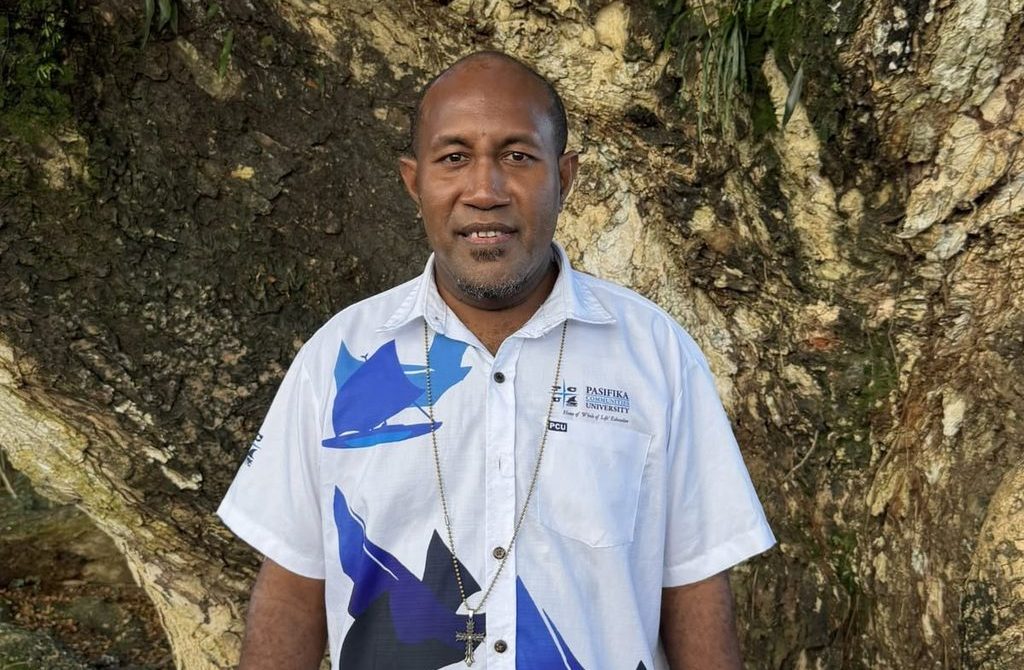
Reverend Father Jabez Akao, an Anglican priest from the Solomon Islands, has spent the past two years at Pasifika Communities University in Nasese, where he has been pursuing a Master of Theology while serving as student president.
He has completed his studies and is now awaiting the results of his thesis, which explores the doctrine of sanctification, or holiness.
The journey into priesthood was influenced by his father, who was also a member of the clergy.
But beyond family influence, he was drawn to the ministry by a desire to create change in communities affected by social unrest and other challenges.
His studies had since broadened his understanding of what it means to serve people.
Growing up in the Solomon Islands, Akao said his theological education had largely focused on the salvation of the soul and the spiritual aspects of life.
At Pasifika Communities University, he encountered a more holistic approach that considers the physical, social, economic, political, spiritual and environmental dimensions of human life.
That thinking has also shaped his thesis.
Drawing from the Lau dialect of Malaita, Akao uses the concept of Abua, or holiness, to challenge what he sees as a narrower understanding of sanctification.
He shared that holiness is not simply about the relationship between an individual and God.
It also encompasses relationships with the community, nature and the environment.
His message extends to climate change.
Akao believes Pacific people cannot separate themselves from their environment because they are part of creation.
He also believes young Pacific scholars must remain grounded in their culture and reconnect with their communities.
“It’s only your rootedness that enables you to be a voice within your community,” he said.
Meaningful change begins with knowing where you come from, understanding your stories and using that foundation to serve others.