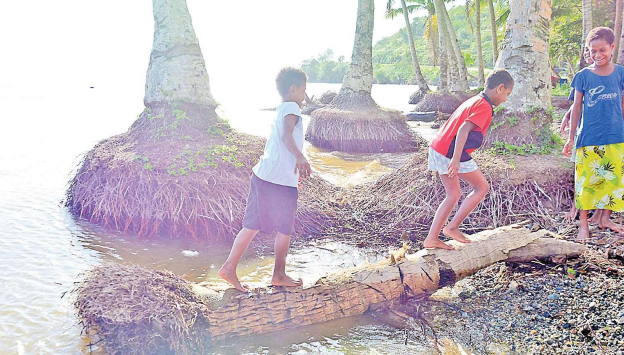
FOR many vulnerable coastal communities in Fiji, local adaptation strategies such as building seawalls or raising houses are no longer sufficient to combat encroaching seas and escalating storm surges. Consequently, managed retreat and the relocation of vulnerable settlements have emerged as critical necessities for human safety.
The World Bank Group Fiji Country Climate and Development Report (CCDR) emphasises that managing spatial exposure is essential, noting that “spatial planning is the (low-cost) key to protecting infrastructure and protective ecosystems”, requiring authorities to “embed climate-sensitive land-use planning into the upgrading of informal settlements and expand local conservation agreements in flood-prone watersheds and coastal areas”.
However, moving a community involves far more than simply constructing new houses on higher ground; it represents a profound disruption of ancestral ties, cultural heritage, and traditional ways of life. The World Bank highlights the immense social, cultural, and financial complexities involved in managed retreat, emphasising that relocation frameworks must balance infrastructure investments with community safeguards.
Financial hurdles are staggering, as purchasing land, building housing, and extending water, electricity, and transport infrastructure to inland sites require substantial capital investment. Beyond the economics, the psychological and cultural toll on displaced villagers cannot be overstated, as ancestral burial grounds, traditional fishing grounds, and deep-rooted communal structures are often left behind.
To navigate these challenges successfully, the report recommended that government agencies must work collaboratively with affected communities from the outset.