
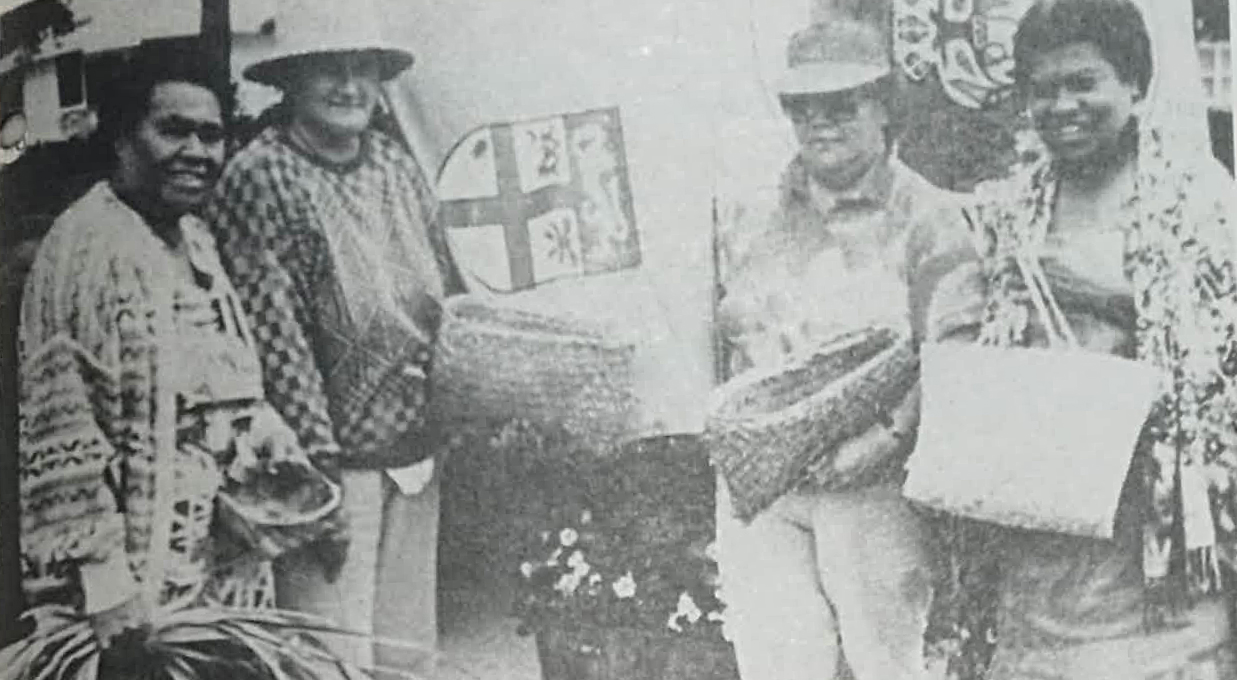
Two Fijian weavers returned from New Zealand with new techniques after attending the first international symposium for indigenous weavers.
The Fiji Times reported on Thursday, April 29, 1993, that the two — Adi Silika Marama, a master weaver from Wailevu Village in Cakaudrove, and Seniloli Sovea, a contemporary weaver of Suva — attended the symposium in Papakura, Auckland. The New Zealand High Commission funded their trip.
The symposium was the first of its kind and brought together experts in indigenous weaving from North America, the Pacific Rim, and the South Pacific region. The event was arranged to mark the International Year of Indigenous Peoples, which the United Nations had declared for 1993.
During the 12-day program, participants exchanged ideas and experiences through seminars and practical workshops. Craftspeople shared their techniques, designs, styles, and demonstrated how traditional knowledge was passed down through generations.
For Adi Silika, who was recognised in her village as a keeper of traditional weaving methods, the symposium provided an opportunity to observe how different cultures prepared and preserved fibres.
For Mrs Sovea, whose work reflected a more contemporary style based in an urban setting, it was an opportunity to see how ancient designs had been adapted for modern use.
Both women said they had learned new weaving styles and would be able to teach those techniques to other weavers in Fiji. They demonstrated the fine mats and baskets distinctive to Cakaudrove and explained the significance of patterns representing family and vanua ties.
They also learned about the methods Māori weavers used to treat raw fibres and prepare them for weaving. This included preparing New Zealand flax, known as harakeke, which was stripped, softened, and coloured with natural dyes.
Officials of the Fiji Arts Council said the exchange was valuable for cultural preservation. At the time, concerns had been raised that younger generations were losing interest in weaving because of the availability of goods. Programs such as the symposium helped renew pride in handmade crafts.

