
The agriculture sector, long considered the backbone of Fiji’s economy, has always looked to mechanisation as the way forward. Modern agriculture techniques allowed for better investment and engagement into the sector.
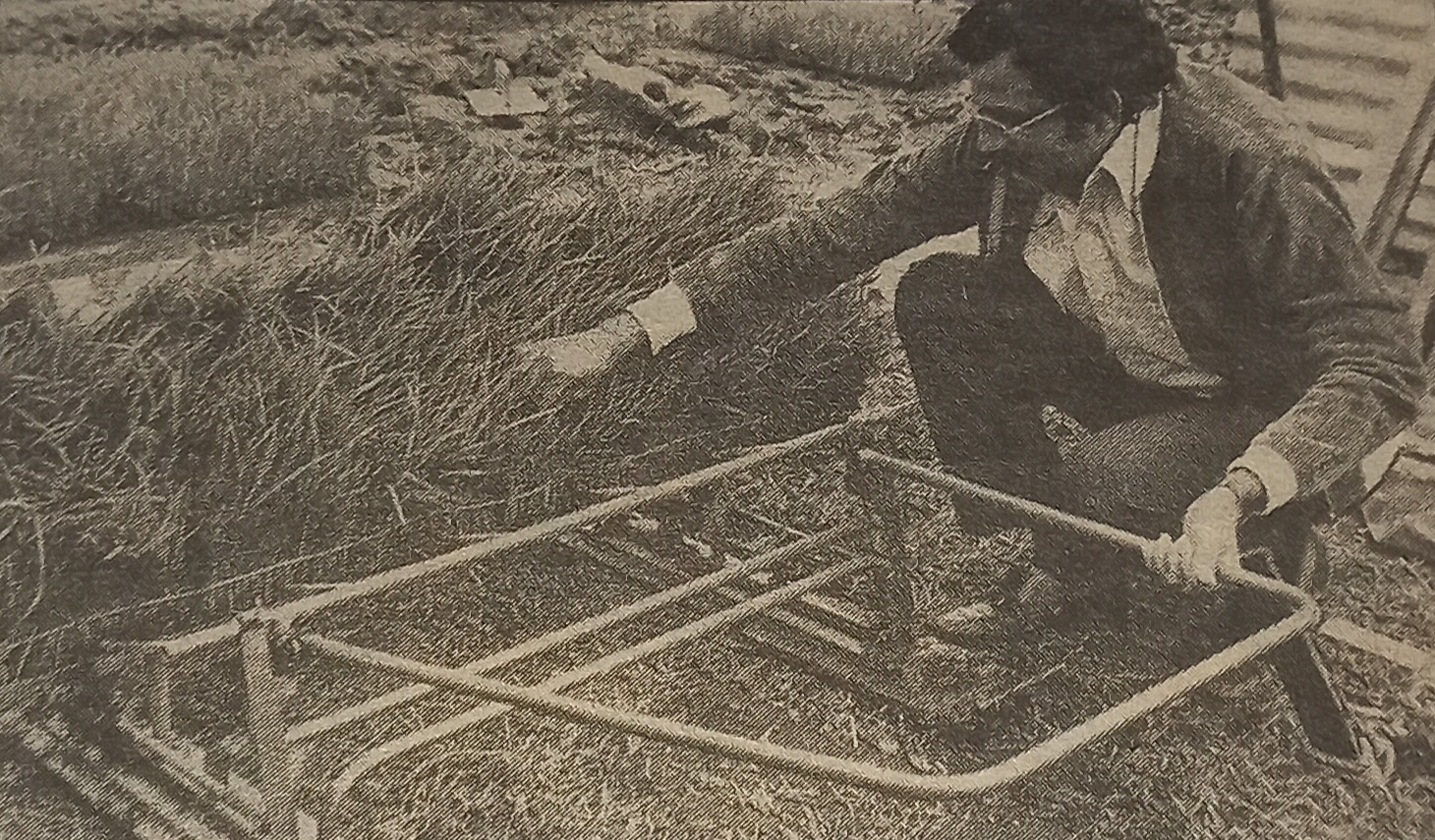
A good example of this was a simple machine introduced by the Ministry of Agriculture in 1987 which was invented to ease the task of transplanting rice in irrigation and rain-fed rice-planting areas.
The Fiji Times recorded this milestone achieved on September 4 that year and captured the “huge relief” expressed by many farmers, especially those with not enough labourers on their farms. The manual rice transporter, as it was known, had very few moving parts.
Since there was no fuel consumption, the machine required little repair and maintenance work because only a very few nuts and bolts were used in its construction. In addition, it only weighed 26 kilograms, which made it portable and easy to use.
The man responsible for introducing and modifying the manual transplanter, Prakash Chand Girdhari, said all the features made it the ideal small machine for rice farmers in developing countries where farmers did not need complex machinery on their farm.
Apart from this simplicity, the machine had many other advantages for rice farmers in the irrigation and rain-fed areas.
For one thing, it reduced the amount of time taken to transplant a whole field of rice.
Preliminary studies at the Koronivia Research Station showed an area of land which took 288 hours to hand transplant could be completed within 80-100 hours with the use of the manual rice transplanter.
Mr Girdhari said the machine was a time saver.
“What’s more, it also reduces the drudgery — a lot of it in manual work so we minimise that and make transplanting easier,” he said in the article.
“Moreover, spacing is very important, this is no issue with the use of the manual rice transplanter, a 20cm by 20cm, spacing which is maintained thus allowing optimum plant population, and if we have optimum population then we have optimum yields.
This was very important because the farmer who would be hand-transplanting would not be able to keep to the 20cm by 20cm spacing which meant that he would not be able to maintain optimum plant population.
The manual rice transplanter also assisted in reducing the number of seedlings used per hill.
Although this could be regulated by the sowing density of the seed, by using the new method of transplanting, the seed rate could be reduced to 40-45/kg per ha which meant a good saving of seeds.
Using the machine, a farmer also maintained the correct depth which is an all-important factor in rice planting.
“If done manually the farmer is not able to maintain same depth because he is planting by hand and shallow depth is important to increase tilling.”
If the seeds were planted deeper than 4cm then the original roots starts decaying and new roots start coming up. This meant the plants would not be able to recover early hence tilling time would be wasted.
“But by using the transplanter, when we plant to a depth of 2-3cm then the original roots start functioning immediately and other plants tilling after 10 days,” explained Mr Girdhari.
Another significant impact of the manual rice transplanter is its ability to tackle the problem of the volunteer crop in rice fields, particularly in the irrigation scheme.
“Volunteer crop is the major problem in all irrigation schemes in the country. Experience has shown that transplanting can significantly reduce this problem but as transplanting a field of rice manually takes a lot of time and labour.
“The manual rice transplanter is the answer to this frustrating problem since it takes time and also minimises labour.”

