This article is the second part of the historic address by Deputy Prime Minister and Minister for Finance, Strategic Planning, National Development & Statistics, Professor Biman Prasad on Wednesday 6, December, 2023, when he became the first regional leader to open the Australasian AID Conference at the Australian National University in Canberra. He highlighted how Australia can become part of an integrated Blue Pacific, which will become one of the great development and political shifts of this century.
Continued from Saturday December 23.
What Australia can do
When the Fijian Prime Minister returned from his official visit to Australia a few weeks back he expressed his confidence in the potential for an expanded partnership between Australia and Fiji and indeed the wider Pacific. Allow me to build on that confidence.
Given our shared futures; my message to Australia is to purposefully consider becoming a part of a fully integrated Pacific.
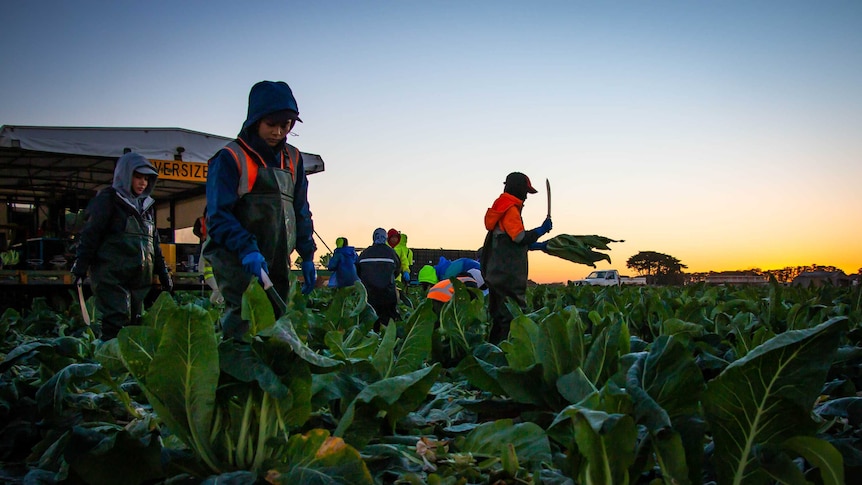
Australia’s businesses: its entrepreneurs, its students, its holy men and women, its skilled workers, its professionals and Australian families should be able to freely move and work across the vast Blue Pacific. So should Pacific islanders – all Pacific islanders – not some Pacific “ islanders.
As they do so they will create new opportunities across our region.
Taken from the world of trade agreements, this would look like a Pacific Most Favoured Nation partnership or agreement.
A most favoured nation partnership would extend – reciprocal privileges including on all visa categories and confirm a shared commitment by all countries to protect citizens, families and businesses – from Australia and from the Pacific – in Australia and across the region.
This is pragmatic, this is doable, and its time has come.
Visa-free Pacific
We have to make a start by lifting visa restrictions on movement of our peoples.
That is the most basic of starting points. We have made much progress with programs that support thousands of Pacific Islanders to work for short periods in Australia and New Zealand.
We have welcomed recent progress on the Pacific Engagement Visa which will allow unskilled Pacific Islanders a pathway into longer term residency.
These are helpful but stop gap measures at best. The next step must surely be a visa free Pacific. That is the most basic building bloc for integration.
This is not about incremental increases to some categories of visas but accepting that Australia and the Blue Pacific are part of a shared region in the world.
The whole region can be a vibrant region of mobility and opportunities for Australians and all Pacific Islanders – not a region of opportunity and mobility only for our elites and the highly skilled.
I have laid out the economic case for this elsewhere and will not bore you with the details this morning. In this room full of development professionals, I will skip to the core: the benefits of a visa free Pacific region that includes Australia and New Zealand are going to be immeasurably substantial for all our economies; for our societies; and for all our peoples.
This is a consideration for all Australians. Is broader interaction between Pacific islanders and Australians a source of anxiety to Australia? This is a consideration for Aboriginal and Torres Straight Islanders.
Do they desire greater interaction with their Pacific families. This is a decision for Australia’s leaders across all its great political parties; here at the federal levels and across its states.
Do they place a high value in a broad partnership with the Blue Pacific as we in the Pacific do with Australia? I can assure you that the Pacific Islands desire for Australia to be a full and equal member of the Pacific family of nations is universal. An economically integrated Blue Pacific will arise from a foundation of visa free movement of people.
It cannot arise without it. Not a chance. And I know that economic integration inevitably means far greater security integration. We will all be more secure for it – not less.
I encourage Australia to give due consideration to the call for establishing a fully integrated region. Pacific’s leaders are unanimous that this is an idea whose time has come.
Response to climate change
I turn attention to the climate emergency that has been unleashed on the Blue Pacific. I am speaking to an audience that is very familiar with the scale of impacts of climate change across the Pacific.
I know as well, that many of you have worked on Australia’s humanitarian responses to climate disasters. Many of you may be quietly living with the trauma of working in postcatastrophe settings long after your return.
Many of you would have seen first-hand the intense impacts of climate catastrophes impact upon women, people with disabilities, children, and those living in very remote communities and islands.
I am deeply grateful for your support in those trying times and I am certain that the region shares its gratitude. I know I don’t need to convince this audience of the need to act urgently on climate change.
A temperature rise beyond 1.5 Celsius will have grave impacts on the Pacific. At a 1.5degree Celsius temperature rise, Pacific Island economies stand to lose between 40 to 80 per cent of their land-based economies by the end of this century.
The 1.5-degree Celsius goal may be breached as early as 2030. Breach of 1.5 is effectively a death sentence for the Pacific. That is why COP28 is so crucial to us.
Pacific’s leaders are not travelling to Dubai to bury the 1.5-degree goal in its desert sands. They are there to save the 1.5-degree goal from being buried.
Country after country across the Pacific have said they do not desire to be relocated. They want to stay on their lands; preserve the identities, pass on their timeless heritage to generations yet to be born. 1.5 Degree Celsius is about lot more than economic losses and damage. A lot lot more.
With humility, I urge Australian businesses and communities to support our efforts to secure the 1.5-degree Celsius target.
This will need enhanced climate action by Australia domestically and solidarity with the Blue Pacific inside the halls where the World decides the future of our planet. We are fighting against much of the world to hold on to this goal.
It would be unfortunate if we could not count on the people, communities, and governments of all the states of Australia and as we take on the world in this fight of our life.
Resources to win battle
To win, we need resources. In our battle against climate change, we find ourselves in the midst of another reality: an international financing system that systematically undermines small states.
The global financial architecture was not designed with small states in mind. Small states cannot bring their adaptation programs to the private markets because of scale.
Small states cannot borrow to rebuild the same infrastructure over and over again each time they get washed away be ever more gruesome storm surges.
The global financial system is broken. Very few Pacific States are in a position to take new loans for necessary for the scale of infrastructure that is needed.
No Pacific State should have to borrow to respond to humanitarian crisis that results from climate catastrophes. Yet this is precisely what we are forced to do; catastrophe after catastrophe after catastrophe.
And when Pacific States borrow for humanitarian recovery – it means that something else has to give. Inevitably investments in health, education and social protection suffer.
Pacific’s leaders are calling for all climate finance vehicles to have dedicated small states windows – from the Green Climate Fund to climate funds within the ADB, World Bank and IMF.
And yes, this must include the yet to be operationalised loss and damage fund. All special purpose small states funds need to have three crucial elements.
First, that they can be accessed rapidly. Second, that they recognise that small states cannot be subject to the same bureaucratic hurdles that larger countries with large bureaucracies can.
Third, they should be largely grants. And if they are loans, they need to be of an ultra-concessional nature with extended repayment periods. Let me be very clear on this.
The international financial system needs fundamental transformation if the small states are to have a fighting chance. It does not need tinkering on its edges.
I hope that Australia will use its influence to secure the fundamental reforms that are so necessary to give the world’s most vulnerable small states a fighting chance. Is this too much to ask?
Does anyone really believe that the smallest states in the world should be required to take out loans to pay for the impact of a climate crisis that we didn’t cause?
Surely nobody thinks that borrowing terms should be the same for Kiribati as they are for India, Indonesia and other large economies.
Budget support is the way to go
My last contribution is on the “how” of international development. In Rarotonga, Pacific leaders selected the theme ‘our choices, our voices, our Pacific Way.’
Applied to the world of climate and development, this means that assistance must shift rapidly towards budget support. I am glad that Australia is moving in this direction and encourage it to take deeper steps in this direction.
Today, Australia’s direct budget support stands at around 10 per cent of its total assistance. There is a long way to travel. Development support through national budgets is the surest way to ensure that development is nationally owned and locally led.
This will allow Pacific governments and civil society to deepen their relationships as they become implementing partners for national programs, rather than for external development programs.
The Pacific is ready for this step up. The direction of travel must be towards multi-year financing agreements. Few climate adaptation investments can be designed and delivered in short three-year cycles — very few.
None can be delivered through an annual financing plan! The Pacific Islands find themselves on a cliff’s edge facing an interlocking climate-fiscal-development crisis.
The time for business as usual and slow incremental change in the Australia- Pacific partnership has passed.
Deep and broad partnership
I pray that the suggestions I have advanced are given your consideration in framing a far deeper and broader Australia and Pacific partnership — one that promotes growth and development here in Australia and across the Pacific; one that promotes stability across the whole region; a partnership that ultimately makes our great Blue Pacific far more secure as a region. That should be the strategic response to the geopolitical uncertainties of our era.
Australia lies at the heart of the new economic and political centre of the World. In an expanded partnership, I envision the potential for Australia working with the countries of the Blue Pacific to rise as the World’s superpower for climate solutions on land and across our seas.
Australia as a fully integrated part of the Blue Pacific will be one of the great political and development shifts this century. I encourage Australians to consider the infinite possibilities that will flow from this.
The Governments of all Pacific islands and all its peoples will walk in step with you as you undertake the steps necessary to get us there. This is our time. Yours and ours.
• Prof Biman Prasad is Fiji’s Deputy Prime Minister and Minister for Finance, Strategic Planning, National Development & Statistics. The views expressed in this article are his and not necessarily shared by this newspaper.