
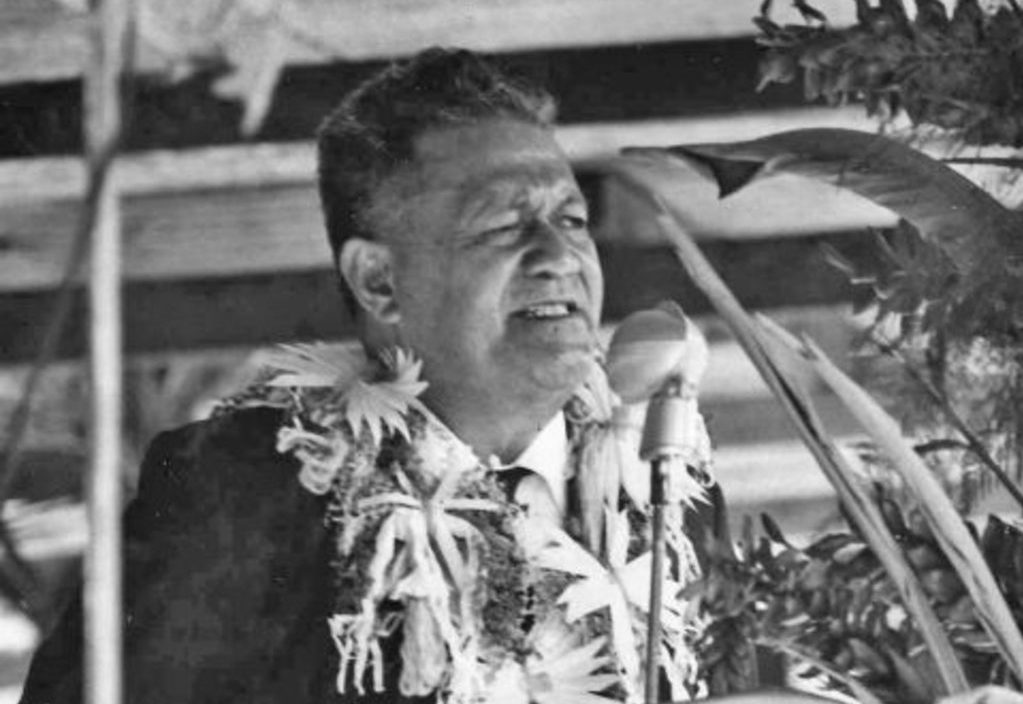
March 13 this year marked 145 years since the chiefs of Rotuma ceded the island to Queen Victoria on May 13, 1881.
This was no doubt an epoch moment in the island’s history and identity.
Across Fiji and throughout the Rotuman diaspora, communities once again gathered to celebrate Rotuman Language Week, honouring the customs, language and traditions that have sustained the island people across generations.
This year’s theme, “Ȧf’ak, putua, a’pumuaạ’ak ma rak’ak ‘os fäega ma ‘os ag fak Rotuma, la se maoen ‘e ‘os tore” calls on Rotumans to treasure, nurture and teach their language and culture so it may endure for future generations.
At the heart of that mission lies education.
And few names loom larger in Rotuma’s educational and cultural history than the late Senator Wilson Fagamaniua Inia who is widely regarded as the man who guided Rotuma into the modern age while fiercely protecting its cultural soul.
Humble beginnings, extraordinary promise
Born in Motusa on October 2, 1908, Inia was the son of a Methodist minister and grew up during a period of profound social and political change.
His life would become inseparable from the story of Rotuma’s own transformation in the twentieth century.
From humble beginnings, Inia’s academic promise quickly became evident.
Educated at Jubilee School and Marist Brothers School in Suva before continuing his studies at Davuilevu, he qualified as a teacher at just 16 years old, a remarkable achievement for a young Rotuman of his era.
But for Inia, education was never merely about examinations or certificates.
It was about building character, discipline and self-reliance.
That philosophy was perhaps best captured in the famous Rotuman proverb he championed: “Hathat se puku ka ha’ha’ se pupu” — “Read books and pull weeds.”
The saying reflected his belief that intellectual growth should never be separated from practical labour and humility.
Students, he believed, should be equally comfortable in the classroom and in the field, grounded both in knowledge and service.
Building the foundations of learning
It was this vision that shaped one of his greatest legacies, the establishment of Rotuma High School in 1958.
As the school’s founding principal, Inia laid the foundation for generations of Rotuman students who would go on to serve in education, government, business, medicine and the church both in Fiji and abroad.
For many Rotumans, access to secondary education had once meant leaving the island entirely.
Rotuma High School changed that trajectory forever.
Yet Inia’s influence stretched far beyond the classroom.
A devout Methodist preacher and respected moral leader, he served communities across Fiji and even spent time in Australia during the late 1930s as a Methodist missionary.
His leadership within the Methodist Church became deeply intertwined with his wider vision for social progress in Rotuma.
Service beyond the classroom
He also recognised that education alone could not uplift communities without economic empowerment.
Through his work with the Rotuma Cooperative Association, Inia championed financial literacy, self-sufficiency and cooperative development at a time when many island communities remained economically vulnerable.
After studying cooperative systems in the United Kingdom on a British Council scholarship, he returned to Rotuma determined to strengthen local economic structures.
He even taught bookkeeping free of charge to help local cooperatives function effectively, which reflected his lifelong commitment to service over personal gain.
Inia’s leadership would eventually carry him onto the national stage.
Following Fiji’s independence in 1970, he became Rotuma’s first representative in the Senate, serving with distinction until his death in 1983.
At a critical time in Fiji’s nation-building journey, Inia brought to Parliament not only the concerns of Rotuma, but also a deeply principled approach to leadership grounded in humility, fairness and public duty.
His contributions to education and community development were formally recognised in 1969 when he was appointed a Member of the Order of the British Empire (MBE).
A leader of balance and principle
But titles and honours alone cannot fully explain why Wilson Inia continues to command such reverence more than four decades after his passing.
Anthropologist Alan Howard, in his biography Hef Ran Ta, meaning The Morning Star, described Inia as a man who embodied balance, he was modern yet deeply traditional, disciplined yet compassionate, principled yet pragmatic.
Howard wrote that Inia “dedicated his life to public service, and did so with grace, integrity and courage”, describing him as a leader who advocated development while still believing firmly in preserving cherished traditions.
That balance remains especially relevant today.
Carrying the language into the future
As Rotuman communities navigate the pressures of migration, modernisation and cultural assimilation, the preservation of language and identity has become increasingly urgent.
Across the Pacific, indigenous languages face decline as younger generations become more disconnected from ancestral customs and mother tongues.
For Rotumans, Language Week is therefore more than celebration, it is an act of cultural survival.
And in many ways, Wilson Inia’s life offers a blueprint for that survival.
He embraced education without abandoning tradition. He advocated progress without sacrificing identity. He believed Rotumans could confidently engage with the modern world while remaining firmly rooted in ag fak Rotuma, the Rotuman way of life.
Today, his legacy continues through annual celebrations such as Wilson Inia Day at Rotuma High School, where students honour his memory through traditional dance, sports and cultural competitions.
More importantly, it lives on in the generations of Rotumans who continue to speak their language, practise their customs and carry forward the values he championed.
One hundred and forty-five years after cession, and more than 40 years after his death, Wilson Fagamaniua Inia remains one of Rotuma’s brightest guiding lights, a true Hef Ran Ta, a morning star whose influence still shines and guides across generations.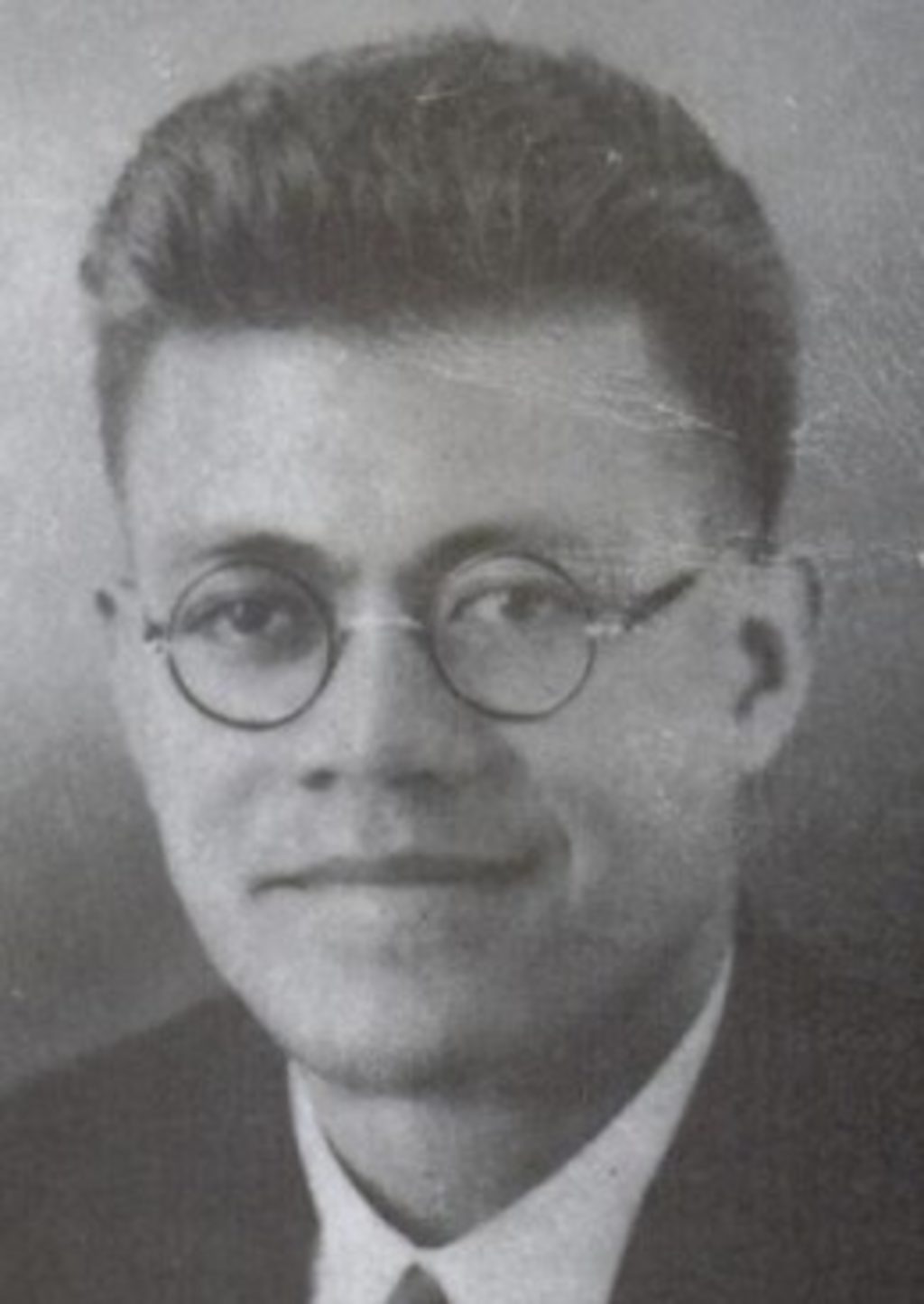
Wilson Fagamaniua Inia in a formal portrait taken in 1938,reflecting his lifelong commitment to education, leadership and the preservation of Rotuman identity. Picture: SUPPLIED
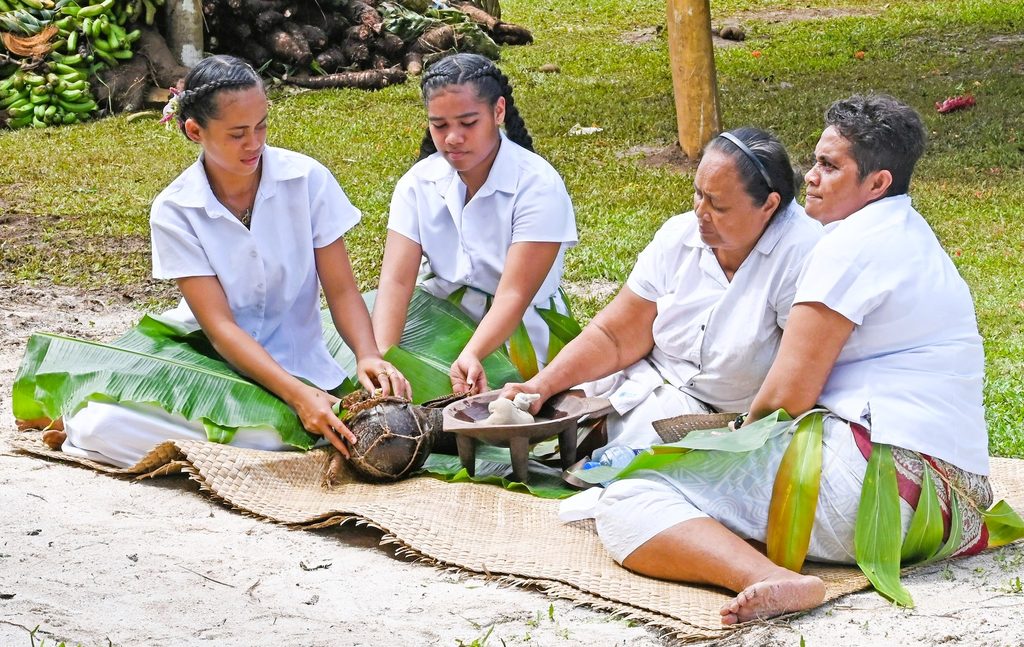
Students and teachers at Rotuma High School continue to uphold the legacy of their founding principal through education and cultural learning. Picture: FIJI GOVERNMENT
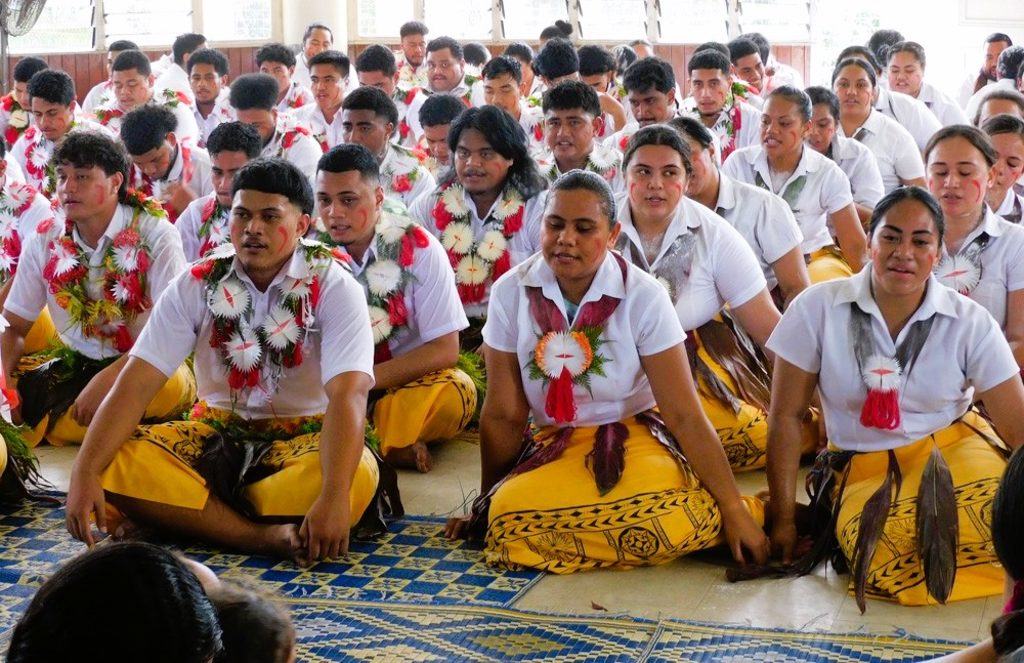
Rotuman communities gather during Language Week celebrations, honouring 145 years since the cession of Rotuma and
reaffirming the call to preserve language and culture for future generations. Picture: SUPPLIED

