AS a young boy growing up in Ra, Shaneel Chandra would spend hours collecting stones and soil at his maternal grandparents’ home in Waimicia, mixing the earth with water and shaking it to see what happened.
His grandmother thought he was making a mess.
Shaneel however, believed that the experiments were an early expression of a curiosity that would eventually take him from the rural landscapes of Rakiraki to university laboratories in Fiji and Australia, where he would investigate the chemistry of the environment and the quality of the world’s waterways.
He did not know it then, but the questions he asked as a child were laying the foundations for a career in science.
“I was always interested in the why, as to why things happen,” he said.
Years later, that childhood fascination with soil and water would find an echo in his master’s research at the University of the South Pacific (USP), where he investigated the movement of sediment and pollution around the Lami landfill.
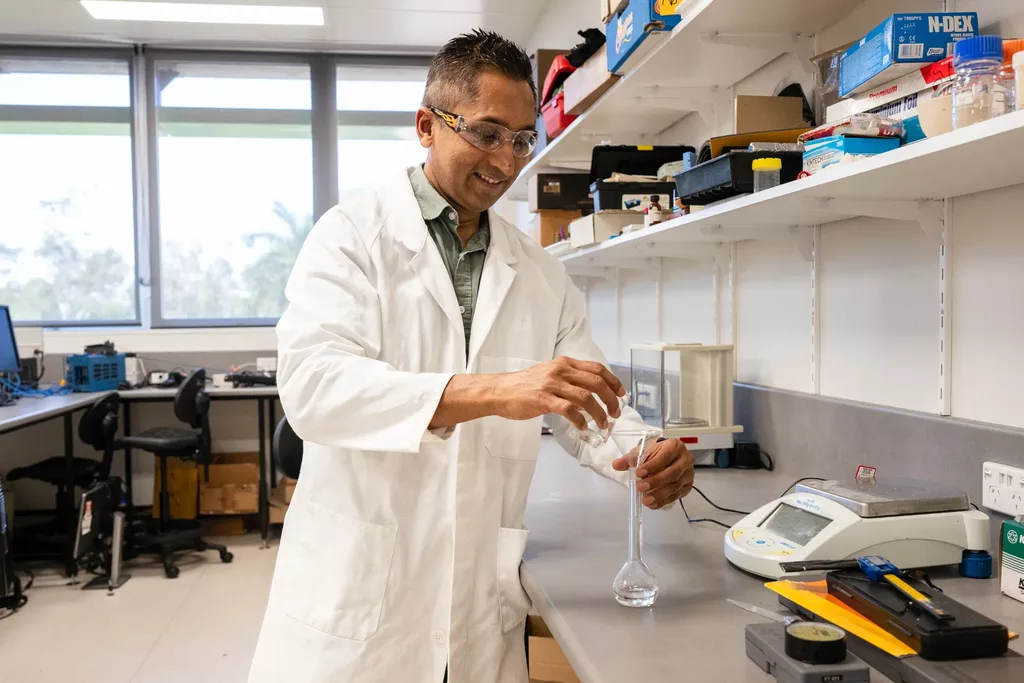
Today, Dr Shaneel Chandra, as a senior lecturer in chemistry at CQUniversity in Australia, brings together environmental science and analytical chemistry to investigate pollutants, develop monitoring technologies and better understand the pressures facing aquatic ecosystems.
Yet, despite the distance his career has taken him, the natural environment of Fiji remains close to his heart.
Learning from the land
Shaneel attended primary school in Rakiraki before moving to Lautoka for secondary education at Natabua High School.
His parents, both teachers, played an important role in his upbringing, while the rural environment surrounding him offered lessons that could not be confined to a classroom.
He grew up listening to older people discuss the land, including when to rotate crops, when to clear vegetation and how to recognise signs of approaching cyclones.
Those observations helped shape his appreciation of the relationship between people and their environment.
In these formative years, Shaneel understood that knowledge was not something found exclusively in books or laboratories.
It was also embedded in the experiences of people who had spent generations observing the natural world.
His interest in science was not always straightforward.
During his secondary school years, he found accounting and economics easier than science.
But the challenge of understanding scientific concepts ultimately became part of its appeal.
He credited supportive teachers with helping him persevere, particularly those who took the time to break down difficult concepts and make them accessible.
“I went into chemistry because I had teachers who were very kind and very supportive,” he said.
The experience also shaped his understanding of education in Fiji, where students whose first language is not English can struggle with technical subjects taught in English.
He believes teachers who can make challenging concepts understandable can help young people recognise their potential in fields they might otherwise abandon.
A scholarship that changed the course
After completing secondary school, Shaneel enrolled at USP, graduating with a Bachelor of Science in Environmental Science.
The transition from the Western Division to university life in Suva exposed him to new subjects, teaching methods and friendships.
He remembers the freedom of university life, including walking between campuses and spending time with friends along the Nasese coast.
But an important opportunity soon emerged.
After completing his undergraduate studies, Shaneel obtained a position at USP’s Institute of Applied Sciences.
The late Professor Bill Aalbersberg subsequently offered him a choice between employment and a scholarship to undertake postgraduate studies.
Shaneel chose the scholarship.
It was a decision that helped him continue his education at a time when the cost of postgraduate study could be prohibitive.
His master’s research focused on the now closed Lami landfill, which had long been discussed as a possible source of pollution affecting the surrounding coastline and harbour.
Researchers had raised concerns about heavy metals, including tin compounds, in Suva Harbour.
Shaneel wanted to investigate the evidence rather than simply repeat assumptions about the source.
He collected and analysed soil samples from the landfill, as well as samples from the coastline, mangroves and investigated whether plants growing around the dump could remove heavy metals from the soil.
The work required two years of demanding research and helped establish his interest in environmental pollution.
After completing his master’s degree in 2002, he returned to scientific work at USP before moving into teaching in 2003.
He later became an assistant lecturer and, in July 2007, left for Macquarie University in Sydney to pursue his doctorate.
From the brain to the ocean
His doctoral research was markedly different from his earlier environmental studies.
At Macquarie, Shaneel developed extremely small electrodes, thinner than a human hair, to measure dopamine in the brain of a rat.
The work involved analytical chemistry, a discipline concerned with identifying and measuring substances.
Although the research was focused on brain chemistry rather than the environment, it equipped him with techniques that would later prove valuable in environmental monitoring.
He completed his doctorate before returning to Fiji in 2011 to resume teaching and research at USP.
In December 2015, he joined CQUniversity, based in Rockhampton, Queensland, where the surrounding region’s connection to the Great Barrier Reef catchment offered new opportunities to combine his expertise.
His analytical chemistry background allowed him to investigate nitrogen and other pollutants in water and food, bringing together the environmental knowledge acquired during his earlier studies with the technical skills developed during his PhD.
His research has since included environmental monitoring and the development of sensors designed to detect substances of concern.
In 2025, he also contributed to the United Nations Environment Programme’s Global Environment Outlook-7, serving as a lead author for its freshwater chapter.
The assessment examined the condition of freshwater ecosystems and the pressures affecting rivers, wetlands and other waterways.
Shaneel highlighted that such work to him only reinforced the central principle that what happens on land does on remain on land.
Pollutants can move through waterways into the sea, affecting ecosystems and, ultimately, the people who depend on them.
A reef that brings him home
Working in Australia has given Shaneel opportunities to study the Great Barrier Reef and the pressures affecting its surrounding environment.
But it has also made him more conscious of what Fiji stands to lose.
During a recent visit to Suva, he recalled driving past Suva Point during the Fiji Day public holiday, seeing families enjoying the water and looking towards Nukulau.
The scene reminded him that the environmental pressures being investigated in Australia could also become problems for Fiji.
“The same actions are happening here too,” he said.
He believes Fiji can learn from Australia’s experience, using scientific evidence to strengthen environmental protection before problems become more difficult to manage.
His concern is not simply about protecting coral reefs for their beauty.
Fiji’s marine environment supports food security, livelihoods and the cultural practices of communities whose lives are closely connected to the sea.
For a country with limited resources for specialised scientific testing, he stressed that building research capacity and applying existing knowledge are essential.
Science and the wisdom of communities
Shaneel’s environmental philosophy also reflects the influence of the people among whom he grew up. He believes scientific research should work alongside indigenous knowledge and the observations of local communities, rather than dismissing them.
People who live close to rivers, forests and coastlines may recognise changes that outside researchers or government officials have yet to observe.
He highlighted the importance of respecting traditional owners and local knowledge holders when decisions are made about natural resources.
Environmental protection requires more than government regulation.
Communities must be involved, their concerns taken seriously and scientific investigations used to understand the changes they observe.
The lesson returns to the boy who once mixed soil and water in his grandparents’ yard.
His curiosity has taken him into laboratories and international research, but the questions that drive him remain connected to the natural world that first inspired them.
As he continues his work in Australia, Fiji, his home, remains a place whose environment he believes deserves greater attention and protection.
“Understanding nature begins with asking questions, but protecting it requires people to listen, investigate and act before there is too much to lose.”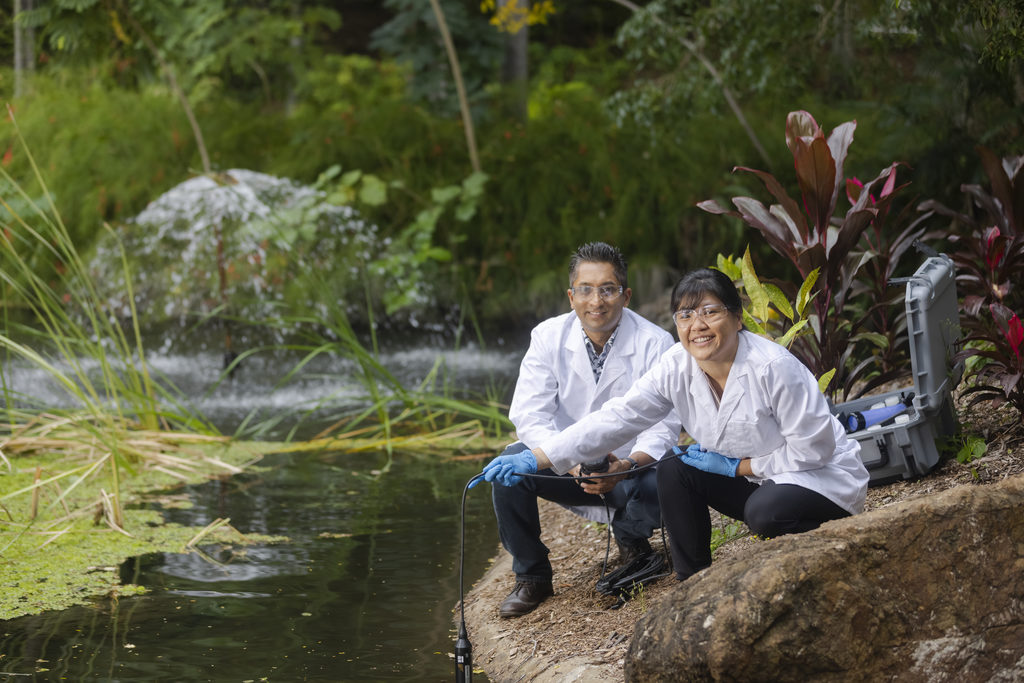
Shaneel with a colleague at CQ University during fieldwork, testing sensors used to monitor water quality and detect potential environmental pollutants. Picture: SUPPLIED
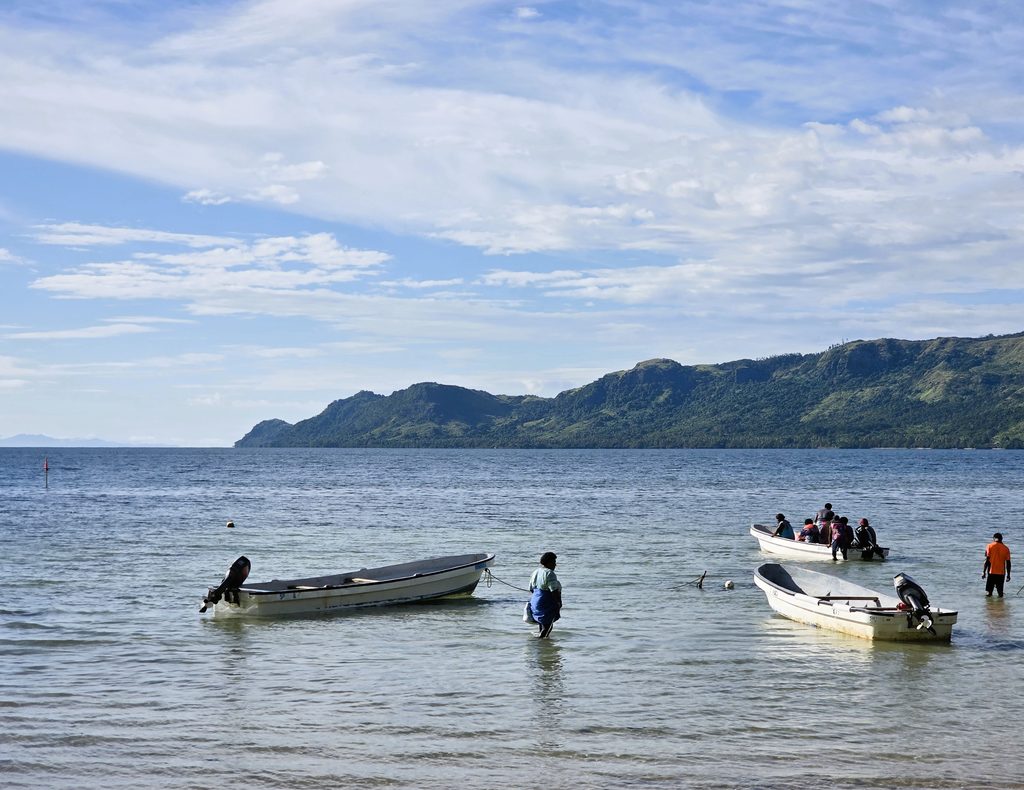
The Ra coastline, where Shaneel grew up. He said views of the ocean anywhere always brings him back to his home province. Picture: ALIFERETI SAKIASI
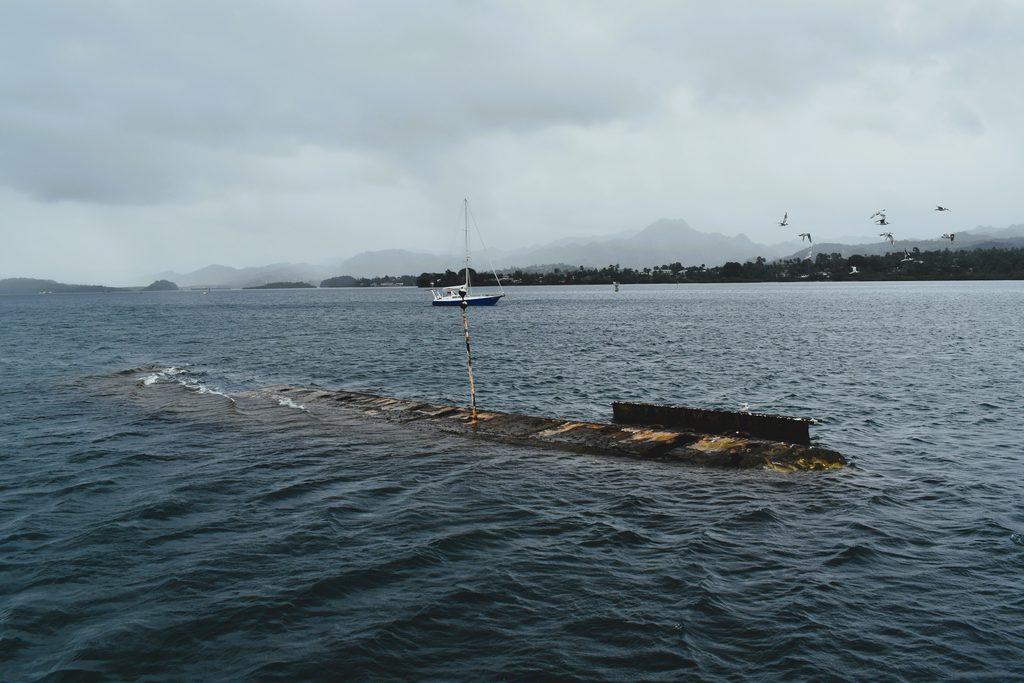
During his master’s studies at the USP, Shaneel investigated heavy metals in soil and coastal environments around the Lami landfill and Suva Harbour, examining their potential environmental impacts and whether plants could help remove contaminants from affected areas. Picture: ALIFERETI SAKIASI