Lens legend
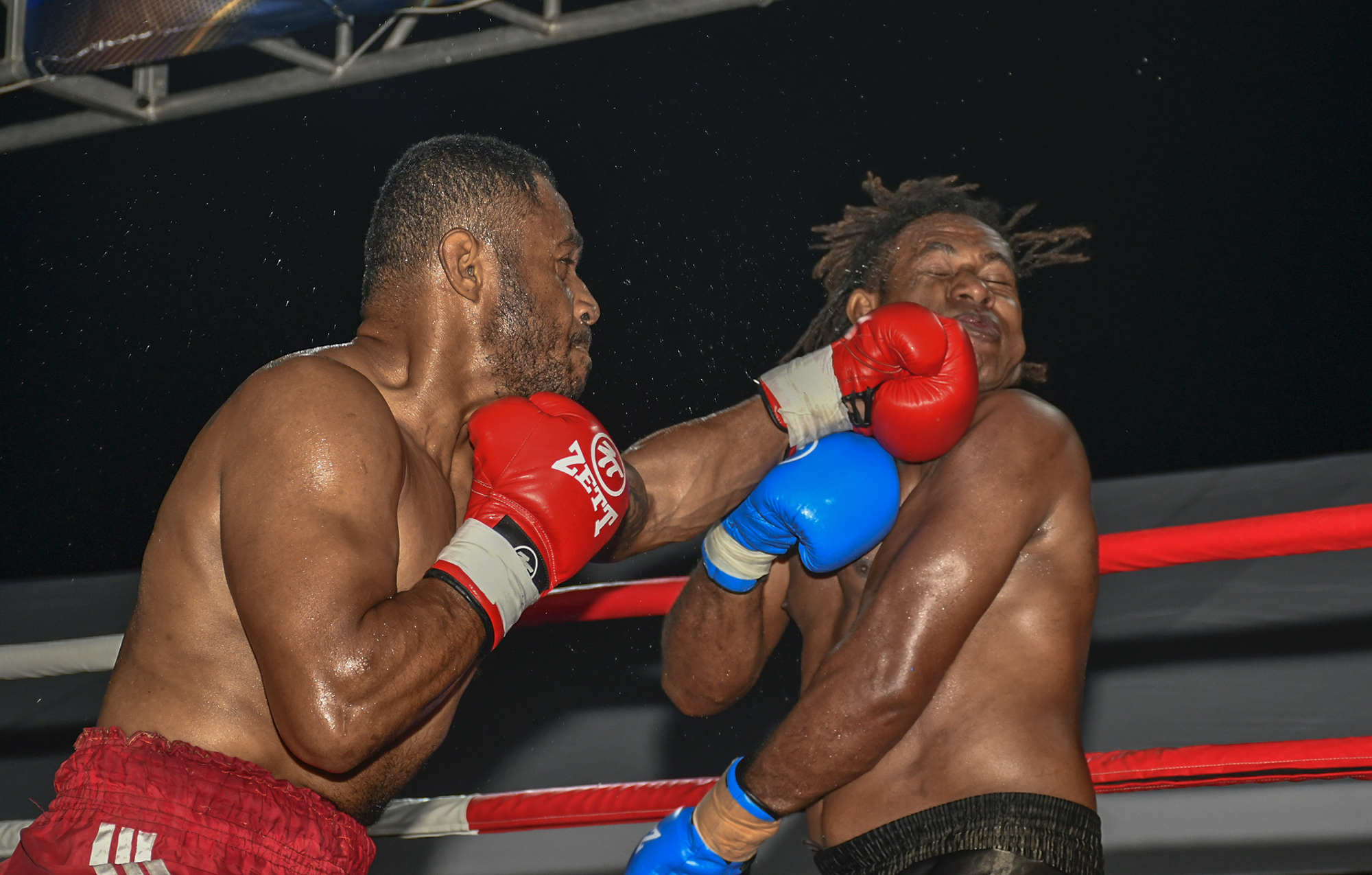
Capturing the intensity of a boxing match at night, with a roaring crowd and split-second action in the ring, takes real skill, timing and courage. Hats off to Baljeet Singh for capturing this unforgettable back-page moment in The Fiji Times (23/11). A powerful photograph is more than just a click! The boxer delivered the punch, but Baljeet delivered the knockout shot with his camera!
NAVNEET RAM (TD)
Lautoka
Two stories
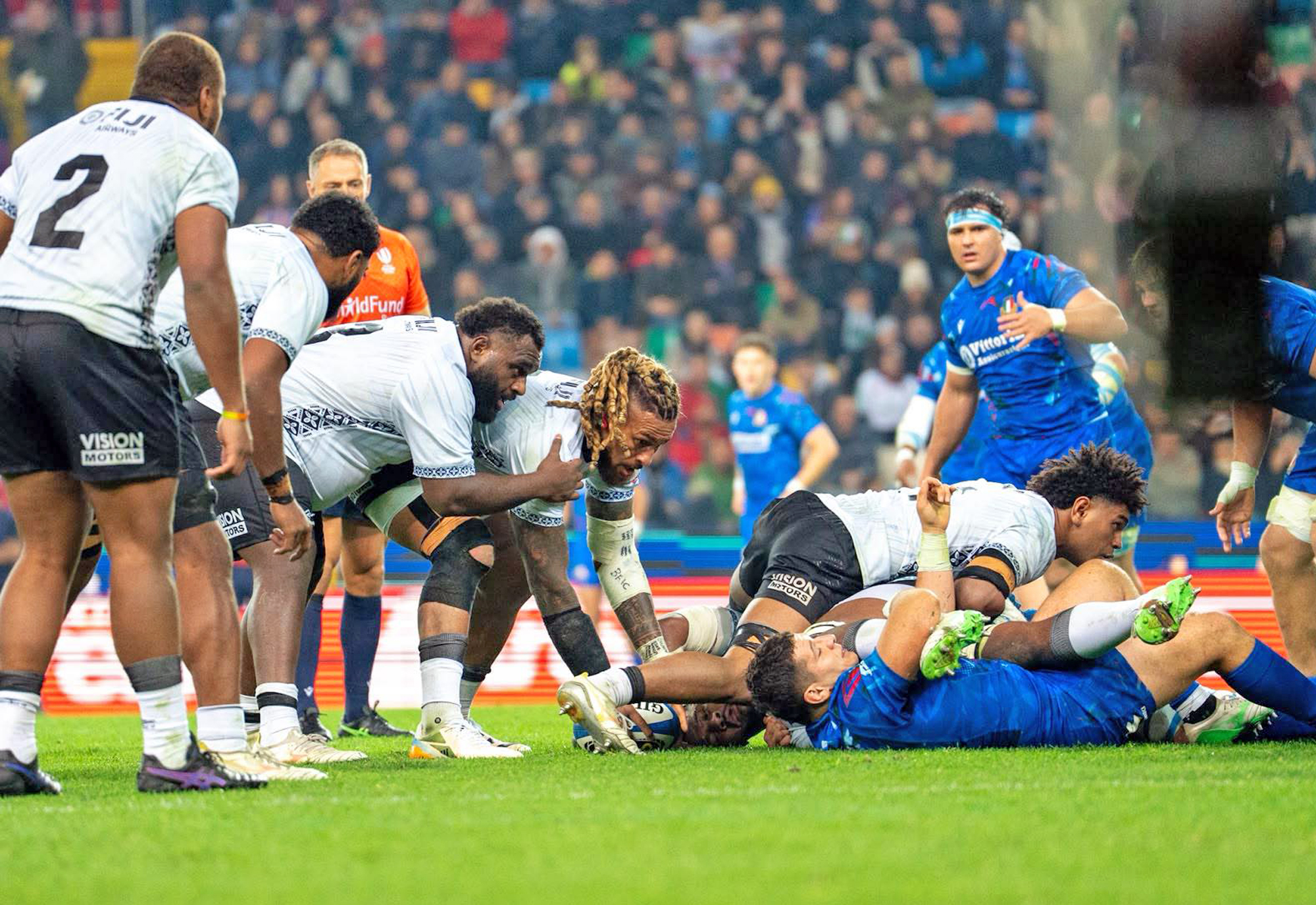
Have the All Blacks become rich or poor in the Northern Hemisphere? If the historical and embarrassing loss to Wales was bad enough, England continued with a mighty performance, outclassing the All Blacks both on attack and defence. Fans from the Land of the Long White Cloud will be unleashing their emotions on their favourite rugby team. Meanwhile, our Flying Fijians survived a determined effort by Italy. Our defence and ability to contain pressure by the Italians brought us a huge sigh of relief and a joyful Sunday. In the end, we got the result we were all eagerly awaiting. For now, coach Jake White will have an improved understanding of the attitudes of our men off the field and their potential on the field. I am anticipating a higher level of focus on fitness and getting specialist coaches to support our Flying Fijians in raising the bar to another level prior to the 2027 Rugby World Cup. All in all, this weekend has been a tale of two stories for the Flying Fijians and All Blacks fans. I would not be surprised if the 2027 Rugby World Cup does not deliver a good fairy tale for both sides unless they increase fireworks amongst the forward pack and widen the search nets for promising players who may have been overlooked.
Floyd Robinson
Micronesia
Water use
Restrictions are being placed on the use of water. The taps are being turned off for certain periods of the day and certain days of the week. Businesses have been told to cut their water use by 30 per cent, and households are rightly barred from washing cars and watering gardens. Everyone is being asked to sacrifice. Fairness demands that these restrictions apply to everyone. However, some may think that grog dopeys use ‘bugger all’ amounts of water. Kava preparation and consumption, particularly in large daily gatherings, uses a considerable amount of water, much of it for non-essential purposes. If a business must cut back and a family must leave the garden dry, it is reasonable to ask why this use is exempt. Tradition and culture matter, but they cannot place anyone above a national water shortage. The authorities should state clearly that the restrictions apply to all and urge everyone to conserve water until supplies recover.
Jan Nissar
Sydney, NSW, Australia
My observation
How quick we complained of water disruption, hot and cold nights, burning bushes, landfills etc. It’s you and I, who are violating the Earth and sea resources. From my village here to Labasa roadsides, we witness burning hedges and bushes. When the Earth has enough of these, it shows its frustration in massive storms and the likes, making people frustrated and in despair. We go to the farms and on our way, we start testing our knives with twigs and small plants. So in six days hiking through bushes, you add more dead twigs and the likes on the ground. Sir, this is just a small observation from the koro.
Jioji O Toronibau
Navetau, Tunuloa
Rugby dominance!
France, England and Ireland made huge statements in the inaugural Nations Championship. Les Bleus beat South Africa and Argentina 21-19 and 45-17, respectively, to finish top of the Northern Hemisphere standings. It’s a pity that France lost 34-32 to the All Blacks away from home in round one. England’s Roses handed the All Blacks their biggest hammering, 37-12, which saw the All Blacks 15s lose their second spot to fall to fifth place. After thumping the Fiji Water Flying Fijians, Ireland also beat the Springboks 20-17. France topped the Northern Hemisphere standings with 26 points, closely followed by England (25 points) and Ireland (24 points). This shows how tight competition in the Northern Hemisphere was. South Africa and the All Blacks 15s finished with 24 points, and the Springboks’ points difference gave them the edge over the All Blacks. South Africa maintained their top spot, but three Northern Hemisphere teams (Ireland, France and England) displaced the All Blacks 15s from second to fifth. With next year’s RWC 15s fast looming, could we see the end of the dominance that the Southern Hemisphere teams have? Apart from England, who won the Webb Ellis Trophy in 2003 thanks to Jonny Wilkinson’s drop goal, the RWC 15s trophy has been kept by the three Southern Hemisphere giants—South Africa (1995, 2007, 2019 and 2023), the All Blacks 15s (1987, 2011 and 2015) and the Wallabies (1991 and 1999). Will we see an upset next year? Only time will tell! As for now, it’s time to enjoy two blockbuster clashes this weekend—France v South Africa and England v the All Blacks 15s!
Rajnesh Ishwar Lingam
Nadawa, Nasinu
Rugby challengers
It seems there is a lot of tit for tat happening within the World Rugby circle. Hope that good sense will prevail in the spirit of rugby. The various laws that are introduced are somewhat causing confusion to the players and coaches. Some decisions that are made by referees are questionable, and when coaches are interviewed, they air their frustration as the laws are not equally applied to all teams. I believe the way it’s going, soon no tackle will be allowed—just play touch rugby.
Juki Fong Chew
Nadawa, Nasinu
COP31 challenge
Those who have attended past COP meetings will understand that the world has achieved limited progress, if any, to limit temperature rise.
Dan Urai
Lautoka
Everyone
is special
MR Nissar confuses identity with value. As a matter of established fact, the iTaukei are the autochthonous inhabitants of these islands and, as such they have a special history which no-one else can claim. They are special in a similar way to the aborigines of Australia, the Maori of New Zealand, the indigenous peoples of the Americas and the Ainu of Japan. Those of us who do not share the same histories as these peoples are not special in the same way, although we are all undoubtedly special in another way that reflects our own particular backgrounds. Right thinkers regard all people, of whatever background, as being of equal value but at the same time they acknowledge the importance of recognising the unique identity of peoples with their own special histories. If we are to achieve clarity on this issue, the type of muddled thinking exemplified by Mr Nissar will have to be avoided.
MICHAEL SCOTT
Morris Street, Lautoka
Body language
Phyllis Simpson’s article (FT 23/11) recalls the cost of being a Fijian Catholic, at Wesleyan hands, in the 1850s. So, I couldn’t help but wonder what contemporary tale the body-language of the four church ministers—one a Catholic—taken at the 182nd anniversary of Catholic arrival, in her accompanying photo, also tells us.
Christopher Griffin
Perth, Australia
Truths, jargons and junkets
When was the last time a COP draft right at the end of the summit was in favour of small island nations and against non-renewable fossil fuels? Maybe those early ones were drafted to sound a bit like the big nations gave a fish about the small nations bearing the brunt of global warming and rising sea levels. The ball was gotten rolling on the ensuing annual talkfest. Talkfest, yes, talkfest because little other than talking has happened year-in-year-out. Some years ago, even our than A-G was left stunned when the final document that came out at the eleventh hour was totally different from the talks and hype over the days leading up to the climax. He couldn’t do anything about it. At COP31, Pacific leaders have reportedly rejected trading away fossil fuel phaseout language for carbon capture, utilisation and storage (CCUS) and electrification targets. CCUS technology is deployed for enhanced oil recovery. Now, all the jargon and junkets aside, what has Fiji done over the past decade to prepare for this era when we are forced to pay close to $4 for a litre of diesel? When El Niño-induced water shortage is hitting our hydroelectric power plants and we are subsequently being further pushed towards thermal power generation, when the cost of living and doing business is unprecedentedly high and when Fiji is rather powerless against natural and external determinants, we are thinking about how much funding we must get in order to fight climate change! We have missed the bus. Not the gravy train that oozes climate funding, but the opportunity to invest into and develop renewable energy infrastructure. We have the wind, sun and the ocean. We cannot wait for someone else to do something. Ok, what if COP31 decided to phase out fossil fuels entirely, let’s say by 2050? Will Fiji have the necessary infrastructure in place and up and running by then to live under a zero fossil fuel system? I laugh out loud each time I see the electric vehicles charging that power is more than 50 per cent likely to be from diesel generators. Electric mai ivei? If today’s leadership doesn’t heed the warnings and signs, it will not be the citizens responsible for the calamity that could befall us over the next decade or two. God is not taking His beautiful Sun away from us; He ain’t stopping the winds neither the ocean waves. We just refuse to pay attention. We think it’s too costly to get the infrastructure to harvest energy from these infinite sources. I don’t think the scriptures talked directly about the Sun, wind and waves potentially sustaining humans when diesel would become unaffordable. But we have failed to capitalise on the science and wisdom He has given us. We have no doubt missed the bus. But there’s a next bus. Fiji just needs to get on board. Let’s not go to COP32. Instead, let’s tell the world we are working on something for the future. They can keep the money that wasn’t coming anyway. Until then, jargons and junkets must be jettisoned. Who cares who paid for the delegation!
Unity, a currency
Fiji will only prosper when we abandon ethnic-based politics and work together. Despite differences in culture and religion, the iTaukei and Indo-Fijians can thrive in harmony through mutual understanding. We must reject the political fearmongering over land. The land has eyes and cannot be taken from the iTaukei. What is actually being stolen from us is a better standard of living. For decades, political manipulators have manufactured land insecurity simply to win votes, trapping our people in poverty while they enjoy lives of luxury. This division must end. Strict laws are needed to hold any party or individual accountable for spreading false, divisive allegations. We must enlighten our grassroots communities on the economic power of unity and learn from one another. Fiji can become the Singapore of the Pacific, and unity is the only road there.
Paula Kaloukocei
Levuka, Ovalau