
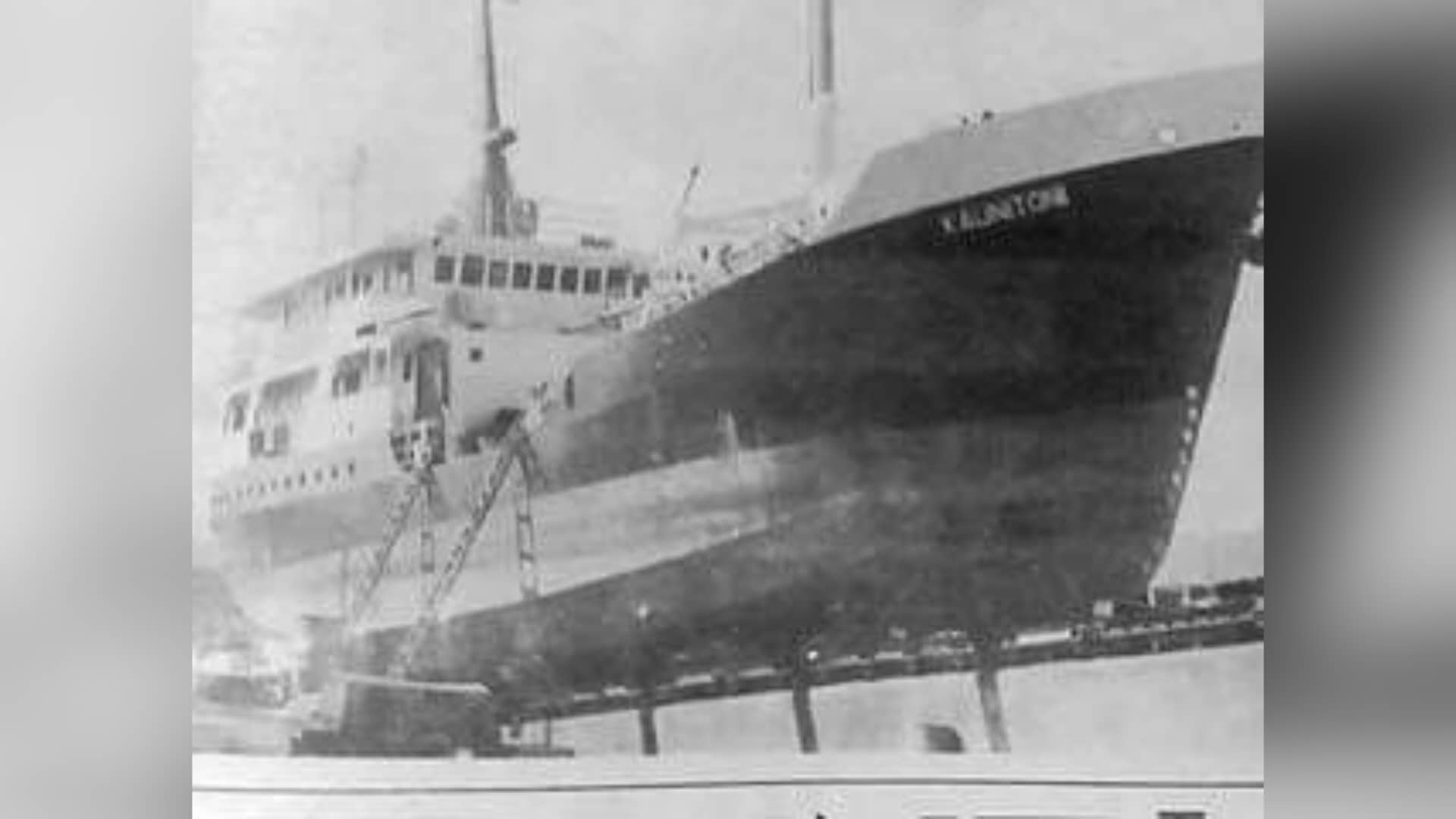
The trouble-ridden Government vessel Kaunitoni was once a case for concern because she broke down during her maiden trip to Lau.
A fault in the lubricating system of the main steel shaft was revealed by the Marine Department as the cause of the seizure.
This was revealed by The Fiji Times on December 21, 1975.
The main shaft of the $5.5m Government ship operated in a stern tube which was filled with oil to act as lubrication for its bearings and also as a cooling system.
Another function of the oil in the main shaft was to help maintain a constant pressure inside the stern tube while the ship was moving.
The director of the Marine Department, Captain John Harrison, who was on board at the time as an inaugural guest, told The Fiji Times that some mechanical defects in the stern tube allowed the oil seal to become “slightly displaced” causing the seizure.
This oil displacement meant there was no more lubricating factor in the tank shaft and the main shaft started over-heating as there was nothing to maintain the constant oil pressure, he said.
Captain Harrison said as soon as the seal failed, water somehow managed to get into the tube and as the heat got higher, the main bearings of the shaft melted and the propeller was unable to function.
The master of Kaunitoni, Captain Jovilisi Vuki, who had wide experience in inter-island vessels in Fiji, said in an interview that they were just approaching the passage to Tubou Village in the early hours of the morning before the shaft had seized.
Captain Vuki said they were travelling at about 10 knots and had to slow ahead as they approached the passage.
As it was still dark, Captain Vuki decided to play safe and gave the order to stop the forward engines.
He gave the order to his engineers to reverse engines so that the ship could wait outside the passage to Tubou until first light because of the risk of hitting the reef.
When Kaunitoni’s engineers frantically tried to start her up again, the engine stalled and would not respond.
Inspecting the fault, engineers on board found that the main shaft had overheated and the lubricating system had failed.
It was then decided that she be towed back to Suva for dry docking and for a thorough inspection of her main shaft.
A spokesman for British Ltd’s engineers, which repaired the shaft in Suva, told The Fiji Times that some of the securing devices in the shaft needed re-locking and the bearings replaced.
Asked whether there was any possibility of the shaft exploding under severe overheating, the spokesman said there was no possible danger of explosion because the fault was not confined to one area of the shaft alone.
He described the failure as only temporary and would have been expected of any new ship.
As soon as Kaunitoni was on the slipway, engineers started work on her around the clock in an effort to complete repairs.
The spokesman said Kaunitoni would be able to sail on her voyage to Lau, but this depended largely on how soon her shaft could be repaired.
A reliable source in the department said one of the reasons for Kaunitoni’s constant delays in the past was her faulty air conditioning unit.
According to the source, the unit now installed was the wrong one.
“The power in the ship had to be worked overtime to enable the air conditioning unit to work properly,” he said.
The source said a new unit to suit the power on board the ship would cost at least $30,000.

