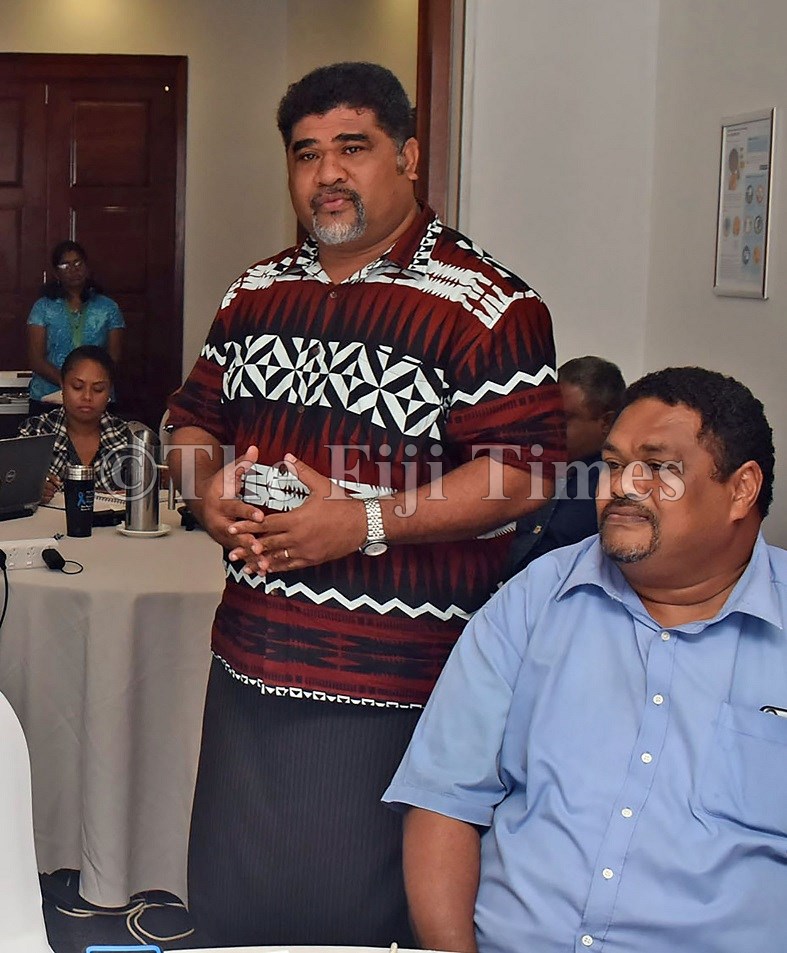
Every activity we engage in and project we implement can contribute to strengthening community resilience, Rural, Maritime Development and Disaster Management Ministry permanent secretary David Kolitagane told staff members during a workshop.
Project, research, monitoring and evaluation staff members of the ministry met in Suva last week to finalise evaluation tools for the assessment of projects that have already been implemented over the past four years and those expected to be implemented in early 2021.
Organised in partnership with the United Nations Development Programme’s (UNDP) Gov4Res Project, the design workshop brought officers from the ministry and the Gov4Res Project to review existing evaluation tools and identify contextually appropriate assessment guidelines for the fieldwork phase.
While officiating at the workshop, Mr Kolitagane said given the vision reflected in the country’s national development plan, the ministry hoped to identify learning from the workshop to help strengthen their approaches to monitoring and evaluation.
“The tools you will develop will play an important role in assessing progress that have already been implemented and also the projects that are still in the pipeline to be implemented.
“We should be thinking about strengthening our approaches from the onset of the project selection phase and I strongly believe that this design workshop will get us thinking towards this direction.
“We are moving towards a planning team that thinks critically about the problems and challenges our rural communities face, we spend time to analyse them, work with other agencies to find long-lasting and sustainable solutions, clearly document analysis work and work out financing structures and build partnerships to resolve problems faced by our rural communities.”
The ministry is working with UNDP to develop its 10-year strategic development plan which will set out the vision for the ministry, both as an implementer and as an integrator for all government services in rural and maritime communities.
“Central to the work of this ministry and our support to rural communities is resilience. The resilience of the communities which we serve, the resilience of the projects which we implement, and of course resilient Fiji.”
Mr Kolitagane said the workshop would start to unpack the ministry’s role as rural development planner in contributing to this resilience.
“As a ministry, we would like to move beyond simply monitoring whether or not a project has been implemented, to understanding and evaluating whether or not that project has achieved its stated objectives (for instance contributing to poverty reduction), and whether or not it is sustainable and resilient.
“Showing its impact to the communities. This is why we are all here today. Sharing success stories and realising the impact through our project.”
Over the past years, Mr Kolitagane said the ministry had done some amazing work in improving the livelihoods of rural communities.
This, he said, ranged from projects focused on poverty alleviation to building resilient infrastructure.