
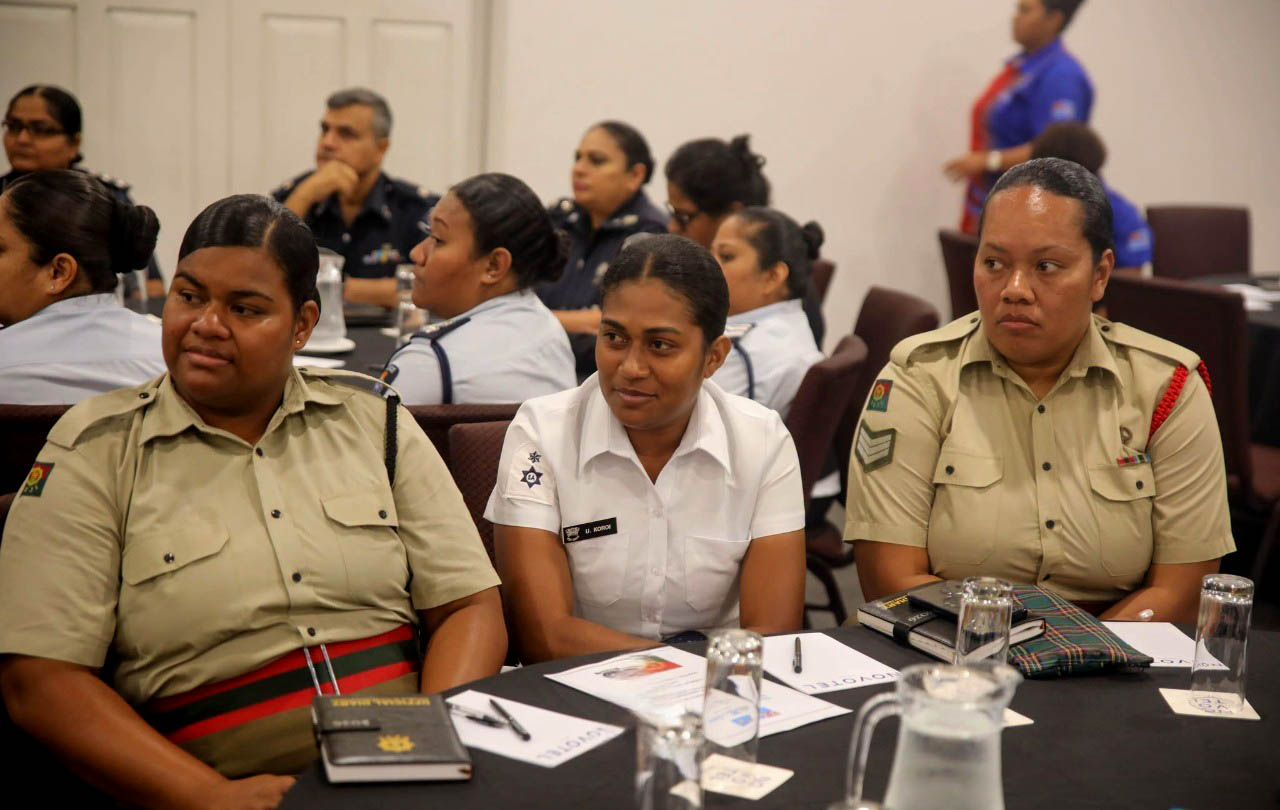
FIJIAN women in uniform are serving longer and deploying more, but leadership and retention gaps continue to persist within disciplined forces, according to a 2026 assessment on women in peace operations across the Republic of Fiji Military Forces and the Fiji Police Force.
The report found deployed women average 18 years at high rank compared with eight years for non-deployed counterparts. However, 63 per cent of women have considered leaving service compared with 47 per cent of men, while only 10 per cent hold commissioned officer ranks.
In the Fiji Police Force, 78 per cent of women are aware of the availability of paid maternity leave ranging from 42 to 84 days, depending on eligibility and service conditions and 81 per cent say pregnancy will not hurt their career, with women with children more likely to deploy on UN peace operations.
The findings were released at the launch of the Gender-based Assessment Project Report at the Novotel Lami.
Speaking at the launch, Minister for Women, Children and Social Protection Sashi Kiran said creating opportunities for women to participate, lead and thrive was not simply about gender balance.
“Creating opportunities for women to participate, lead and thrive is not simply about gender balance, it is about strengthening our institutions, enhancing operational effectiveness and ensuring that our security sector reflects the community it serves,” she said.
“When women are empowered to serve and lead, our security institutions become more responsive, resilient and effective.
“Armed with this evidence, we are now in a stronger position to move beyond assumptions and develop practical evidence-based roadmaps that will guide our efforts towards achieving gender parity and creating workplaces where every individual has the opportunity to contribute and succeed.”
Ms Kiran said her ministry would work with the Ministry of Defence, Fiji Police Force, Republic of Fiji Military Forces and development partners to translate these findings into reforms aimed at improving retention, strengthening leadership pathways and removing structural barriers for women in uniform.
“I’m confident that through continued partnership, shared leadership and collective commitment, we can build disciplined forces that are not only operationally stronger, but also representative, inclusive and reflective of the values we uphold as a nation.”

