
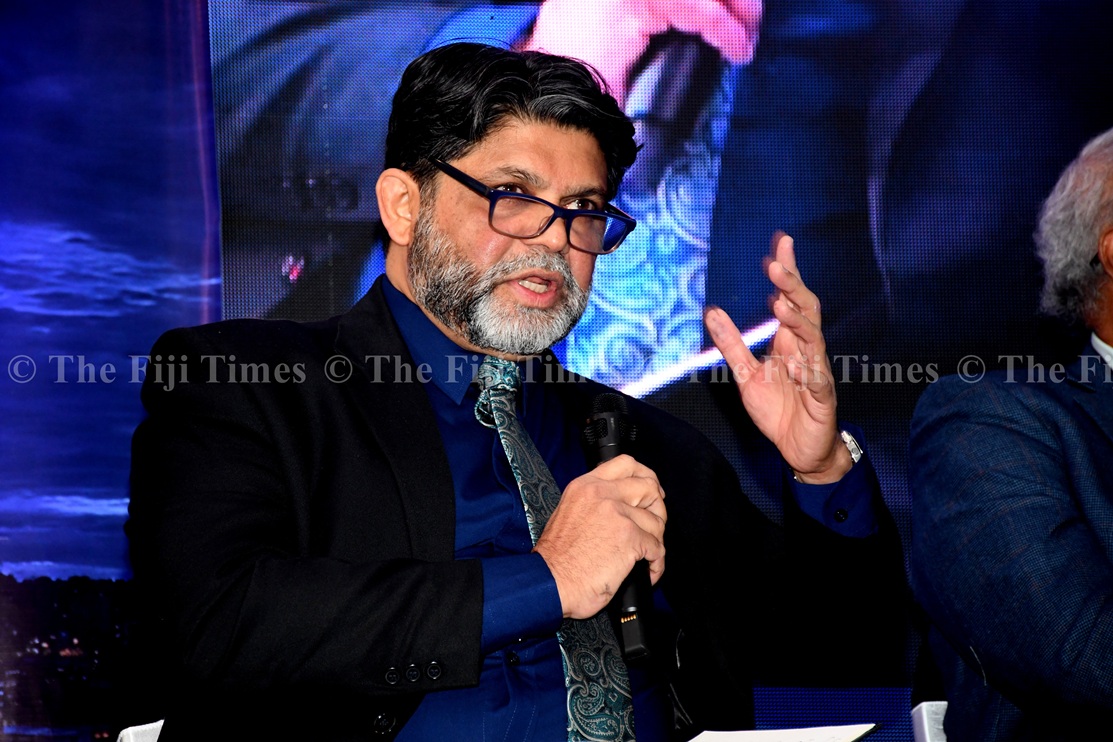
Government has significantly wasted taxpayers’ money and national loans by spending too much on day-to-day expenses instead of capital investment.
Former attorney-general and economy minister Aiyaz Sayed-Khaiyum criticised the current administration’s spending priorities, saying the national budget had increased sharply since 2022, with most of the money now going towards operating expenditure.
He said this showed Government was placing more emphasis on running costs rather than long-term capital investment.
“To put it into perspective, in 2022, the total budget spend by government was $3.7billion,” he said.
“Today, the total budget spend is $4.8billion, an increase of about $1.1billion.”
Mr Sayed-Khaiyum said the concern was not only the size of the increase, but where the money was being spent.
He said $3.9billion of the current $4.8billion budget was being directed towards operating expenditure.
“In other words, the total operating expenditure of the current budget is more than the entire budget in 2022.
“So it goes to show what the priority is like.”
Mr Sayed-Khaiyum said the current budget showed a clear priority towards operating expenses, including costs associated with a larger political administration.
He criticised the size of Cabinet, saying concerns arose when every member of one political party in Parliament was made a minister or assistant minister.
“But it’s not just about ministers. It’s about all the auxiliary staff that comes along with it.
“The cars, the permanent secretaries, the secretaries, the expenses, etc.”
Mr Sayed-Khaiyum also criticised salary increases, saying they were not required at the time they were introduced.
“That debt is not a bad thing if you’re borrowing money for the right reasons.
“But if you are going to be borrowing money to spend a lot of it on the operating expenditure, vis-a-vis the capital expenditure.”
Mr Sayed-Khaiyum said about 85 per cent of the budget was now directed towards operating expenditure, with the balance going to capital spending.
He said this was a major shift from the previous mix, which he said had placed about 40 per cent of spending on capital investment.

