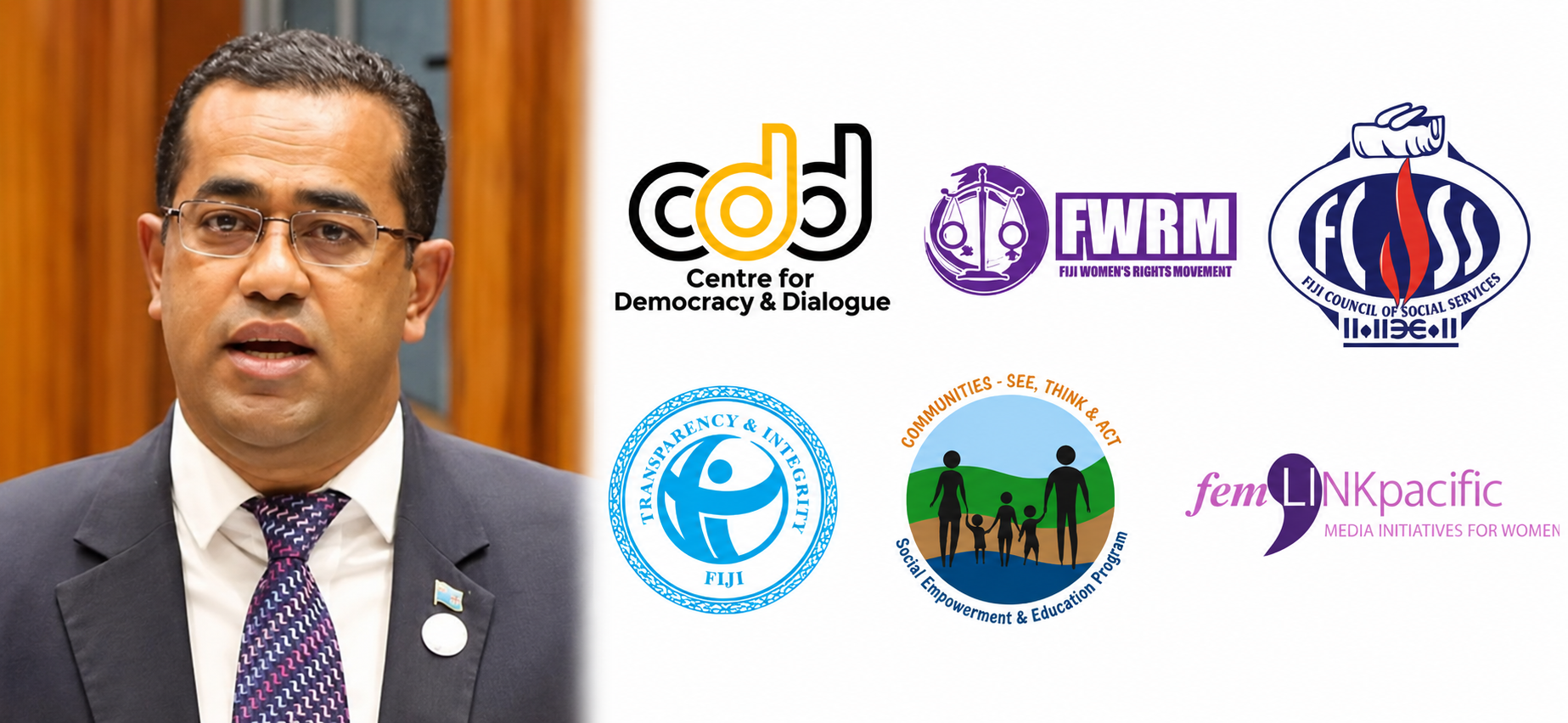
Minister for Public Works, Meteorological Services and Transport Filipe Tuisawau has launched a scathing attack on non-governmental organisation (NGO) leaders, accusing some of making misleading statements and undermining democracy.
In a strongly worded social media post, Mr Tuisawau challenged NGO leaders to enter politics and contest elections rather than criticise elected representatives from outside Parliament.
“Some NGO leaders are confused. They need to make a decision now. Remain a NGO leader or become a politician and stand in elections,” he said.
“You cannot be both!!!”
Mr Tuisawau also questioned the credibility of unelected commentators and civil society representatives, urging the public to listen to elected parliamentarians instead.
“Please read the clarifications here from legitimately elected representatives in Parliament rather than from unelected commentators or civil society whose actions and misleading statements undermine the democracy they purport to uphold,” he said.
His comments come amid growing debate over changes to Fiji’s electoral laws, particularly provisions allowing centralised counting of votes.
Several civil society organisations have raised concerns about the transparency, security and accountability of transporting uncounted ballot papers from polling stations to centralised counting centres.
The concerns prompted a response from Justice Minister and Minister Responsible for Elections Filimoni Vosarogo, who clarified that centralised counting was not compulsory under the Electoral (Amendment) (No. 2) Act 2026.
Mr Vosarogo said the amendments did not abolish polling-station counting and that the Electoral Commission would independently determine whether centralised counting should be adopted.
“The introduction of centralised counting does not, in itself, compromise electoral integrity,” he said.
He acknowledged that concerns about the transportation and custody of uncounted ballot papers were legitimate operational considerations that needed to be addressed.
Mr Tuisawau’s criticism has brought the role of NGO leaders in public policy debates into focus, particularly their scrutiny of electoral reforms and government decisions.