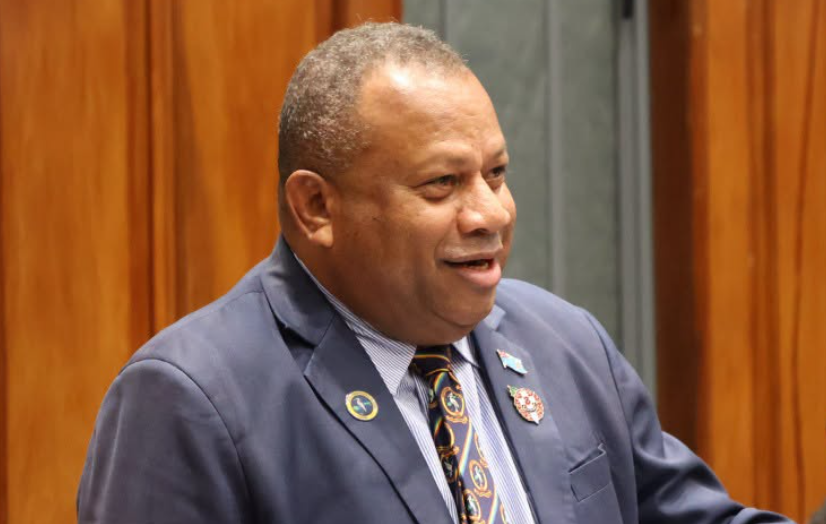
Minister for Justice and Minister Responsible for Elections Filimoni Vosarogo has clarified that centralised vote counting is not compulsory under the newly amended Electoral Act, and the Electoral Commission will independently decide whether to adopt the system.
Responding to concerns raised by civil society organisations over the Electoral (Amendment) (No. 2) Act 2026, Mr Vosarogo said the introduction of centralised counting did not automatically compromise electoral integrity.
“The introduction of centralised counting does not, in itself, compromise electoral integrity,” he said.
“What matters is that appropriate administrative, operational and security measures are established and strictly implemented to protect the integrity of ballot papers at every stage.”
Mr Vosarogo said the insertion of Section 89A into the Electoral Act 2014 did not abolish counting at polling stations.
“The amendment should not be interpreted as an automatic requirement to transport all election day ballot boxes to a central location,” he said.
“Neither does it prescribe that every polling station must adopt the same counting arrangement.”
He said the amendment provided the Electoral Commission with flexibility to determine suitable counting arrangements based on operational and logistical requirements.
Mr Vosarogo acknowledged that concerns about transporting and safeguarding uncounted ballot papers were legitimate and needed to be addressed.
He said centralised counting could offer advantages, including improved supervision, standardised procedures and better allocation of resources.
He also argued that the system could allow political party agents, candidate agents, accredited observers and the media to scrutinise the counting of approximately 700,000 votes, compared with about 650 votes at an individual polling station.
However, he stressed that transparency and independent scrutiny must remain essential safeguards.
“Their ability to observe the counting process and independently scrutinise the results must not be undermined by any change in counting arrangements,” he said.
Mr Vosarogo also maintained that the Electoral Commission remained independent of government influence.
“The government does not have influence or control over how the Commission carries out its responsibilities,” he said.
He said the Commission could independently decide whether to centralise counting.
“Ultimately, the measure of a credible counting process is that every ballot paper is properly accounted for, securely protected, accurately counted and subject to appropriate independent scrutiny, irrespective of where the counting takes place.”
The minister’s statement follows concerns raised by civil society organisations about the transparency, security and accountability of transporting uncounted ballot papers to centralised counting centres.