FIJI remains firmly on track to expand its tourism sector into a $4 billion industry by 2027 while attracting 1.2 million annual visitors, supported by a $2.1 billion investment pipeline and expanding accommodation inventory.
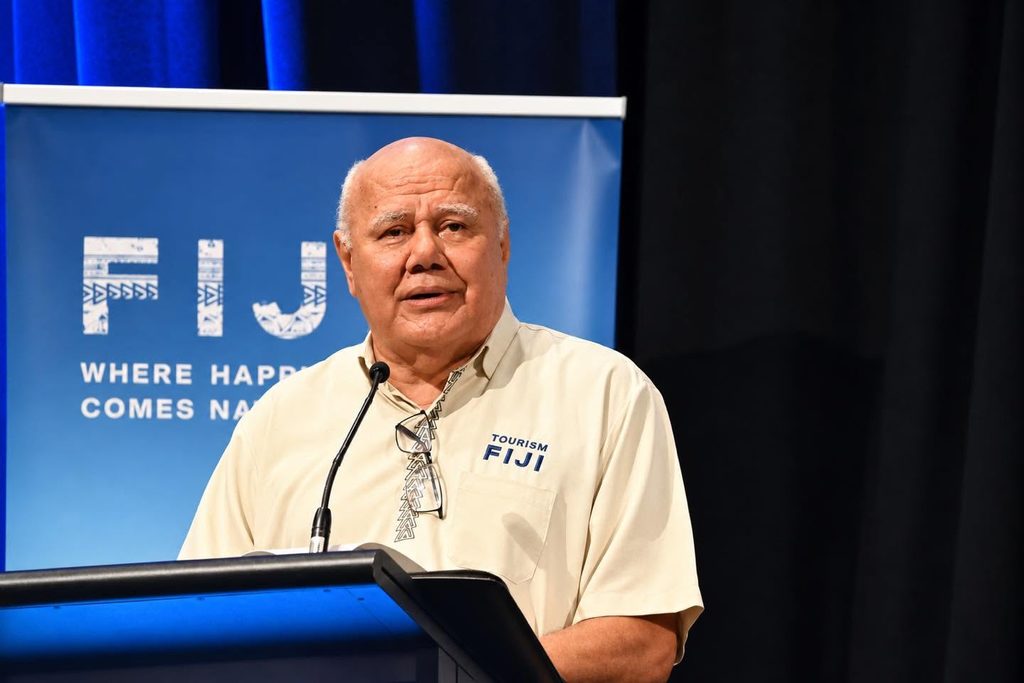
Deputy Prime Minister and Minister for Tourism and Civil Aviation Viliame Gavoka reaffirmed the ambitious economic target at the HOTEC 2026 trade show in Nadi this week, highlighting sustained consumer interest across key international markets.
“The way we are growing fast, the demand is still very high, and we don’t see that reducing in the coming years,” Mr Gavoka said.
“Second, the inventory is increasing, there are more buildings being built right now, so demand and then the growing inventory will give us the numbers that we want.”
Investment Fiji is currently tracking 57 tourism investment projects nationwide, representing 5600 new rooms. Nineteen of these projects totalling 1460 rooms are under construction, with Nadi accounting for a third of the national pipeline.
Mr Gavoka commended industry leadership, including the Fiji Hotel and Tourism Association for advancing technological standards and operational capacity.
Exhibitors from Fiji, Australia, New Zealand, New Caledonia, Canada, the United States and Japan gathered at the event to showcase hotel supplies and sustainable water and energy solutions.
The expansion comes following the passage of the Tourism Act 2026 in May, the first major overhaul of Fiji’s tourism legislation in more than 50 years.
The legislation introduces national tourism standards, establishes a National Tourism Council, and creates a dedicated fund for infrastructure, training, and community operators while protecting indigenous culture and traditional knowledge.
The reforms align with the National Sustainable Tourism Framework 2024–2034 and the Civil Aviation Master Plan for Fiji 2026–2031, which target localized supply chains, clean energy, sustainable aviation fuel, and climate-resilient airport infrastructure.
“Fiji lives with cyclones, in my view, resilience is a business decision as much as an environmental one.”