
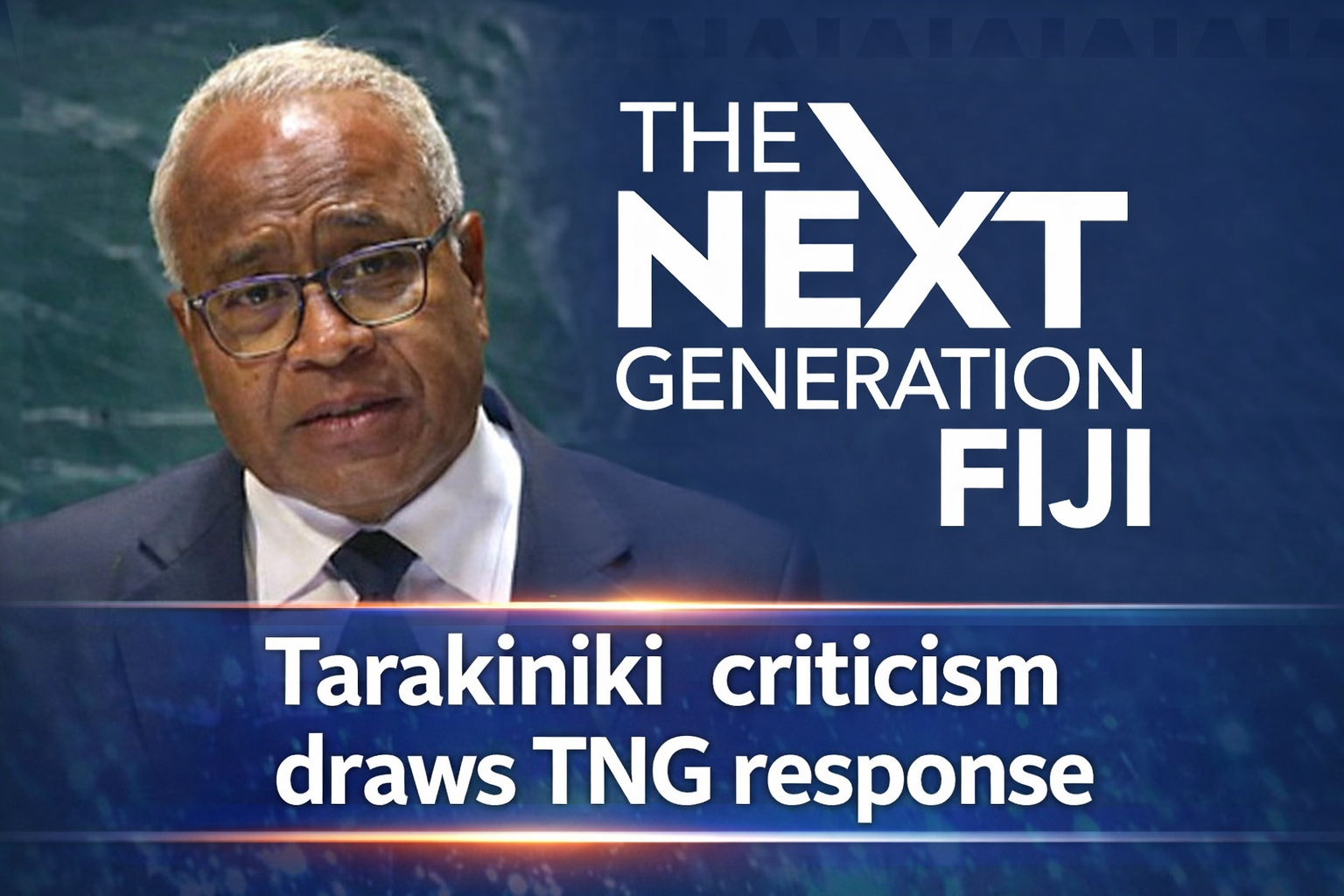
The Next Generation (TNG) Fiji has responded to concerns raised by Ambassador Filipo Tarakinikini regarding the proposed waste-to-energy facility at Vuda, calling for a balanced and evidence-based discussion as the project undergoes public scrutiny.
In a statement, TNG Fiji acknowledged the Ambassador’s concerns and passion, particularly around Vuda’s cultural significance and environmental future, but stressed the importance of relying on scientific assessments.
“These are important issues, and public scrutiny of a project of this scale is both expected and necessary,” the organisation said.
However, it emphasised that the ongoing Environmental Impact Assessment (EIA) process should guide the national conversation.
“A comprehensive 1,500-page Environmental Impact Assessment, prepared by independent global engineering firm GHD, has been submitted and is now in the public consultation phase,” TNG Fiji said.
“This process exists precisely to test the science, assess environmental and health impacts, and allow all concerns to be properly examined.”
Addressing fears around emissions and health risks, the group noted that such concerns were thoroughly covered in the assessment.
“Modern energy-from-waste facilities operate under strict international emissions standards, with advanced filtration systems and continuous monitoring designed to ensure compliance with global benchmarks,” the statement said.
TNG Fiji also rejected comparisons with a previously rejected proposal in Australia, saying the Vuda project was uniquely designed for Fiji.
“It has been specifically designed for Fiji’s waste profile, environmental conditions, and regulatory framework,” it said.
“The current proposal in Fiji is being assessed independently, on its own merits, under Fiji’s laws.”
The organisation pointed to Fiji’s growing waste problem, warning that existing landfill capacity was already under strain.
“While Fiji formally reports around 200,000 tonnes of waste annually, the absence of a comprehensive national dataset combined with informal dumping and waste leakage means the true volume is likely significantly higher,” the statement said.
It added that increasing tourism numbers would further compound the issue.
“In 2025 alone, 452,422 visitors — nearly 46 per cent of arrivals — came from Australia. With tourism expected to double in the next five years, waste volumes will inevitably increase.”
TNG Fiji clarified that the project was not intended to serve as a regional dumping facility.
“Its purpose is to provide a long-term solution for managing waste generated within Fiji, including waste linked to tourism and imported goods, in a more controlled and environmentally responsible way,” it said.
The group also acknowledged concerns about the cultural and historical importance of Vuda, noting these were being assessed as part of the EIA.
“These are precisely the types of issues that the EIA process is designed to assess, including social, cultural, and environmental impacts, alongside mitigation measures,” it said.
TNG Fiji maintained that the project team had remained open to engagement throughout the process.
“This is a complex national issue; waste management, environmental protection, and energy security are all deeply interconnected,” the statement said.
“It is critical that decisions are made based on evidence, independent assessment, and informed public dialogue.”

