
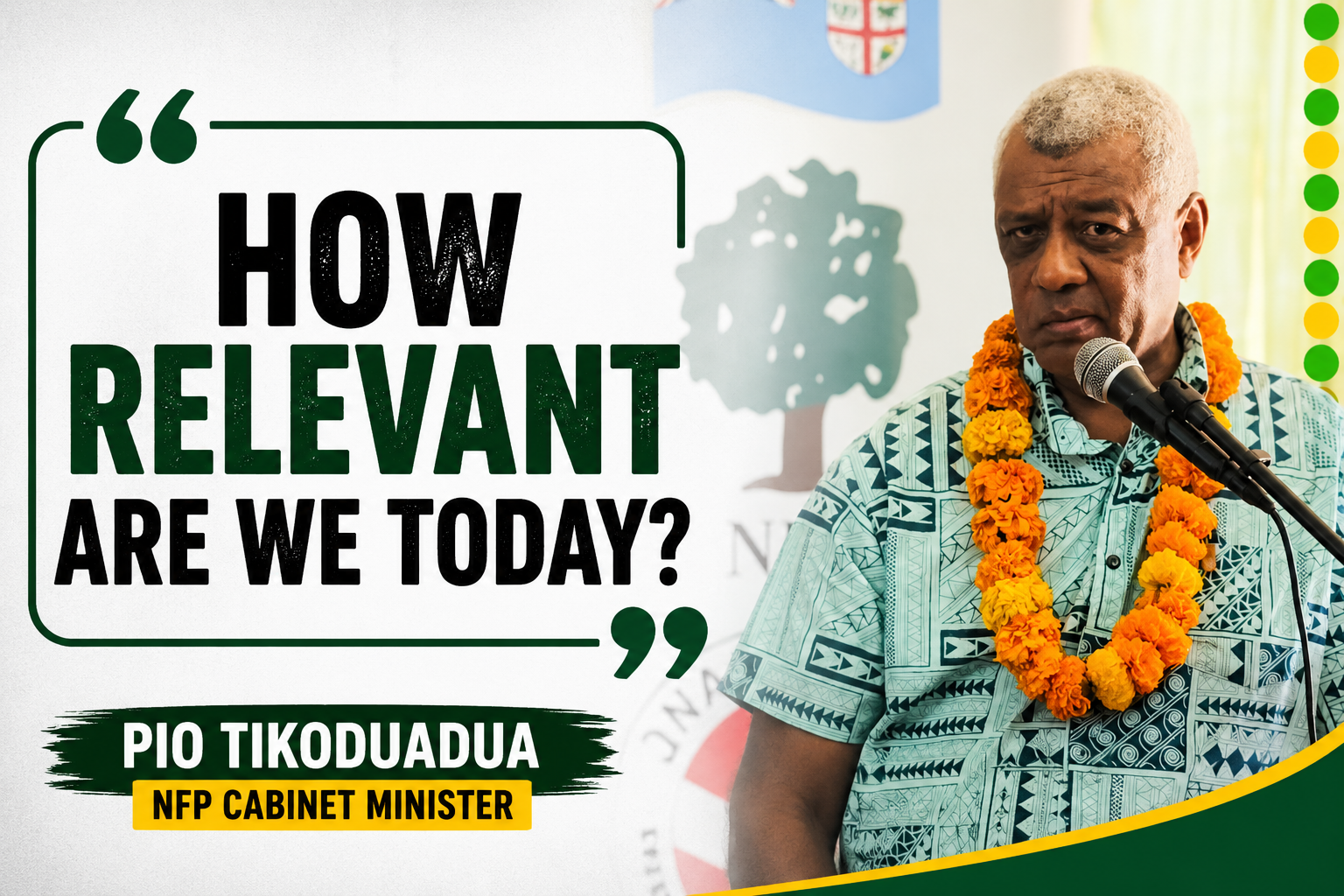
Defence Minister and National Federation Party Cabinet Minister Pio Tikoduadua has challenged party members to focus on strengthening the NFP’s public image and relevance as Fiji moves closer to the next general election.
Speaking at the NFP Working Committee meeting in Rakiraki on Saturday, Mr Tikoduadua said the party needed to look beyond its own internal assessments and consider how it was viewed by the wider public.
“But let me challenge us today,” he told party members, noting that the period leading into the election would place greater demands on the party’s communication and engagement efforts.
Mr Tikoduadua said while NFP members may have a clear understanding of the party’s values and achievements, the more important question was whether ordinary Fijians shared the same perception.
“We know ourselves and we know what we stand for, but what do the people think about us?” he asked.
He said the party needed to honestly assess its standing among voters and determine whether its foundations, policies and principles continued to resonate with the wider population.
“How relevant are we today?” he questioned.
Mr Tikoduadua stressed that political success would depend not only on the party’s record in government but also on its ability to communicate effectively with voters and remain connected to their concerns.
He urged members to focus on developing the image and competency of the NFP so that it remained a credible and relevant political force.
“The best way forward from here is to develop the image and the competency of the NFP so that it is relevant,” he said.
Mr Tikoduadua told party supporters that internal meetings and discussions were important, but they must ultimately translate into stronger engagement with communities and the public.
“It is good for us to meet among ourselves, but we must ensure that what we stand for reaches the people and remains relevant to them,” he said.
His comments come as political parties across the country begin preparing for the 2026 General Election, with voter engagement, policy delivery and public perception expected to play a major role in shaping the electoral landscape.

