In the past four parts, we have travelled through the trials, the struggles and uncertainties that marked the arrival of the first Catholic missionaries in Fiji.
We have followed the early days of Bishop Bataillon, Father Breheret, Father Joseph-Francois Roulleaux, Brother Perol, the two Wallisian catechists and the Fijian catechist Mosese Monatavai in a land unfamiliar to them, the difficulties they encountered and the beginnings of a mission that would eventually take root in Fiji.
But stories such as these do not end with the people who first lived them.
They continue through the places that hold their memories and the generations who choose to preserve them.
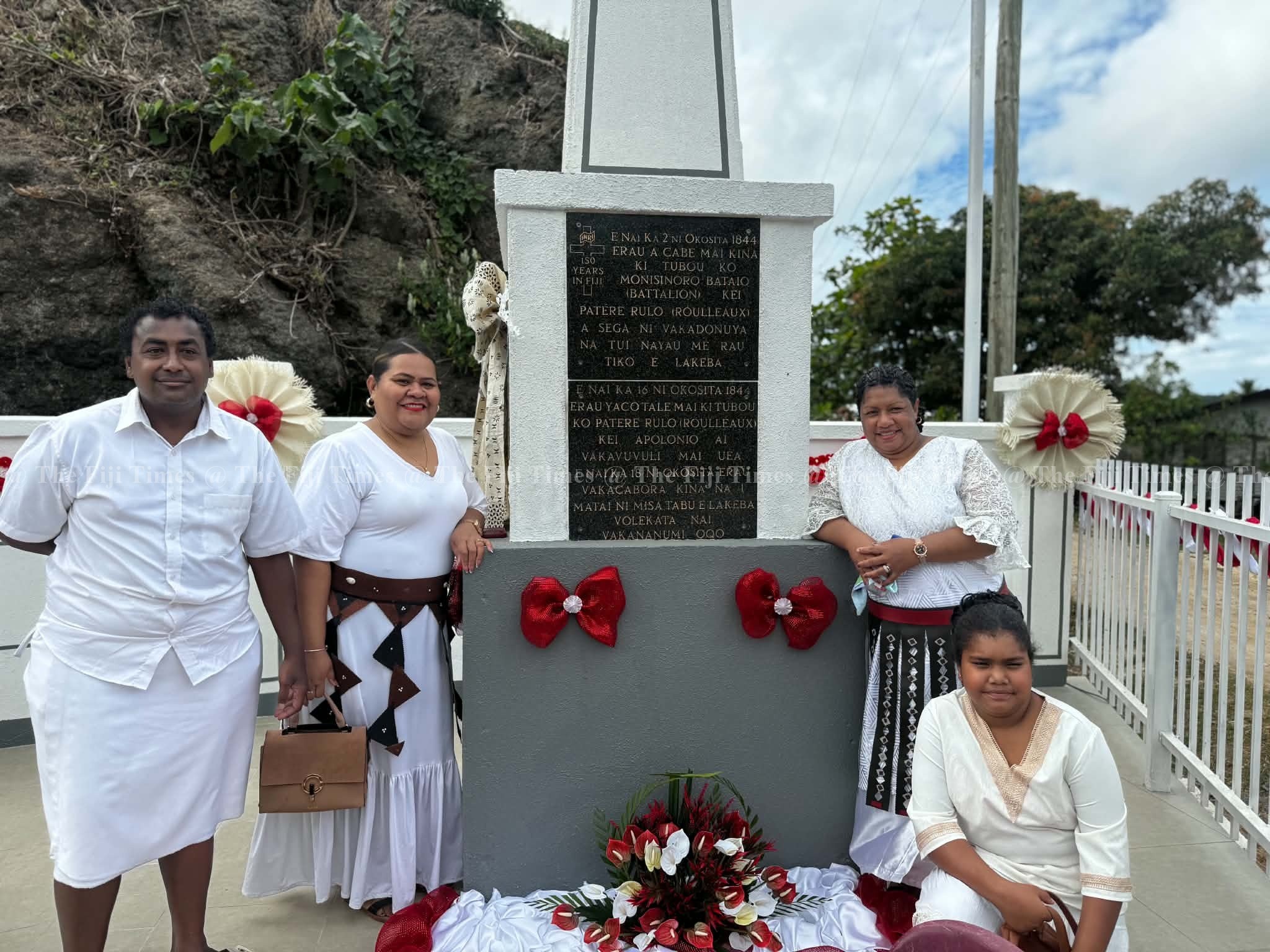
Along the way, we have mentioned a number of times the landmark built in their honour of the missionaries as a reminder of the history that began there more than 180 years ago.
Today, we turn our attention to that very landmark, exploring the story behind its construction, the man whose dream brought it to life and the community that came together to ensure the memory of the missionaries would live on for generations to come.
In the chiefly village of Tubou, Lakeba in Lau, that remembrance now takes the form of a structure that began not with a grand ceremony or a building plan, but with an idea that stayed with one man for almost 20 years.
For Enele Ma’afu, the patch of land covered in bush and trees was never simply an overlooked corner of his village.
He saw in it an opportunity to create something lasting, a place where people could gather and remember the missionaries whose story began on the shores of Lakeba in 1844.
The idea of turning it into something tangible would require more than a vision.
It would require patience, sacrifice and the willingness to begin even when the outcome was uncertain.
In an interview with the Head of the Catholic Church Archbishop Peter Loy Chong during the celebration to remember the missionaries in August this year in Tubou, Mr Ma’afu shared how the idea came about, the sacrifices he made to bring it to life and why he believed the landmark should be a lasting tribute not only to the missionaries but also to the Catholic community and the wider vanua.
“I had been carrying this dream for almost 20 years, thinking about what would be the most fitting way to honour the first Catholic missionaries in Fiji,” he said.
Mr Ma’afu is a descendant of the Tongan chief Enele Ma’afu’otu’itonga (commonly known as Ma’afu) who was the brother of King George Tupou I who arrived in Fiji in the 1840s and later introduced Methodism to eastern Fiji.
The chief died on February 6, 1881, in Lomaloma Vanuabalavu, and was buried in Tubou.
The 150 anniversary commemoration remembrance in Tubou more than 20 years ago had been marked by a cross and a stone.
For Mr Ma’afu, it was a meaningful beginning, but he believed there was an opportunity to create something more substantial for future generations.
His experience in the engineering department of the military gave him the skills to develop his idea.
He began sketching a design, determined to have a clear plan before approaching the community.
“I did not want to simply tell people that we had built something in honour of the missionaries without having a clear idea of what it would look like.”
When the sketch was complete, he took it to his mother and the Roko Tui, both of whom have since passed away, and asked them to present it at a parish meeting to seek the community’s views.
The idea was taking shape, but the finances remained a challenge.
Mr Ma’afu was still serving in the military and began putting money aside for the project.
He did not want to depend entirely on the church or the community to make his dream a reality.
“I wanted to take the first step myself. If the church and community could help, I would be grateful.”
That commitment continued even after he retired from the military and moved to Australia, where he took on various jobs while saving for the project.
With the support of his wife and family, the savings gradually grew.
Whenever they had money available, they deposited it into a fixed-term account while continuing to contribute to the church soli.
The project remained in his thoughts, even as he balanced his responsibilities to his family with his desire to honour the missionaries.
His first direct discussions with a priest about the proposal were with Father Mika, who was overseeing the parish at the time.
Later, he approached Father Semi in Tubou when he believed he had saved enough to begin construction.
After waiting for a busy period involving an ordination to pass, Mr Ma’afu was ready to move forward.
By February this year, he returned to Tubou to begin the work. But before construction could start, he needed the permission of the Tui Nayau Ratu Tevita Uluilakeba Mara.
The meeting would become one of the moments he remembered most from the project.
The day he planned to approach the chief, the Tui Nayau was attending a service with the Methodist Church.
Mr Ma’afu waited for the service to end before meeting him to discuss the proposal.
What made the encounter particularly meaningful to him was the location. He met the Tui Nayau at the very spot where he hoped to build the landmark.
He said the timing felt like God’s plan.
During their conversation, the Tui Nayau told him that people had often wondered what could be done with the area as they passed through it.
So, Tui Nayau agreed to the proposal, allowing Mr Ma’afu to move forward with the project on the site he believed was fitting for such a tribute.
The shape of the land influenced his design. With the site forming a triangle, he envisioned a space where people could gather, with a stage and commemorative stone positioned so visitors could face both.
A cross and a grotto (a small cave-like structure or shrine used as a place for prayer and devotion) featuring a statue of Mary were also part of his plans.
Unable to find a suitable statue in Fiji, he approached a priest in Australia with whom he had a good relationship.
“It took time, but I was determined to see it completed.”
The priest agreed to help, and the statue was brought to Fiji despite challenges he faced in Nadi where it was kept for a while.
He also chose to retain the existing commemorative stone erected by the Catholic community before him.
Rather than replace it, he wanted to preserve the inscription in Fijian while adding an English version so the history could be understood by a wider audience.
For him, the earlier stone represented the efforts of those who had come before, and he wanted their contribution to remain part of the story.
The construction itself required considerable commitment.
Building materials, feeding the workers who were part of the Catholic community and others and other expenses added to the cost, particularly as Mr Ma’afu and his wife continued to meet their family responsibilities.
“Things are much more expensive today than they were in the past, so undertaking a project of this scale required considerable financial commitment.”
His family held a soli to support the work, while priests and members of the community also helped bring the vision to life.
He remained in Tubou for more than a month after arriving in February, overseeing the work and ensuring the project was completed as intended.
Speaking in the interview, Mr Ma’afu said he was grateful to his family for standing by him, as well as to the priests and others who helped him along the way.
For him, the landmark was never intended to belong to one person or one group alone.
He wanted it to be something the entire vanua could take pride in, welcoming visitors to a place that reflected its history and faith.
Archbishop Peter Loy Chong said the landmark represented more than the arrival of the first Catholic missionaries.
It marked a new chapter for the Catholic community of Lau and the wider Christian community in Fiji.
Reflecting on the country’s history, Archbishop said the landmark symbolised a new era following a time when violence and harsh treatment were part of life.
He also believed it was fitting for the commemoration to return to Tubou, where the Catholic mission first took root.
Mr Ma’afu explained that connection between the past and present was central to his vision.
He wanted the landmark to be something for the people to remember the missionaries and the generations of Christians who had carried their faith forward.
The location of the landmark holds its own historical significance.
It stands on part of the land where the first Catholic missionaries settled after it was given to them by the Tui Nayau then.
On top of the hill stands the Catholic parish, while the community lies below, connecting the place where the missionaries began their work with the generations who have continued their legacy.
Ultimately, the landmark reflects the sacrifice of a man whose ancestral roots trace back to a land far away, yet whose commitment to preserving the history of the Catholic Church in Fiji has left something meaningful in the very place where that story began.
And perhaps that is what gives the structure its deeper meaning – it does not simply look back at the past.
It reflects the people who have chosen to keep that past alive for those who will come after.