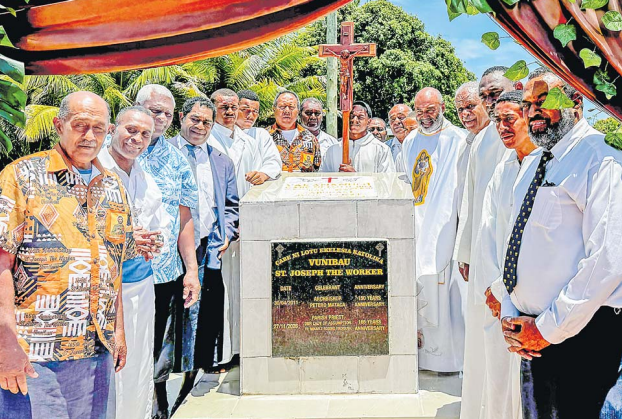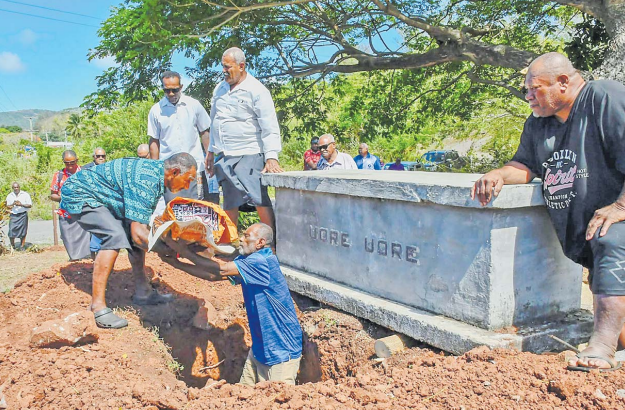
A piece of Rakiraki’s history, removed from its ancestral home in 1940, has finally returned after 86 years bringing renewed hope and a sense of peace to the people of Rakiraki in Ra.
The return of the remaining bones of late Tu Navitilevu, Ratu Udre Udre, from Suva to his original burial site marks the end of a long chapter of the life’s story of one of Fiji’s most historically significant chiefs.
Behind the historic homecoming is a remarkable story of discovery and a responsibility that 79-year-old Ateca Kaloumaira Williams believes she was destined to fulfil.
Ms Williams, who was serving as acting director of the Fiji Museum in 1978, revealed how a telephone call on her first day in the position led her to a house filled with Fijian artefacts, including items connected to Udre Udre.
A young woman from Belfast, Northern Ireland, named Nancy Ferguson, who was in Fiji caring for her dying stepmother, Mrs Wise, had contacted Ms Williams and invited her to collect anything she considered valuable for the museum from her Suva home.
Ms Williams accepted the invitation and made her way to 197 Princes Road in Suva.
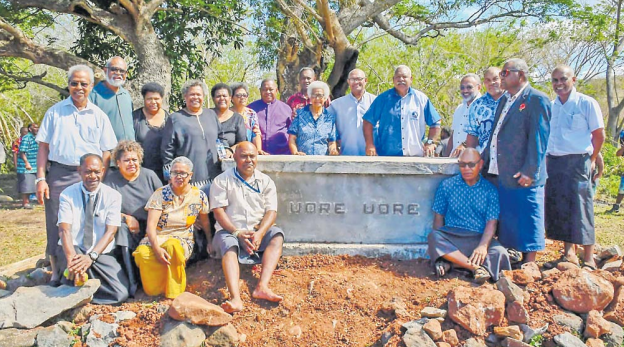
Ateca Williams (7th) from right with her family after the
burial of the remains of Udre Udre at Narauyaba, Ra.
Picture: BALJEET SINGH
An elderly woman opened the door and, after Ms Williams introduced herself, called out to Ferguson inside, saying that a “native girl” had come to see her.
Ms Williams admitted that her immediate reaction was one of rejection.
“I must tell you, when I heard the word native, I rejected it. I rejected it, I just said, what?” she recalled.
But before she could complete her reaction, an inner voice challenged her understanding of the word.
Yes, you’re a native, you’re coming to take what is yours, she thought. That moment changed her perspective.
“What happened to me was very powerful that day when I arrived at the home,” Ms Williams said.
Inside the house, Ms Williams discovered an extraordinary collection of Fijian cultural artefacts, with spears, clubs, cannibal forks, and other historical items displayed along both sides of the hallway.
Among the significant items was Udre Udre’s long pig dish, known as “Sovasova ni Bokola nei Udre Udre”.
She transported three large cartons of traditional drums and other items using the museum’s Land Cruiser and returned with her husband and their two vehicles to collect more of the historical collection.
The discovery eventually presented another unexpected opportunity when the woman offered Ms Williams and her husband the property for sale.
At the time, the Williams were renting and did not own a home. They accepted the offer, with the purchase arranged through lawyer Sir John Falvey.
It was through the property that Ms Williams became connected to the story of how Udre Udre’s remains had been taken from Rakiraki.
She recalled that in 1940, Wilfred Wise, who served as Director of Public Works, approached the then Tu Navitilevu with a proposal to construct a road through the centre of Rakiraki.
The chief initially refused because the proposed road would affect the sacred chiefly burial ground, known as the sautabu, and Udre Udre’s tomb.
Mr Wise eventually reached an agreement with the chief, assuring him that the Fiji Government would take responsibility for looking after the burial site if permission was granted for the road.
The chief agreed, allowing construction to proceed.
During the work, the burial site was excavated and relocated to another designated area near the junction where the Rakiraki-Vaileka Rd meets Kings Rd towards Ba.
However, according to Ms Williams, Udre Udre’s skull was removed from the tomb during the excavation.
Mr Wise took the remains to his home in Nasova, Levuka, where they were kept before he later moved to 197 Princes Road in Suva, bringing the remains with him and burying them on the property.
The return of the remains to Rakiraki was, therefore, more than a historical exercise for Ms Williams. It was a responsibility she believed had to be fulfilled.
“He is their chief and this is his home, so he wants to come back home, and it is my job to bring him home when I know he doesn’t belong there,” she said.
“I will also have peace, so that is what I’ve done. The only thing to do is to bring him home and I’m at peace.”
Ms Williams revealed that her connection to the matter went back several decades, including spiritual experiences associated with the property where the remains had been kept.
She purchased the property in 1978, but before moving in, she arranged for prayer groups to visit regularly and pray at the home.
Different prayer groups continued visiting the property, with Ms Williams explaining that people who stayed there had reported unusual disturbances.
She recalled that her brother, who lived at the property before the family moved in, complained about hearing people talking, footsteps and a telephone ringing during the night.
Ms Williams believes returning Udre Udre’s remains to his original burial place was the right thing to do and would bring peace to the people of Rakiraki.
She also revealed that people had reported seeing the chief represented in the smoke from the tapa, or masi kuvui, used during the return ceremony.
“They already saw him, they called and told us”, she said
“And they had rain, torrential rain. So, they’re already experiencing it, yes. And there’s peace at home.”
For the people of Rakiraki, the homecoming carries significance beyond the return of their chief’s remains.
Spokesperson for Tui Navitilevu, Sakiusa Kaitaini, said the historic occasion would restore a sense of prosperity, happiness, and unity among the people of Rakiraki and the wider province of Ra.
“We will have back what we have lost because our chief is now finally at peace at his resting place,” Mr Kaitaini said.
He highlighted Udre Udre’s unique place in Fiji’s history, explaining that during the 1800s, the chief was associated with the acceptance of Christianity while initially maintaining his practice of cannibalism.
However, he eventually abandoned cannibalism and fully embraced Christianity.
Mr Kaitaini believes the return reconnects the history of Ratu Udre Udre with his people and chiefly family of Uluda.
For Ms Williams, however, the greatest reward is knowing that she has fulfilled what she believes was her responsibility.
At 79, her recollection of an unexpected telephone call in 1978 offers a rare glimpse into how one encounter helped preserve an important part of Fiji’s cultural heritage.
What began as an invitation to collect historical artefacts from a house in Suva eventually became a journey to return a chief to his ancestral home.
And for Ms Williams, that is where the story finds its peace.