The cost of living are a burden on many ordinary families. Now concerns over crime are now adding to that unease.
What lies ahead remains uncertain. Yet one troubling pattern is becoming increasingly difficult to ignore: reports of sacrilege continue to surface all over Fiji, particularly in relation to temples.
Fiji recorded more than 18 reported cases of sacrilege in 2021, one is compelled to wonder if there were many others which did not hit the statistics. The emergence of further incidents now compels us to ask a difficult question: are we witnessing a resurgence of such offences?
At least two alleged acts of sacrilege have come to my attention within the past seven days. This inevitably raises the question of why the Fiji Police Force has not communicated more openly about such incidents through its official channels. Is there a rationale for the absence of public communication? Are there investigative sensitivities that the public may not be aware of, or are there other factors affecting how these cases are being communicated and pursued?
These are legitimate questions, and the victims are entitled to clarity and meaningful action. They should not be left to bear these concerns in isolation. Their concerns deserve attention. As a society, we must stand with them, ensure that their voices are heard, and demand that justice is pursued.
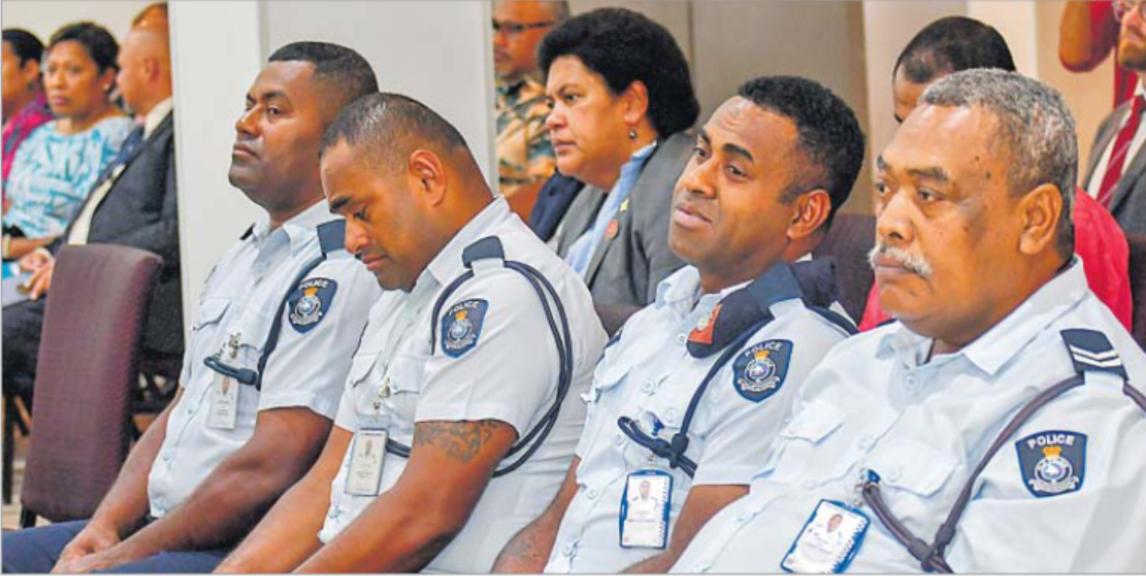
Given the resources allocated to the Fiji Police Force, it is difficult not to question whether the issue lies in resources, operational capacity, accountability, or the manner in which those resources are being utilised. The Government has allocated $226.5 million to the Fiji Police Force under the 2026–2027 Budget, compared with $240.3 million in the 2025–2026 Budget. The Police Commissioner has maintained that the reduced allocation will not compromise public safety or the Force’s operations.
Yet I still find it difficult to understand why the public continues to perceive shortcomings in the police response. Somewhere within this equation, there must be an issue that warrants closer examination. Is it a matter of resources, deployment, responsiveness, accountability, or simply the way existing resources are being utilised? The bottom line is that taxpayers are shouldering these costs as an investment in public safety. What the public deserves in return is not merely expenditure, but visible action, accountability and measurable results.
Fiji is a multi-faith nation, yet a troubling number of reports appear to involve Hindu temples. I genuinely hope someone is willing to answer the question of why. I recognise that there have also been reported cases of property damage and acts of sacrilege involving places of worship belonging to other faiths, but the repeated reports involving temples cannot simply be brushed aside. Is this a pattern, or is it merely a coincidence? I continue to wonder.
I have gathered this from reports in the mainstream media as well as posts circulating on social media. But we must also recognise an important distinction: those who write or post on social media may not always have the same access to authorities as mainstream media organisations.
This, in turn, raises another important question: what exactly have authorities done in response to growing concerns over crime and the protection of places of worship? What proactive measures or strategies are in place to monitor, prevent and address such social issues? And can anyone assure the public that there will be no further acts of this nature?
It is profoundly distressing to continue witnessing such incidents, particularly when those affected may feel that their concerns are falling on deaf ears or receiving inadequate attention. For the victims, this is not merely another statistic or another headline. It is their place of worship, their sense of security and, in many cases, a deeply personal and spiritual space that has been violated. To witness such incidents repeatedly is, without question, an excruciatingly difficult experience.
A positive development is that the campaign period for the next general election may hopefully begin very soon. When prospective candidates and political parties go before the people seeking their votes, I have no doubt that there will be a mouthful of promises: reduced expenditure, greater freedom of speech, better security services, less crime and much more. But promises alone cannot be the measure of leadership.
The public should not hesitate to ask the questions that matter—not merely the questions that fit neatly into an election campaign. What is your plan to address crime? What will you do to protect places of worship? And, most importantly, what concrete measures will you put in place rather than simply making promises during an election campaign?
These are questions the public has every right to ask, and candidates should be prepared to answer them. As the cost of living places greater pressure on households, concerns about crime and social hardship also deserve greater attention. Economic hardship does not excuse criminal behaviour, but it is reasonable to ask whether increasing financial pressure is contributing to some forms of offending.
When the Government continues to charge 12.5 percent VAT on taxable goods and services, the question remains whether the relief reaching ordinary people is sufficient when they continue to bear the cost at the point of purchase.
And if parliamentary salaries and other public expenses continue to rise rather than fall, the burden will ultimately remain with the people. The people, after all, are the ones who continue to pay the price. There is also the question of money coming into the country for specific purposes and how clearly its eventual use is communicated to the public.
In May, Australia committed A$30 million in additional budget support to Fiji to help address rising fuel costs and cost-of-living pressures, including support connected to bus fares. Yet ordinary people are entitled to ask: where, in their daily lives, is the tangible benefit of such assistance being felt?
People continue to look at the price of getting from one place to another and ask whether the relief promised on paper is translating into relief in reality. I cross my fingers until my bones hurt that, come September, the bus fare will finally move closer to the $0.75 Stage One adult fare that many ordinary commuters would welcome.
People, regardless of their employment status, continue to bear the cost of consumption taxes. Even children, when making purchases of taxable goods, encounter VAT embedded in the prices they pay. So the question remains: where is all this money going, and where are the tangible improvements that ordinary people can see and feel?
We continue to hear concerns about pressure on health facilities. The Ministry continues to depend on support and donations. Overfilled buses continue to struggle along our roads. Potholes continue to appear. And while the Viria Water Project has already begun supplying water, its existing 40-million-litre-per-day capacity is still being expanded towards the planned 80 million litres per day. My question is, does it really take an additional three and a half years to complete and existing project?
Meanwhile, when citizens need the police, there remain concerns about whether assistance arrives with the urgency expected of a public service entrusted with their safety. At what point do we stop measuring progress by the amount of money allocated and start measuring it by the quality of life that ordinary people actually experience?
If the cost of living continues to place pressure on ordinary families, and if the public continues to see reports of theft, sacrilege and other offences, then we have to ask: Where are we heading?
Krishneel Nair is Fiji citizen and a Sanatani. He contrbutes opinion pieces occasionally to this newpaper. The views expressed in this article are his and do not reflect the views of this newspaper.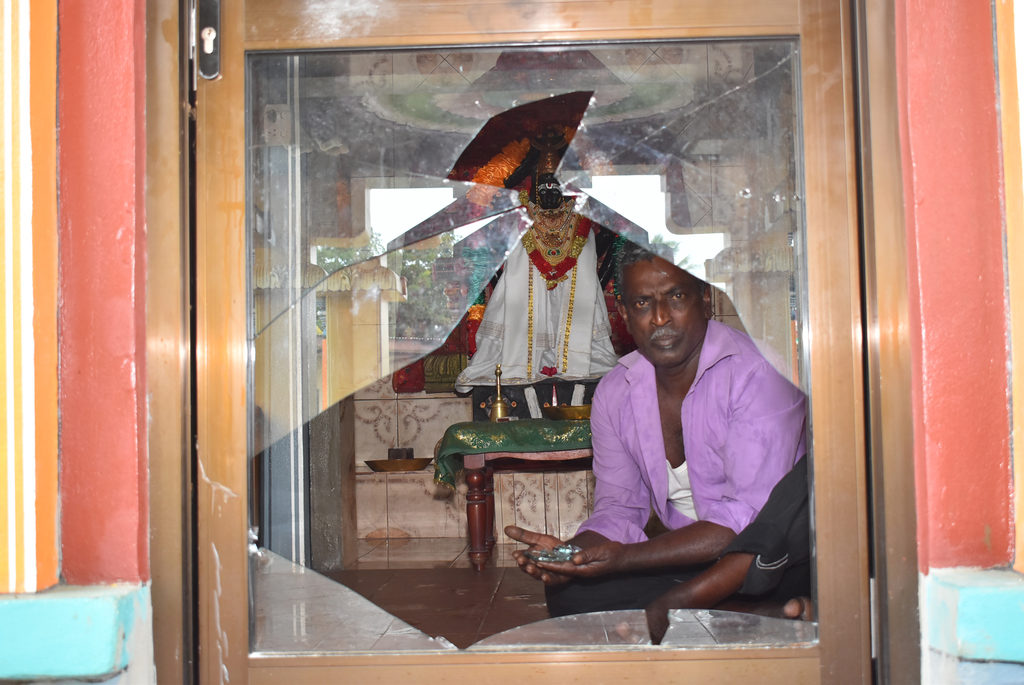
Priest Ganga Dharan shows one of the doors broken during a robbery at the Malolo Sangam Temple in Nadi. Picture: FT FILE/ REINAL CHAND