
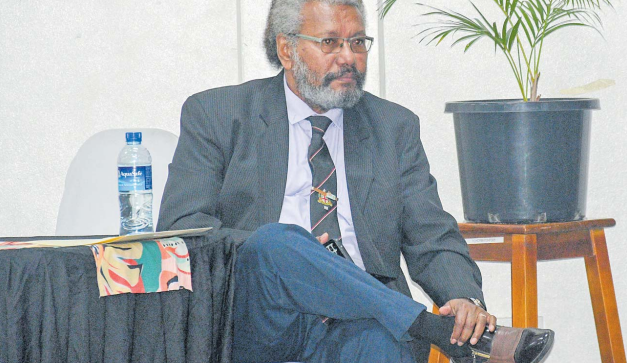
FIJI’S escalating HIV epidemic is increasingly affecting young people, with teachers now on the frontline of identifying and supporting at-risk students, the National Substance Abuse Advisory Council (NSAAC) has warned.
Speaking at the School Management Association of Fiji conference in Suva this week, acting chief executive Josua Naisele said schools had become a critical point for early intervention as HIV infections continued to surge among young Fijians.
“This is happening in our schools now. Teachers are on the front line of early detection and referral,” he said.
Mr Naisele said Fiji had recorded 5676 cumulative HIV cases by the end of 2025, including 2016 new infections last year alone.
He said HIV cases among children aged 10 to 14 had increased by 892 per cent since 2015, while infections among 15 to 19-year-olds had surged by 4183 per cent over the same period.
“Young people under the age of 25 accounted for 58 per cent of all new HIV cases recorded in 2025.”
Mr Naisele said injection drug use had emerged as the leading identified route of HIV transmission in Fiji.
“Injection drug use is the number one identified HIV transmission route,” he said, adding that needle sharing remained the most efficient way of transmitting the virus because “even microscopic blood residue is enough”.
He also warned that alcohol and drug use lowered inhibitions, making young people more likely to engage in unprotected sex or other risky behaviour.
Among school-age children, cannabis remained the most common drug of initiation, while methamphetamine use was growing, with injecting already reported among school-age users in Suva.
Mr Naisele said peer pressure, family dysfunction, trauma, poverty and limited adult supervision were among the factors making young people more vulnerable to both drug use and HIV infection.
He urged schools to strengthen counselling, referral systems and child protection measures to help identify vulnerable students before they fell deeper into addiction or HIV risk.

