
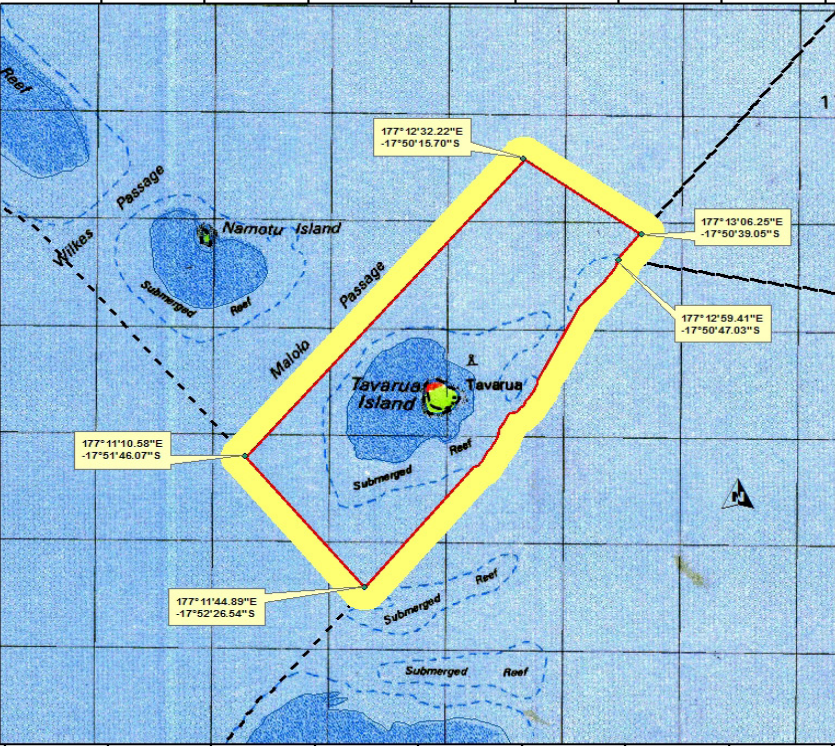
Government has officially declared the waters surrounding Tavarua Island a protected marine reserve, introducing strict new regulations aimed at conserving marine biodiversity and protecting one of Fiji’s most ecologically significant reef systems.
The new Fisheries (Tavarua Island Marine Reserve) Regulations 2026, published in the Government Gazette, came into force on 10 July.
Under the regulations, all fishing and the collection of marine organisms, including coral, giant clams and sea cucumbers, are prohibited within the reserve. The protected area is intended to conserve fish stocks, sharks, rays, cetaceans, sea turtles and other marine life.
The regulations also prohibit the dumping of rubbish and any development activity within two kilometres inland of the reserve’s high-water mark unless approved by the Department of Fisheries.
Boats entering the marine reserve will only be permitted to use designated moorings.
Anyone found illegally fishing within the reserve faces fines ranging from $500 to $10,000, imprisonment of up to six months, or both. Repeat offenders may also be fined up to $1,000 for every day the offence continues.
The Department of Fisheries has also been granted powers to seize marine organisms, fishing equipment, vessels, vehicles and other property used in illegal fishing activities.
A 200-metre buffer zone has also been established around the reserve. The use of indiscriminate fishing gear, including gillnets, steel-wire handlines and destructive fishing methods such as poison and dynamite fishing, is prohibited within the zone.
Breaches of the buffer zone regulations carry penalties of between $500 and $5,000, or imprisonment for up to six months, with additional daily fines for continuing offences.
The regulations allow the Minister for Fisheries to authorise scientific research within the protected area and issue future guidelines governing tourism activities such as diving, snorkelling, surfing and marine ecosystem restoration.
The regulations were signed by Minister for Fisheries Alitia Bainivalu on 6 July and took effect upon publication in the Government Gazette on 10 July.

