
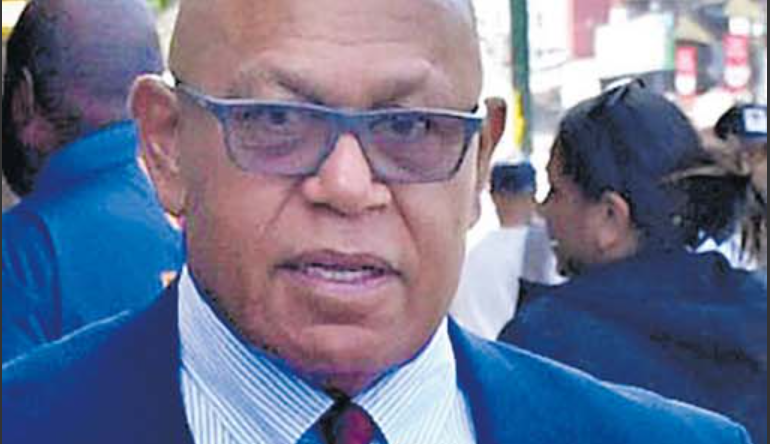
AFTER spending more than two decades behind bars, George Speight says his time in prison has reinforced one lesson above all others.
That lasting justice begins with accountability.
In his submission to the Constitution Review Commission yesterday, Mr Speight said the principles underpinning Fiji’s prison system should also guide the nation, arguing that no one should be above the law.
He said prison reflects society’s expectations of justice, where offenders accept responsibility for their actions and face the consequences.
“When you commit a crime, you do the time. If you’re man enough and honest enough to confess to it, you’re on the way to redemption,” he said.
Mr Speight explained that every prisoner progresses through a structured corrections system based on the seriousness of their offence, recalling that he was sent directly to maximum security prison because of the gravity of his crimes.
Quoting Proverbs 28:13, he said confession and accountability were essential steps towards mercy and redemption.
Mr Speight argued the same principle should apply throughout society and be reflected in Fiji’s Constitution.
“There is no way that anybody can be allowed to get away with crime and not be held accountable for it.”
He said his submission was not driven by bitterness or revenge but by a desire to address the issues that continue to divide the country and to encourage a future built on justice, fairness and responsibility.
Speight urges comprehensive review of 2013 Constitution
GEORGE Speight has called for a comprehensive review of Fiji’s 2013 Constitution, describing the document as “contentious” and “contradictory” and urging reforms based on justice, fairness and public confidence.
Making his submission to the Constitution Review Commission yesterday, Mr Speight identified the immunity provisions as the most divisive part of the Constitution, saying they had contributed to ongoing debate over the country’s supreme law.
“Easily the most contentious chapter is the chapter on immunity, easily by far,” he said.
Mr Speight said he supported concerns raised by the Commander of the Republic of Fiji Military Forces and agreed that the Constitution presented challenges for governance moving forward.
He said the commission’s task was to recommend changes that would uphold equality before the law and restore public trust in the nation’s governing framework.
“This book of law must have the confidence of everyone whose lives are governed by it,” he said.
Mr Speight said the Constitution should be reviewed clause by clause to determine whether it reflected the interests of Fiji’s future and the principles of justice and fairness.
While acknowledging that the commission was not established to revisit past political events, he said Fiji would eventually need a separate process to examine its history and understand the causes behind previous national crises.
He argued that democratic legitimacy depended on the consent of citizens, saying the majority of Fijians should have a role in deciding what is included in the country’s Constitution.
He described the current review process as an important opportunity to strengthen Fiji’s democratic foundations.
Calls for honest national reckoning
GEORGE Speight has called for an honest national reckoning over Fiji’s history of coups, saying the military, civilian leaders and all those involved must participate in a truth-telling process if the country is to
achieve lasting reconciliation.
Making his submission to the Constitution Review Commission yesterday, he said the Republic of Fiji Military Forces had a central role in any future reconciliation process.
“The military is a huge, huge part of this whole story, and so the truth telling and the healing process has got to begin in those kinds of quarters, with myself,” he said.
Mr Speight acknowledged his own responsibility for leading the 2000 coup and said he had accepted the consequences of his actions.
“I’m the only civilian that led a coup and went to jail. Fine, that’s the way the law works, we accept it, we pled guilty, and hopefully we can find redemption back in society, let alone in front of God, to be able to make something of the rest of our lives.
“It’s going to be doubly hard.”
Mr Speight said recent submissions to the Constitution Review Commission, particularly those by the Commander of the Republic of Fiji Military Forces, had created an opportunity for Fiji to confront its political history.
“With the commander’s comments and presentations, it’s the start of what I see as the opportunity for our nation to really address this, take the bull by the horns, so to speak, going right back to 1987.”
He called for a comprehensive examination of the country’s coups, including an acknowledgement by those responsible of their actions and the harm caused.
“Dismantling the whole thing, and coming up with the acknowledgement of what took place by those who did it, the hurt that was caused, the issues that were behind it.
“Those issues cannot be ignored.”
Mr Speight said reconciliation could only succeed if every perspective was heard.
“Once we come to grips with all of that and accept, let all the voices that say it’s this, it’s this, it’s this, let’s hear honestly and fairly from everyone.”
‘Give full consideration to submissions on indigenous rights’
THE Constitution Review Commission has been urged to give full consideration to submissions on indigenous rights, saying iTaukei concerns should no longer be automatically labelled as racist.
Making his submission to the commission George Speight referred to presentations made earlier this week by former parliamentarian Niko Nawaikula and other iTaukei representatives, including submissions on behalf of the iTaukei Land Trust Board.
“Now those voices have to be heard, and they have to be accommodated,” he said.
He argued that discussions on indigenous issues should be viewed as legitimate constitutional concerns rather than racial ones.
“The process of hearing those voices and accommodating the issues brought up must never, going forth, be labelled as racist anymore, because they’re not.
“When the iTaukei get up and say, ‘please, this, this, this… we want addressed,’ it has been a common practice to label it all as racist.”
Mr Speight said he disagreed with that characterisation. “I ask in my own mind, no, it’s not the case.”
He said addressing indigenous concerns should not create fear or division within the wider community.
“No one should feel threatened, no one should feel agitated, no one should feel uncertain.”
“Level heads will prevail.”
Mr Speight also called on those opposed to constitutional recognition of specific iTaukei issues to reconsider their position and engage constructively with indigenous communities.
“Those that push the agenda that iTaukei issues are not good for the future of this country and should not be addressed specifically, I ask that they reconsider and work together with the iTaukei community
in determining certain things about itself that only it can determine.”
Speight urges comprehensive review of 2013 Constitution
GEORGE Speight has called for a comprehensive review of Fiji’s 2013 Constitution, describing the document as “contentious” and “contradictory” and urging reforms based on justice, fairness
and public confidence.
Making his submission to the Constitution Review Commission yesterday, Mr Speight identified the immunity provisions as the most divisive part of the Constitution, saying they had contributed to ongoing debate over the country’s supreme law.
“Easily the most contentious chapter is the chapter on immunity, easily by far,” he said.
Mr Speight said he supported concerns raised by the Commander of the Republic of Fiji Military Forces and agreed that the Constitution presented challenges for governance moving forward.
He said the commission’s task was to recommend changes that would uphold equality before the law and restore public trust in the nation’s governing framework.
“This book of law must have the confidence of everyone whose lives are governed by it,” he said.
Mr Speight said the Constitution should be reviewed clause by clause to determine whether it reflected the interests of Fiji’s future and the principles of justice and fairness.
While acknowledging that the commission was not established to revisit past political events, he said Fiji would eventually need a separate process to examine its history and understand the causes behind previous national crises.
He argued that democratic legitimacy depended on the consent of citizens, saying the majority of Fijians should have a role in deciding what is included in the country’s Constitution.
He described the current review process as an important opportunity to strengthen Fiji’s democratic foundations.

