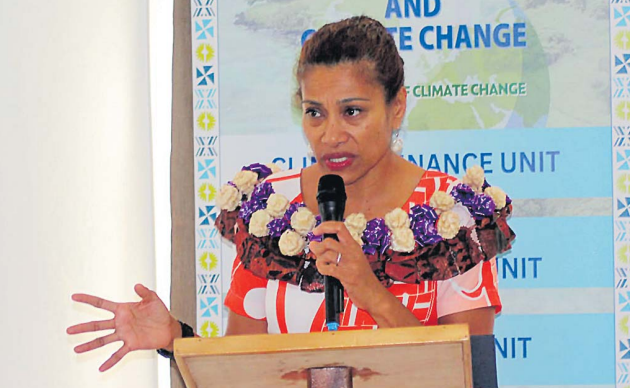
ENVIRONMENT Minister Lynda Tabuya says Fiji must spend money to attend meetings in order to secure climate finance for vulnerable communities.
“Meetings with countries such as Australia, New Zealand, Canada and those in Europe were important in securing funding support,” she said.
Ms Tabuya said these meetings helped build partnerships that allow Fiji to access climate finance for development and resilience projects.
“When you see us posting about those meetings on government pages, they are important because we are trying to secure relationships and, importantly, climate finance.”
She said sustainable projects required significant financial investment.
“Everything requires money. We can do small projects here and there, but they may only last a few weeks or a few years.”
Fiji, as a country heavily affected by climate change, she said must continue to actively seek funding to support communities facing flooding, drought and damaged infrastructure.
“Investment is also needed in preparing strong project proposals so communities can access available funding.”
She said the aim was to ensure projects lasted longer and benefitted future generations. Ms Tabuya said while communities could identify and plan projects, government support was essential to turn proposals into funded and implemented initiatives.
Call for urgent waste action
ENVIRONMENT Minister Lynda Tabuya has sounded the alarm over Fiji’s worsening waste problem, warning that villages and informal settlements are being overwhelmed by rubbish as large parts of the country remain without proper waste collection services.
Calling for a national waste management strategy, Ms Tabuya said communities outside municipal boundaries were being left behind while plastic waste continued to pile up in rural areas.
“At the moment, there is still no comprehensive national strategy for rubbish collection outside municipal areas,” she said.
She warned that changing lifestyles and growing dependence on packaged supermarket goods had dramatically increased plastic pollution in villages once reliant on traditional organic waste practices.
“Today, people are buying packaged goods from supermarkets, and plastic waste is increasing.”
Ms Tabuya said while councils collect rubbish for urban ratepayers, many rural communities are forced to burn, bury or dump waste themselves.
She said the Government had begun schoolbased recycling and waste separation programs, but stressed education alone would not solve the crisis.
“Ultimately, it is still the government’s responsibility to collect rubbish,” she said.
The minister said the growing waste challenge now required urgent national coordination before
environmental and public health conditions deteriorate further.