
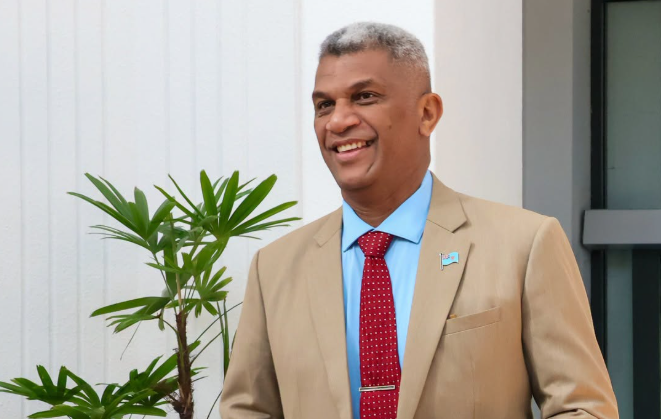
EDUCATION Minister Aseri Radrodro says the Government is strengthening counselling, chaplaincy and behavioural support systems in schools as part of efforts to tackle rising student misconduct and violence in classrooms.
His comments came after Parliament passed the Education Bill 2025 on Monday, introducing tougher penalties for people who insult, harass or assault teachers and students, including fines of up to $5000 or imprisonment for up to one year.
This newspaper had sought clarification on whether the proposed fines would also apply to students found guilty of insulting, harassing or assaulting teachers.
Mr Radrodro said the ministry already had policies and procedures in place to address student behaviour issues, with schools expected to follow strict disciplinary guidelines.
“And those policies clearly stipulates what steps would be taken by schools and heads of schools,” he said.
He said the ministry was expanding counselling services nationwide, including the establishment of counselling centres and hubs in all divisions, while also introducing counsellors directly into schools.
Mr Radrodro said school chaplaincy programs and the strengthening of the National Substance Abuse Advisory Council were also part of broader intervention measures.
“These are all avenues which the ministry has put in place to try and mitigate student behaviours.
“We need to refocus how we give our attention to students in schools.”
He added that schools had taken firm action in serious cases, including requiring some students to transfer to other schools under existing ministry policies.
Tough provisions to ensure children
PARENTS who fail to ensure their children attend school could face fines of up to $500, imprisonment for up to two years, or both under tough new provisions contained in the Education Bill 2025 passed in Parliament on Monday.
The legislation makes school attendance compulsory for all children of compulsory school age and gives the Ministry of Education stronger powers to intervene when students are not enrolled or regularly absent from school.
Under the Bill, children must be enrolled at a school and attend classes every school day unless there is a reasonable excuse for their absence.
If a child is not enrolled or repeatedly absent, the permanent secretary for Education will first conduct inquiries into the matter before directing parents to immediately enrol the child or ensure regular attendance.
Should parents fail to comply with those directives, the permanent secretary may apply to a magistrate for a compulsory education order.
The order can require parents to enrol the child, take reasonable measures to ensure attendance, attend counselling sessions, or submit to ministry monitoring.
Any parent who breaches the compulsory education order commits an offence and may face a fine, jail term or both upon conviction.
The Bill also require school heads to report cases of non-compliance to the permanent secretary, while parents providing homeschooling must submit regular attendance reports.
However, exemptions may be granted by the Minister for Education for prescribed reasons through a formal application process.
Minister defends school levies
PROVISIONS in the newly passed Education Bill allowing schools to charge levies has been defended by Education Minister Aseri Radrodro who says payments are neither compulsory nor a condition for student enrolment.
“I think it’s not fair to state that this Bill enforces the levy on students and parents,” Mr Radrodro said.
“In fact, the levy is something that schools have been giving out, subject to approval from the Ministry, and that is what is reflected in the Bill.
It’s nothing more than that.”
Under the new Education Bill, government and government-aided schools may charge levies for infrastructure development, maintenance, books, equipment, educational excursions and extracurricular activities.
However, schools must first seek approval from the Permanent Secretary, who must ensure the amount is “reasonable and equitable” and not burdensome on parents.
Mr Radrodro stressed that the levies would remain voluntary and could not be used to deny children access to education.
“Levies are not subjective. They are not mandatory.
“So, it’s not to be used like if you don’t pay, you’re not going to be enrolled.”
He said the Ministry had consistently reminded schools over the years that enrolment should remain free for all students regardless of their ability to contribute.
“Enrolment should be free for everybody and not subjective to those who can pay levy or those who don’t,” he said.
Mr Radrodro added that levy amounts would vary depending on the size, needs and activities of individual schools, but all proposed charges would continue to undergo ministry scrutiny before approval.
In fact, the levy is something that schools have been giving out, subject to approval from the Ministry…

