Strong board governance is increasingly important across the Pacific, where organisations operate in diverse cultural, economic and regulatory environments.
Effective boards must balance internationally recognised governance principles with local values, including collective leadership, respect for community, and accountability to a broad range of stakeholders.
This approach helps organisations make sound decisions, manage risk and maintain trust while remaining responsive to the needs of the communities they serve.
Through strategic direction, performance oversight and risk management, boards influence an organisation’s financial sustainability, its ability to respond to change and the confidence of its stakeholders.
Governance in a changing environment
Organisations are operating in an increasingly complex environment shaped by higher costs, regulatory change, workforce pressures, climate-related risks, technological disruption, cybersecurity threats and changing stakeholder expectations.
In order to make informed decisions, directors need to ask constructive questions, test assumptions and determine whether the information presented to them is sufficient.
Experience remains valuable, but the changing operating environment also requires directors to continually strengthen their knowledge, skills and understanding of their responsibilities.
Board culture and leadership
Good governance is demonstrated not only through policies and procedures, but also through how directors behave, how openly issues are discussed and whether the board is prepared to challenge ideas respectfully.
An effective board creates an environment in which directors can contribute different perspectives, raise concerns and ask difficult questions without discussions becoming personal or unproductive.
The chair has an important role in shaping this environment.
A strong chair keeps discussions focused, encourages contributions from directors and ensures that priority matters receive appropriate attention.
The chair also supports a clear and constructive relationship between the board and management.
While the board sets direction and oversees performance, management is responsible for implementing strategy and managing daily operations.
A shared understanding of these roles strengthens accountability and supports better decision-making.
In the Pacific, governance must also recognise the importance of relationships, collective leadership, community obligations and accountability to a broad range of stakeholders. Internationally recognised governance principles remain important, but they must be applied in ways that reflect the environment in which Pacific organisations operate.
Connecting risk and strategy
Risk and strategy are closely connected.
Decisions to enter new markets, adopt technology, expand operations or change a business model can create opportunities while also increasing financial, operational or reputational exposure.
Boards should understand the organisation’s risk appetite and keep its most significant risks and strategic priorities under regular review.
Making risk part of ongoing board discussions allows emerging issues to be identified earlier and supports more considered decision-making.
Financial literacy is every director’s responsibility
Directors do not need to be accountants, but they should have sufficient financial knowledge to understand the organisation’s position, recognise warning signs and question the assumptions behind financial reports.
This includes reviewing cash flow, performance against budgets, emerging liabilities and the organisation’s ability to meet its commitments.
Financial literacy enables every director to contribute to oversight and ensures that responsibility does not rest only with those who have accounting or finance experience.
Strengthening accountability
Conflicts of interest do not necessarily indicate misconduct, but they must be disclosed and managed appropriately.
Clear processes for recording interests and determining whether a director should participate in a discussion or decision help protect the integrity of the board.
Directors must act in the best interests of the organisation rather than the individual, group or relationship through which they were appointed.
Accountability also requires boards to assess their own effectiveness.
Regular evaluations can help determine whether meetings focus on the right issues, directors receive useful information and the board has the appropriate mix of skills and experience.
This process can identify areas for improvement, support director development and inform succession planning as the organisation’s needs change.
Building governance capability
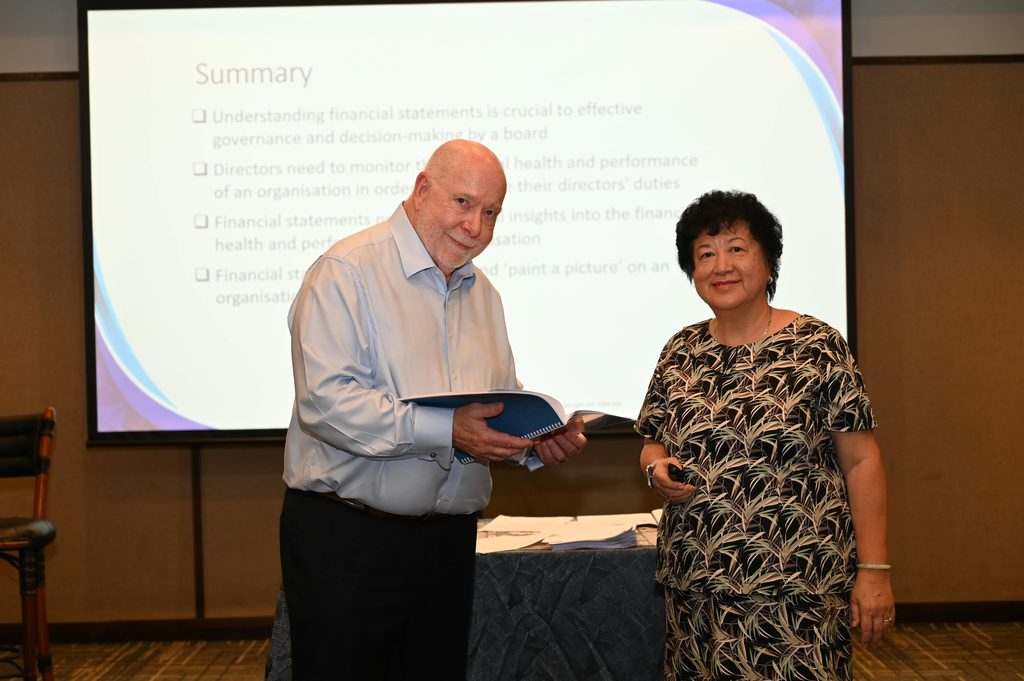
These priorities are central to the governance workshops delivered by Pacific Board Governance in partnership with FCEF.
Through this partnership, FCEF and Pacific Board Governance have delivered several workshops to help directors, C-suite executives, board secretaries and senior leaders apply sound governance principles within their own organisations.
The workshops have brought participants together to examine practical issues involving board leadership, financial oversight, risk, strategy and decision-making.
Through discussion, case studies and shared experience, participants have considered how recognised governance principles can be applied to the situations they encounter in their own boardrooms.
This practical approach is important because governance capability is not developed through policies alone.
Directors need opportunities to test their understanding, consider different perspectives and strengthen their ability to respond to changing organisational needs.
Through its partnership with Pacific Board Governance, FCEF is helping directors and senior executives strengthen their governance knowledge and apply recognised practices within the Fiji and Pacific operating environment.
For FCEF, stronger governance contributes directly to more resilient and sustainable organisations.
Boards that understand their responsibilities are better positioned to oversee risk, protect organisational resources and support long-term performance.