
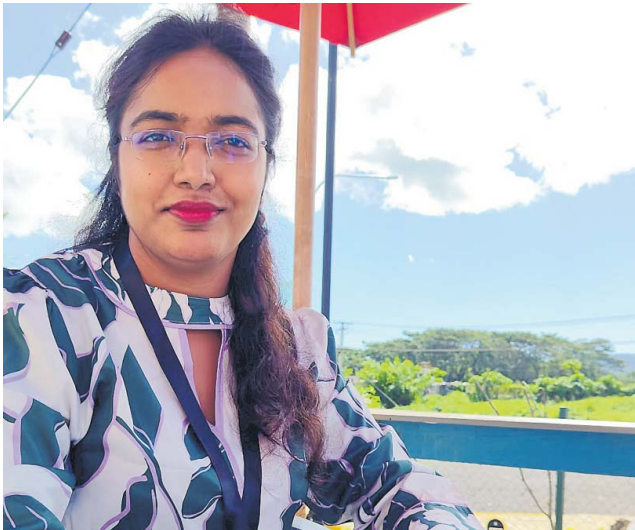
FIJI’S ability to respond to the escalating drug crisis is being severely constrained by a critical shortage of mental health professionals, according to St Giles Hospital acting chief medical officer Dr Afia Zahin.
Dr Zahin said just 10 doctors at St Giles Hospital were responsible for providing specialist mental health services nationwide, placing heavy strain on an already overstretched system.
She said manpower remained the biggest challenge facing the sector.
“How can a team of 10 adequately respond to an epidemic of drug abuse?” she said.
Speaking at the mini Fiji Medical Conference at the Ramada Hotel in Labasa, Dr Zahin said recruitment of mental health specialists remained difficult despite interest from qualified professionals.
“We have expressions of interest sitting in offices, yet we are not even recruiting one psychiatrist per year,” she said.
She said existing doctors were working beyond their designated roles, managing clinics and outreach services across the country with limited resources.
“We are paid for one subdivision but are running clinics and outreach services across the country,” Dr Zahin said.
She said increasing the number of mental health professionals was essential to addressing substance abuse.
“If we want to tackle drug abuse, we first need to recruit more mental health professionals,” she said.
Dr Zahin said if immediate recruitment was not possible, greater support and training for health workers across the system was needed.
“Secondly, if that is not feasible and I understand Fiji is a small island nation with budget limitations, then we must empower our medical officers and mental health nurses around the country,” she said.
She called for greater investment in training young healthcare workers, warning that mental health care could not remain centralised in Suva.
“If we train our younger workforce, intern nurses and intern doctors to understand mental health and provide immediate care, then in five years’ time, when the problem grows, we will have a much larger workforce capable of responding,” Dr Zahin said.
She said mental health services must be strengthened nationwide to meet growing demand.
Call for empathy in drug treatment
A SENIOR mental health specialist is urging healthcare workers to adopt a more compassionate and practical approach when treating people with substance abuse problems, warning that simply telling users to quit often fails to address underlying causes of addiction.
St Giles Hospital acting chief medical officer Dr Afia Zahin said some people struggling with cannabis use were also involved in growing and selling marijuana as a source of income.
“It is probably their livelihood, and that’s how they earn money,” she said.
She said health workers needed to understand the social and economic realities facing patients before expecting meaningful behavioural change.
“You need to come down to their level and try to understand what are their goals and expectations,” Dr
Zahin said.
Speaking at the mini Fiji Medical Conference at the Ramada Hotel in Labasa, she said addiction should not be viewed as a simple behavioural issue, but as a complex condition requiring empathy, trust and engagement.
“Building rapport with patients is essential, and judgemental attitudes often discourage people from seeking help or being honest about their drug use,” Dr Zahin said.
She said effective intervention depended on recognising the broader circumstances surrounding substance abuse, including financial hardship and livelihood pressures.
Dr Zahin urged healthcare professionals to strengthen relationships with patients and better understand their individual situations, saying a supportive approach was more likely to produce positive outcomes than judgement or criticism.

