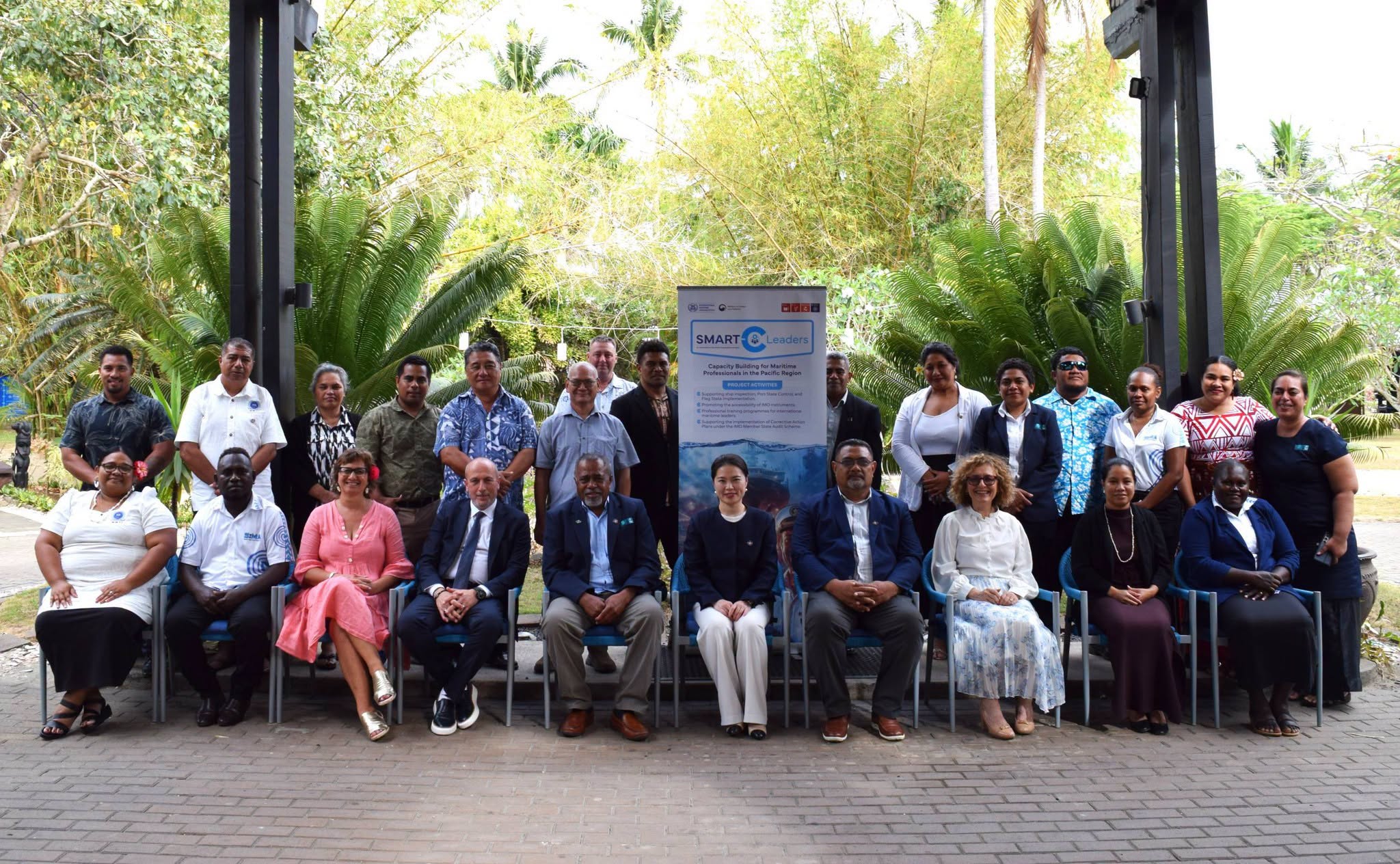
PACIFIC maritime leaders are working to strengthen national laws and governance to ensure ships operating in the region meet international safety and environmental standards.
The commitment was discussed at the SMART-C Leaders Regional Workshop on Flag State Implementation, held in Nadi from November 2 to November 4.
During the workshop maritime officials examined gaps in national legislation and ways to improve oversight of vessels.
Opening the three-day workshop, Maritime Safety Authority of Fiji (MSAF) executive chairman Savenaca Cavalevu said signing international conventions and passing national laws were not enough to guarantee safety at sea.
“A ship does not become safe because a convention has been signed. It does not become safe because a law has been passed, a certificate has been issued, or an audit has been completed,” he said.
“Those things matter, of course.
“But their real value is seen in what happens when a ship puts to sea, when a surveyor identifies a problem, when an officer has to make a difficult decision, or when an administration is called upon to account for its responsibilities.”
Mr Cavalevu said a ship was more than a vessel moving between ports for Pacific nations.
“It is a lifeline,” he said.
The workshop was co-organised by the International Maritime Organization (IMO), MSAF, the International Maritime Law Institute (IMLI) and the Ministry of Oceans and Fisheries.
It focused on strengthening national legislative frameworks to implement key international maritime instruments, including the International Convention for the Safety of Life at Sea (SOLAS), the International Convention for the Prevention of Pollution from Ships (MARPOL) and the Standards of Training, Certification and Watchkeeping for Seafarers (STCW).
Delegates from Fiji, Tonga, Vanuatu, Papua New Guinea, Nauru and the Cook Islands examined flag State implementation gaps, vessel survey and certification oversight and audit findings under the IMO Member State Audit Scheme.
Participants also took part in practical legislative drafting exercises and identified national priorities to translate international obligations into workable domestic laws. The discussions also addressed recognised organisation management and opportunities to advance women’s leadership in maritime governance.