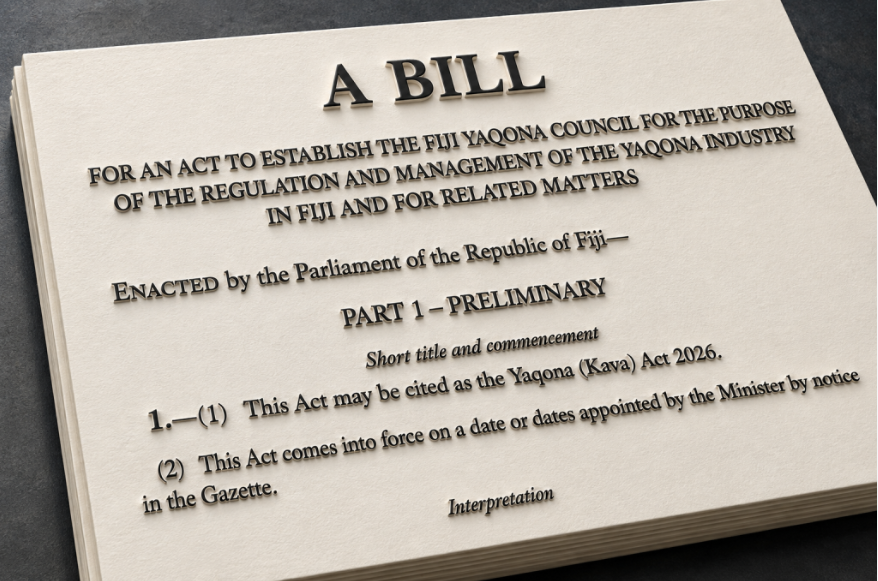
Opposition Leader Inia Seruiratu has called on the Government to reconsider proposed penalties under the Yaqona (Kava) Bill 2026, warning they could disproportionately affect farmers, villagers and small-scale sellers who depend on yaqona for additional income.
Mr Seruiratu said he was concerned by reports that people selling yaqona without the required registration could face fines of up to $10,000 or imprisonment for up to two years.
“A $10,000 fine and the prospect of two years in prison is an extraordinarily harsh penalty to hang over ordinary Fijians who may simply be selling a few bundles of yaqona to put food on the table,” he said.
Mr Seruiratu said yaqona provided an important source of supplementary income, particularly for families in rural and maritime communities.
“People sell yaqona to pay for groceries, school expenses, transportation, electricity, medical needs and other basic necessities,” he said.
He stressed that the Opposition was not against regulating the yaqona industry, saying there were legitimate reasons for protecting quality, improving traceability and preventing adulterated or falsely represented products from entering the market.
However, he said the law should distinguish between serious or repeated commercial breaches and small-scale selling by families.
“There is a significant difference between a deliberate commercial operator who repeatedly breaches the law and a rural family selling small quantities of yaqona to supplement household income.”
Mr Seruiratu said education, affordable registration and assistance with compliance should come before severe penalties.
He also raised concerns that the registration fee was yet to be determined and would instead be prescribed through regulations.
“The Government must guarantee that registration will be simple, affordable and accessible, particularly for people living in rural and maritime areas,” he said.
Mr Seruiratu also called for safeguards around enforcement powers, including entry into premises, inspection of records and collection of samples.
“There must be no room for intimidation, selective enforcement or unnecessary harassment of small operators,” he said.
He called on the Government to review the proposed penalties before the Bill becomes law.
“Government cannot continue talking about empowering SMEs and rural communities on one hand while creating laws on the other that could impose penalties worth many months, or even years, of income for some ordinary families.”