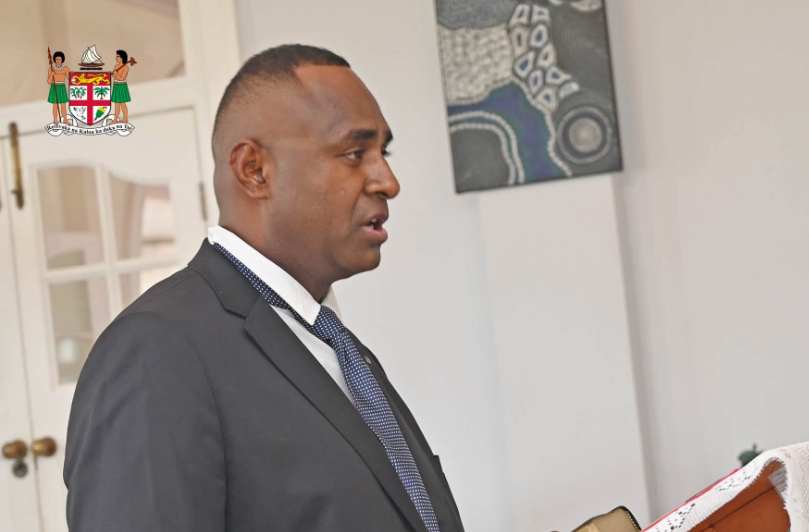
THE nature of national security threats has fundamentally shifted, no longer confined to geography or conventional military forces, according to Defence and Veteran Affairs Minister Pio Tikoduadua.
Speaking at the opening of the Regional Workshop on Hybrid Threats at the Blackrock Camp, Mr Tikoduadua said modern threats were now interconnected, adaptive, and often operate below the threshold of traditional conflict.
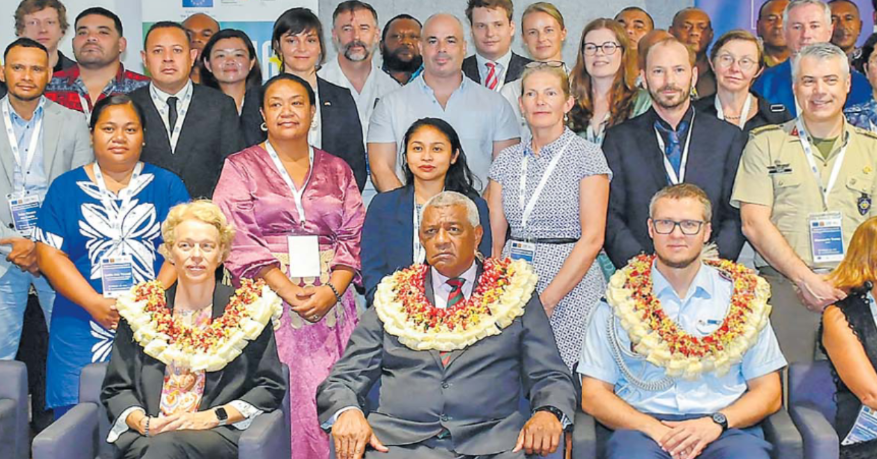
The two-day workshop, organised by the European Union and the Republic of Fiji Military Forces in collaboration with the German Embassy Suva and the Center for Intelligence and Security, focuses on emerging security challenges facing the region.
Mr Tikoduadua highlighted that these threats are increasingly emerging alongside Fiji’s natural disaster cycles, stressing that climate-related events are no longer abstract concerns for Pacific nations.
“They are new realities — cyclones, floods, and rising seas shake our economies, our infrastructure, and our communities,” he said.
He warned that such environmental disruptions are creating opportunities for a different category of threat actors.
“Hostile actors are exploiting the systemic vulnerabilities created by climate stress and disaster response operations.”
These threats include foreign information manipulation, transnational organised crime, and risks to critical maritime infrastructure — collectively described as hybrid threats.
“For Fiji and for the Pacific, this is a matter of current operational reality. “When a disaster strikes, our primary directive is saving lives and restoring basic services.”
However, he noted that during these periods, national systems come under significant strain. Information systems can degrade, law enforcement resources are redeployed, and maritime surveillance is reduced.
Communities may also become isolated from verified sources of information, increasing their susceptibility to misinformation.
“These are not incidental conditions; they are observed vulnerabilities.”
He added that transnational criminal networks often exploit reduced patrols to move illicit goods, while disinformation campaigns target populations temporarily cut off from official communication channels.
Workshop targets security threats
SECURITY implications of climate change, disinformation in crisis environments, transnational
organised crime, and protection of critical maritime infrastructure will top the agenda a Regional
Workshop on Hybrid Threats at the RFMF Headquarters Joint Task Force Command, Black Rock Camp in Nadi.
Defence and Veteran Affairs Minister Pio Tikoduadua officiated at the opening of the workshop on
Tuesday.
The two-day workshop is organised by the European Union and Republic of Fiji Military Forces in
cooperation with the German Embassy in Suva and the Center for Intelligence and Security Mr Tikoduadua said the workshop provided a forum to examine how climate change, disaster response, and
hybrid threats intersect and how to respond collectively.
“You’re here to develop practical mechanisms for cooperation, including information sharing,
coordinated surveillance, and infrastructure protection,” he said.
“The Pacific has always understood the importance of partnership.
Our regional security architecture is built on cooperation, trust, and shared responsibility.
Mr Tikoduadua welcomed the engagement of our international partners, and at the same time,
emphasised that solutions must be grounded in Pacific realities.
“They must reflect our geography, our capabilities, and our priorities.
“We do not approach this as a passive recipient of assistance, Fiji is an active contributor to regional
and global security.
“Our record in peacekeeping and our role in regional cooperation demonstrates that clearly.”
Mr Tikoduadua said the value of this workshop will be measured by the policies, protocols, and
partnerships that emerge from it, and we all look forward to it.
“Hybrid threats, particularly those that exploit natural disasters, require coordination, clarity, and
sustained institutional resolve.
“It provides a forum to examine how climate change, disaster response, and hybrid threats intersect and
how we respond collectively.”
The focus of this regional workshop will be hybrid threats in climate-affected regions, with an emphasis on the Pacific.
The workshop will examine how hostile entities exploit vulnerabilities caused by natural disasters
and climate change, including through Foreign Information Manipulation and Interference (FIMI),
transnational organised crime, and threats to critical maritime infrastructure.